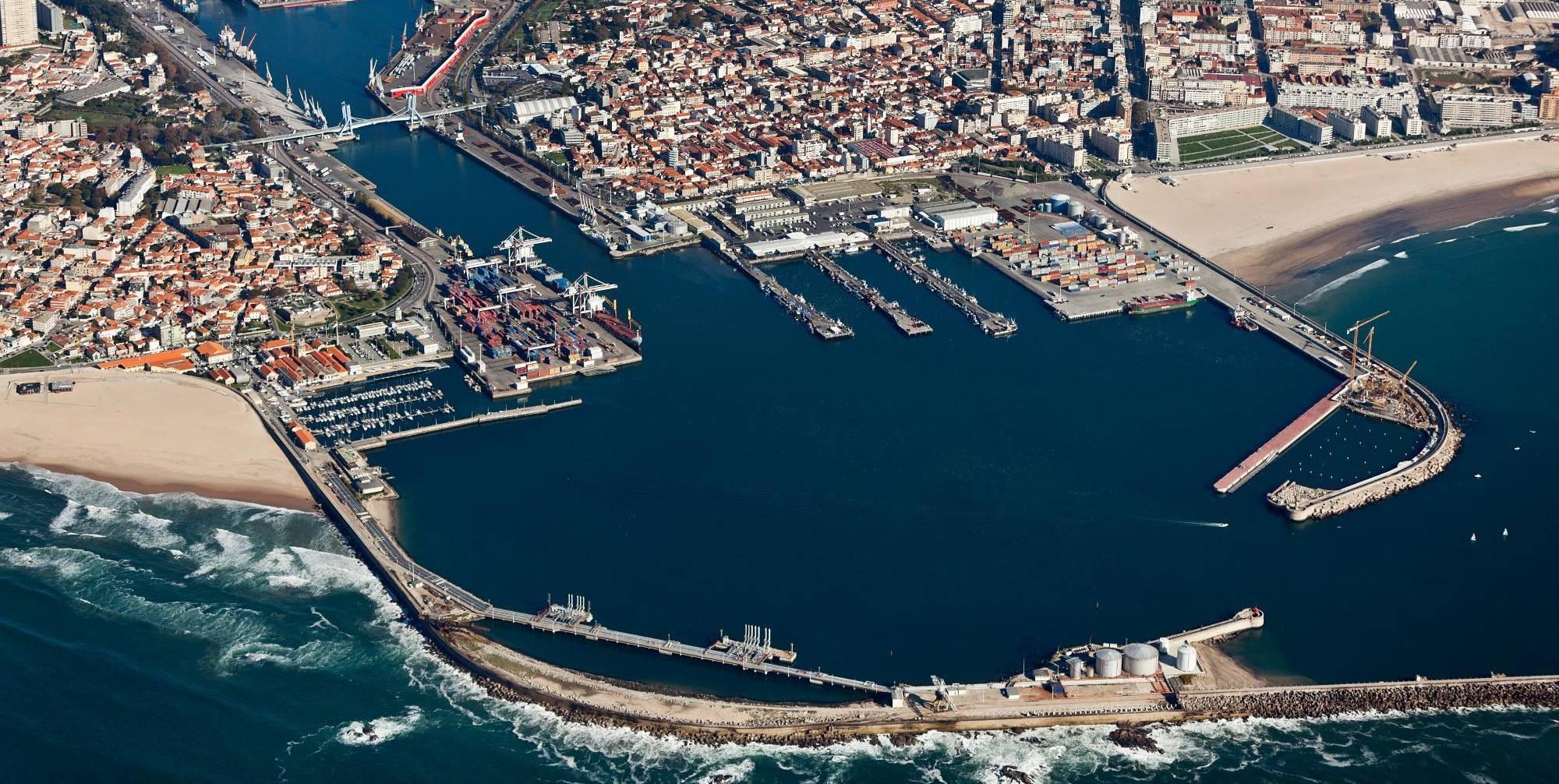
The proximity of Varna port to the city is unhealthy for the population. With this project, we move it further to the interior of Lake Varna, a safe distance from the city.
Signature(s)
Amount
€ 50,000,000
Countries
Sector(s)
Bulgaria
: € 50,000,000
Agriculture, fisheries, forestry
: € 25,000,000
Transport
: € 25,000,000
Signature date(s)
27/06/2023 : € 25,000,000
27/06/2023 : € 25,000,000
Other links
Summary sheet
Release date
13 June 2023
Status
Reference
Signed | 27/06/2023
20210337
Project name
Promoter - financial intermediary
OLIVA GRAIN PORT TERMINAL
BUILDCOM EOOD,OLIVA AD
Proposed EIB finance (Approximate amount)
Total cost (Approximate amount)
EUR 50 million
EUR 100 million
Location
Sector(s)
- Agriculture, fisheries, forestry - Agriculture, forestry and fishing
- Transport - Transportation and storage
Description
Objectives
The project consists of the construction of a new port facility in the vicinity of the Port of Varna - a comprehensive trans-european network (TEN-T) port - for the storage, handling and export of grain cereals, oilseeds, vegetable oils and oil seed meals in the area of Beloslav, Bulgaria.
The aim is to generate substantial economic and financial benefits, such as: (i) providing efficient and low-cost access for domestic cereals, oilseeds, vegetable oils and oil seed meals to liquid international market via TEN-T networks and the Black Sea (ii) reducing greenhouse gas emissions in transporting agricultural commodities to the regions and destinations in most need to mitigate food insecurity and malnutrition. The rationale behind the development of the project consists of the positive synergy potential between the promoter's grain producing and export business and light commercial vehicles (LCV') freight transport capabilities, as well as sponsoring a project of regional importance in Northern Bulgaria.
Additionality and Impact
The project supports two main policy priority areas under the InvestEU mandate. They are (i) The development of sustainable and safe transport infrastructures and mobility solutions, equipment and innovative technologies in accordance with Union transport priorities and the commitments taken under the Paris Agreement; and (ii) Sustainable agriculture, forestry, fishery, aquaculture and other elements of the wider sustainable bioeconomy,
The project supports the development of sustainable and safe transport infrastructures in accordance with EU transport priorities and the commitments taken under the Paris Agreement, in particular through the development of port facilities integrated in the TEN-T. It is aligned with the priorities of Connecting Europe Facility (CEF) and increases the capacity of the Solidarity Lanes by providing an optional route to transport Ukrainian agricultural commodities to exports markets.
The project addresses market failures related to under-priced transport and logistics externalities.
The financing of the project addresses other market failures and weaknesses, including: (i) imperfect competition, due to asymmetric information and (ii) failures in the financial market caused by the fact that the economic lifetime of the project exceeds significantly the tenor of loans that are typically available on capital markets. In that context, the promoter is faced with a sub-optimal investment situation, as it cannot access long-term loans matching the economic lifetime of the project.
The project improves the competitive position of the agribusiness sector in Northern Bulgaria and maritime transport by increasing the capacity and efficiency to handle the related traffic. This incentivises modal shift from road to less carbon intensive transport modes, enables interoperability between transport modes and reduces the related logistic costs and externalities.
The project would not have been carried out (to the same extent) by the EIB without the InvestEU support.
Environmental aspects
Procurement
Compliance with the Strategic Environmental Assessment (SEA) Directive 2001/42/EC, the Environmental Impact Assessment (EIA) Directive 2014/52/EU amending the EIA Directive 2011/92/EC, the Habitats Directive 92/43/EEC, the Birds Directive 2009/147/EC, the Water Framework Directive 2000/60/EC, as well as biodiversity assessment requirements, climate change adaptation issues, mitigation/compensation measures and environmental and social monitoring plans, will be assessed during appraisal and/or allocation phase for each project component, whenever applicable.
The promoter is a private company and the project will be developed on privately owned land, therefore, it is not required to follow the EU public procurement directives and may undertake private procurement procedures according to the EIB's Guide to Procurement (GtP).
Milestone
Under appraisal
Approved
Signed
21 June 2023
27 June 2023
Related documents
Related projects
Documents
Environmental and Social Impact Assessment (ESIA) - OLIVA GRAIN PORT TERMINAL - Non Technical Summary
Publication Date
22 Jun 2023
Document language
Main Topic
Lending
Document Number
164251756
Document Focus
Environmental Information
Document Type
Project Number
20210337
Sector(s)
Regions
Countries
Publicly available
Download now
Environmental and Social Impact Assessment (ESIA) - OLIVA GRAIN PORT TERMINAL
Publication Date
22 Jun 2023
Document language
Main Topic
Lending
Document Number
171836860
Document Focus
Environmental Information
Document Type
Project Number
20210337
Sector(s)
Regions
Countries
Publicly available
Download now
Environmental and Social Data Sheet (ESDS) - OLIVA GRAIN PORT TERMINAL
Publication Date
28 Jun 2023
Document language
Main Topic
Lending
Document Number
171391255
Document Focus
Environmental Information
Document Type
Project Number
20210337
Sector(s)
Regions
Countries
Publicly available
Download now
Link to source
Other links
News & Stories
Link to source
Other links
Inside the project
How and Why
Expanding and upgrading the port of Varna in Bulgaria
Why
- Bulgaria port is important to the supply route of food from Ukraine
- Bottlenecks lead to extra CO2 emissions and extra costs
- Maximum depth of the port limits large-volume vessels and cargo.
How
- Buildcom Group builds new port terminal that’s 13.5 metres deep
- New technical and administrative buildings, new railway and road access
- Modern system for grain storage and transport
- The loan is backed by the InvestEU programme.
Sectors & Countries

Story
Expanding maritime transport and reducing air pollution
The Buildcom project will modernise Varna’s port, support food security, promote greener maritime transport, and boost economic growth in the region by improving access to the export market for local agricultural producers.
Expanding the port will also reduce road transport, shifting freight to less carbon-intensive maritime transport. This means cargo passing through the centre of Varna will decrease, improving air quality in the city and reducing noise pollution.

This project will optimise transport routes on land and at sea, improving CO2 emissions. It ensures climate change mitigation, coastal management and flood prevention.
Why are ports important?
As around 74% of goods enter or leave Europe by sea, it’s crucial to invest in modern maritime infrastructure for both agribusiness and industrial cargo.
The European Commission tabled in June 2021 a 35-point action plan to boost the role of inland waterway transport. The core objectives are to shift more cargo over Europe's rivers and canals, and to facilitate the transition to zero-emission barges by 2050. This is in line with the European Green Deal and the Sustainable and Smart Mobility Strategy, which set the goal of increasing transport by inland waterways and short sea shipping by 25% by 2030, and by 50% by 2050.
- Read about future-proofing European inland waterway transport to better shift towards a zero-emission and digital economy

Related media
All hands on deck
Ports in Bulgaria and Portugal are modernising to cut congestion and CO2 emissions, as well as moving Ukraine’s grain faster
Nature’s highways
A plan to revive Lithuania’s inland waterways with electric barges could cut CO2 emissions by 14 000 tonnes a year
Roads to connect Ukraine
Russian blockades make Moldova’s dilapidated roads key to moving grain out of Ukraine and aid in. Here’s how the country is upgrading its transport links
Danube cleanup
The removal of WWII wrecks in Serbia will enable safer and faster navigation along the Danube—that’s good for the environment and the economy
Links
Related projects and stories
Celebrating diversity, equity and inclusion at Luxembourg Pride Week
The European Investment Bank (EIB) Group is taking part in Luxembourg Pride Week from 2 to 12 July, celebrating the LGBTIQ+ community and reaffirming its strong commitment to diversity, equity and inclusion.
Local leaders and EIB join forces to pool public and private funds for affordable houses
Intensifying their cooperation with the European Investment Bank, regions and cities on 2 July discussed the EU’s housing policy with President Calvino, Members of the European Parliament and associations. During their debate in a plenary session of the European Committee of the Regions, they also voiced concerns that the next EU budget will weaken EU support for social, energy and climate projects
EIB Group Complaints Mechanism outreach and dispute resolution workshop in Zagreb, Croatia
The EIB Group Complaints Mechanism, in collaboration with the Independent Complaint Mechanism for DEG, FMO and Proparco (ICM), and the Dispute Resolution Service (DRS) of the World Bank Accountability Mechanism, organised a regional workshop in Zagreb from 8 to 11 June 2026, with the support of the CEE Bankwatch Network.