"Das ist ein wegweisendes Projekt für die Menschen in Jordanien"
Unterzeichnung(en)
Betrag (.*)
427.000.000 €
Länder
Sektor(en)
Jordanien
: 427.000.000 €
Wasser, Abwasser
: 427.000.000 €
Unterzeichnungsdatum
24/07/2025 : 30.000.000 €
14/10/2024 : 47.000.000 €
28/11/2023 : 50.000.000 €
3/12/2023 : 100.000.000 €
8/12/2022 : 200.000.000 €
Andere Links
Übersicht
Veröffentlichungsdatum
27 April 2022
Projektstatus
Referenz
Unterzeichnet | 08/12/2022
20190712
Projekttitel
Projektträger – Finanzintermediär
AQABA-AMMAN WATER DESALINATION & CONVEYANCE
MINISTRY OF WATER AND IRRIGATION - HASHEMITE KINGDOM OF JORDAN,SPECIAL PURPOSE ENTITY(IES)/FUND
Vorgeschlagene EIB-Finanzierung (voraussichtlicher Betrag)
Gesamtkosten (voraussichtlicher Betrag)
USD 880 million (EUR 874 million)
USD 6155 million (EUR 6114 million)
Ort
Sektor(en)
- Wasser, Abwasser - Wasserversorgung; Abwasser- und Abfallentsorgung und Beseitigung von Umweltverschmutzungen
Beschreibung
Ziele
The primary objective of the project is to provide 300 million cubic metres (MCM) of potable water to Amman and other governorates in Jordan and, possibly, to areas along the project pipelines route. The water will come from a seawater reverse osmosis plant south of Aqaba and will be conveyed to Amman via a new, approximately 420 km long water conveyor that would run for most of its part parallel to the existing Disi Conveyor.
Jordan has one of the lowest levels of water availability per capita in the world, which is anticipated to decline even more over the next years. This is due to an increase in population (expected to increase by 2047 from the current estimated 10 million to 18 million inhabitants) and the consequences of climate change in the country. In that context, the AAWDCP is expected to contribute to the following objectives: (i) increase the resilience of the water supply by substantially increasing water production by providing up to additional 300 million cubic metres of water per year to Amman; (ii) adapt to and potentially mitigate the impacts of climate change; and (iii) create jobs both during construction and operation. The project is a high priority for the Government of Jordan and supports the EU and EIB objectives in the country. Specifically it is in line with: - National priorities, in particular the National Water Strategy 2016-2025, which identifies projects that contribute to a resilient water sector as a key priority for concessional financing. - EU policy objectives, as the project is included among the flagship initiatives identified in the EU Joint Communication on Renewed Partnership with the Southern Neighbourhood, published in February 2021. - The EIB's objectives under the Neighbourhood, Development and International Cooperation Instrument (NDICI), specifically the development of social and economic infrastructure, as well as the Bank's Water Sector Lending Orientation, Adaptation Plan and Climate Bank Roadmap. - Sustainable Development Goal #6, which calls for ensuring availability and sustainable management of water and sanitation for all, and #11 (make cities and human settlements inclusive, safe, resilient and sustainable).
Zusätzlichkeit und Wirkung
The AAWDCP is the largest water generation scheme to be implemented in the history of Jordan. It will generate from the outset 300 MCM per year of water and will be implemented through a build-operate[1]transfer (BOT) scheme. The project will close a supply-demand gap that is growing over time as a result of climate change. The project thus contributes significantly to the objectives of Jordan's National Water Strategy, the EU Joint Communication on Renewed Partnership with the Southern Neighbourhood, and the EIB Climate Bank Roadmap and Adaptation Plan. The benefits of the project include increased availability of water for domestic, municipal and industrial uses. The project also helps mitigate market failures by financing critical water supply infrastructure that generates positive externalities, mainly (i) security of supply in a wider geographic context with very scarce water resources, allowing for stable and prosperous social and economic livelihoods and (ii) environmental benefits by relieving further over-exploitation of groundwater resources. EIB's financial and non-financial contribution to the project is excellent. The Bank, alongside numerous development partners, is providing a substantial and favourable financing package, consisting of sovereign lending, project finance, and the management of an investment grant from the EU. In addition, the Bank has been involved from the very beginning of the project and provided technical expertise in the origination and structuring of the project, primarily through the ESIA, which establishes environmental and social standards in line with international best practices and which was funded and managed by EIB.
Umweltaspekte
Auftragsvergabe
A full Environmental and Social Impact Assessment (ESIA) has been completed with funding from the EIB and in line with international best practices and EIB environmental and social standards. The ESIA has also been approved by the relevant Jordanian authorities.
The Bank will require the Promoter to ensure that implementation of the project will be done in accordance with the Bank's Guide to Procurement.
Under Global Europe NDICI guarantee
Under EFSD+ Guarantee
Weitere Unterlagen
Andere Links
Zugehörige Pressemitteilungen
Dokumente
Umwelt- und Sozialverträglichkeitsprüfung - AQABA-AMMAN WATER DESALINATION & CONVEYANCE
Datum der Veröffentlichung
8 Jun 2022
Sprache
Bereich
Finanzierung
Nummer des Dokuments
157505254
Thema
Umweltinformationen
Art des Dokuments
Projektnummer
20190712
Sektor(en)
Regionen
Länder
Öffentlich zugänglich
Jetzt herunterladen
Umwelt- und Sozialverträglichkeitsprüfung - AQABA-AMMAN WATER DESALINATION & CONVEYANCE - Non-Technical Summary
Datum der Veröffentlichung
8 Jun 2022
Sprache
Bereich
Finanzierung
Nummer des Dokuments
157505368
Thema
Umweltinformationen
Art des Dokuments
Projektnummer
20190712
Sektor(en)
Regionen
Länder
Öffentlich zugänglich
Jetzt herunterladen
Formblatt ökologische und soziale Aspekte - AQABA-AMMAN WATER DESALINATION & CONVEYANCE
Datum der Veröffentlichung
16 Jul 2022
Sprache
Bereich
Finanzierung
Nummer des Dokuments
156117900
Thema
Umweltinformationen
Art des Dokuments
Projektnummer
20190712
Sektor(en)
Regionen
Länder
Öffentlich zugänglich
Jetzt herunterladen
Umwelt- und Sozialverträglichkeitsprüfung - AQABA-AMMAN WATER DESALINATION & CONVEYANCE - Annexes
Datum der Veröffentlichung
7 Jun 2022
Sprache
Bereich
Finanzierung
Nummer des Dokuments
157701388
Thema
Umweltinformationen
Art des Dokuments
Projektnummer
20190712
Sektor(en)
Regionen
Länder
Öffentlich zugänglich
Jetzt herunterladen
Umwelt- und Sozialverträglichkeitsprüfung - AQABA-AMMAN WATER DESALINATION & CONVEYANCE - Process flow diagrams
Datum der Veröffentlichung
21 Jun 2025
Sprache
Bereich
Finanzierung
Nummer des Dokuments
248024520
Thema
Umweltinformationen
Art des Dokuments
Projektnummer
20190712
Sektor(en)
Regionen
Länder
Öffentlich zugänglich
Jetzt herunterladen
Umwelt- und Sozialverträglichkeitsprüfung - AQABA-AMMAN WATER DESALINATION & CONVEYANCE - Land Acquisition Resettlement Policy Framework (Arabic version)
Datum der Veröffentlichung
21 Jun 2025
Sprache
Bereich
Finanzierung
Nummer des Dokuments
247886262
Thema
Umweltinformationen
Art des Dokuments
Projektnummer
20190712
Sektor(en)
Regionen
Länder
Öffentlich zugänglich
Jetzt herunterladen
Umwelt- und Sozialverträglichkeitsprüfung - AQABA-AMMAN WATER DESALINATION & CONVEYANCE- Environmental and Social Impact Assessment report
Datum der Veröffentlichung
12 Jun 2025
Sprache
Bereich
Finanzierung
Nummer des Dokuments
247200983
Thema
Umweltinformationen
Art des Dokuments
Projektnummer
20190712
Sektor(en)
Regionen
Länder
Öffentlich zugänglich
Jetzt herunterladen
Umwelt- und Sozialverträglichkeitsprüfung - AQABA-AMMAN WATER DESALINATION & CONVEYANCE - layout of the desalination plant
Datum der Veröffentlichung
21 Jun 2025
Sprache
Bereich
Finanzierung
Nummer des Dokuments
247879961
Thema
Umweltinformationen
Art des Dokuments
Projektnummer
20190712
Sektor(en)
Regionen
Länder
Öffentlich zugänglich
Jetzt herunterladen
Umwelt- und Sozialverträglichkeitsprüfung - AQABA-AMMAN WATER DESALINATION & CONVEYANCE - IPS to SWRO conveyance profile (Sea Water)
Datum der Veröffentlichung
21 Jun 2025
Sprache
Bereich
Finanzierung
Nummer des Dokuments
247882142
Thema
Umweltinformationen
Art des Dokuments
Projektnummer
20190712
Sektor(en)
Regionen
Länder
Öffentlich zugänglich
Jetzt herunterladen
Umwelt- und Sozialverträglichkeitsprüfung - AQABA-AMMAN WATER DESALINATION & CONVEYANCE - SWRO to IPS conveyance profile (Brine)
Datum der Veröffentlichung
21 Jun 2025
Sprache
Bereich
Finanzierung
Nummer des Dokuments
247882143
Thema
Umweltinformationen
Art des Dokuments
Projektnummer
20190712
Sektor(en)
Regionen
Länder
Öffentlich zugänglich
Jetzt herunterladen
Umwelt- und Sozialverträglichkeitsprüfung - AQABA-AMMAN WATER DESALINATION & CONVEYANCE - GHG (Arabic version)
Datum der Veröffentlichung
21 Jun 2025
Sprache
Bereich
Finanzierung
Nummer des Dokuments
247882140
Thema
Umweltinformationen
Art des Dokuments
Projektnummer
20190712
Sektor(en)
Regionen
Länder
Öffentlich zugänglich
Jetzt herunterladen
Umwelt- und Sozialverträglichkeitsprüfung - AQABA-AMMAN WATER DESALINATION & CONVEYANCE - CRVA report (Arabic version)
Datum der Veröffentlichung
21 Jun 2025
Sprache
Bereich
Finanzierung
Nummer des Dokuments
247888141
Thema
Umweltinformationen
Art des Dokuments
Projektnummer
20190712
Sektor(en)
Regionen
Länder
Öffentlich zugänglich
Jetzt herunterladen
Umwelt- und Sozialverträglichkeitsprüfung - AQABA-AMMAN WATER DESALINATION & CONVEYANCE - Baseline survey and laboratory analysis (Arabic version)
Datum der Veröffentlichung
21 Jun 2025
Sprache
Bereich
Finanzierung
Nummer des Dokuments
247782674
Thema
Umweltinformationen
Art des Dokuments
Projektnummer
20190712
Sektor(en)
Regionen
Länder
Öffentlich zugänglich
Jetzt herunterladen
Umwelt- und Sozialverträglichkeitsprüfung - AQABA-AMMAN WATER DESALINATION & CONVEYANCE - Noise level
Datum der Veröffentlichung
21 Jun 2025
Sprache
Bereich
Finanzierung
Nummer des Dokuments
247892583
Thema
Umweltinformationen
Art des Dokuments
Projektnummer
20190712
Sektor(en)
Regionen
Länder
Öffentlich zugänglich
Jetzt herunterladen
Umwelt- und Sozialverträglichkeitsprüfung - AQABA-AMMAN WATER DESALINATION & CONVEYANCE - Details of archaeological sites (Arabic version)
Datum der Veröffentlichung
21 Jun 2025
Sprache
Bereich
Finanzierung
Nummer des Dokuments
247869284
Thema
Umweltinformationen
Art des Dokuments
Projektnummer
20190712
Sektor(en)
Regionen
Länder
Öffentlich zugänglich
Jetzt herunterladen
Plan für die Öffentlichkeitsbeteiligung - AQABA-AMMAN WATER DESALINATION & CONVEYANCE - Stakeholder Engagement Plan (Arabic version)
Datum der Veröffentlichung
21 Jun 2025
Sprache
Bereich
Finanzierung
Nummer des Dokuments
247869919
Thema
Umweltinformationen
Art des Dokuments
Projektnummer
20190712
Sektor(en)
Regionen
Länder
Öffentlich zugänglich
Jetzt herunterladen
Umwelt- und Sozialverträglichkeitsprüfung - AQABA-AMMAN WATER DESALINATION & CONVEYANCE - IPS site layout and marine works
Datum der Veröffentlichung
21 Jun 2025
Sprache
Bereich
Finanzierung
Nummer des Dokuments
248034405
Thema
Umweltinformationen
Art des Dokuments
Projektnummer
20190712
Sektor(en)
Regionen
Länder
Öffentlich zugänglich
Jetzt herunterladen
Umwelt- und Sozialverträglichkeitsprüfung - AQABA-AMMAN WATER DESALINATION & CONVEYANCE - ESMP (Arabic version)
Datum der Veröffentlichung
21 Jun 2025
Sprache
Bereich
Finanzierung
Nummer des Dokuments
247869917
Thema
Umweltinformationen
Art des Dokuments
Projektnummer
20190712
Sektor(en)
Regionen
Länder
Öffentlich zugänglich
Jetzt herunterladen
Umwelt- und Sozialverträglichkeitsprüfung - AQABA-AMMAN WATER DESALINATION & CONVEYANCE - Trihalomethanes and Residual Chlorine Analysis (Arabic version)
Datum der Veröffentlichung
21 Jun 2025
Sprache
Bereich
Finanzierung
Nummer des Dokuments
247819697
Thema
Umweltinformationen
Art des Dokuments
Projektnummer
20190712
Sektor(en)
Regionen
Länder
Öffentlich zugänglich
Jetzt herunterladen
Umwelt- und Sozialverträglichkeitsprüfung - AQABA-AMMAN WATER DESALINATION & CONVEYANCE - Second disclosure session
Datum der Veröffentlichung
21 Jun 2025
Sprache
Bereich
Finanzierung
Nummer des Dokuments
247879958
Thema
Umweltinformationen
Art des Dokuments
Projektnummer
20190712
Sektor(en)
Regionen
Länder
Öffentlich zugänglich
Jetzt herunterladen
Umwelt- und Sozialverträglichkeitsprüfung - AQABA-AMMAN WATER DESALINATION & CONVEYANCE - Brine discharge risk assessment (Arabic version)
Datum der Veröffentlichung
21 Jun 2025
Sprache
Bereich
Finanzierung
Nummer des Dokuments
248042881
Thema
Umweltinformationen
Art des Dokuments
Projektnummer
20190712
Sektor(en)
Regionen
Länder
Öffentlich zugänglich
Jetzt herunterladen
Umwelt- und Sozialverträglichkeitsprüfung - AQABA-AMMAN WATER DESALINATION & CONVEYANCE - First disclosure session
Datum der Veröffentlichung
21 Jun 2025
Sprache
Bereich
Finanzierung
Nummer des Dokuments
247838881
Thema
Umweltinformationen
Art des Dokuments
Projektnummer
20190712
Sektor(en)
Regionen
Länder
Öffentlich zugänglich
Jetzt herunterladen
Umwelt- und Sozialverträglichkeitsprüfung - AQABA-AMMAN WATER DESALINATION & CONVEYANCE - Scoping session details
Datum der Veröffentlichung
21 Jun 2025
Sprache
Bereich
Finanzierung
Nummer des Dokuments
247886259
Thema
Umweltinformationen
Art des Dokuments
Projektnummer
20190712
Sektor(en)
Regionen
Länder
Öffentlich zugänglich
Jetzt herunterladen
Link zum projekt
Andere Links
Aktuelles und Storys
Link zum projekt
Andere Links
Über das Projekt
Wie und warum
Wasserentnahme aus dem Roten Meer, aber mit Verantwortung
Warum
- In Jordanien fällt deutlich weniger Regen als früher; Schuld daran ist der Klimawandel
- Die Bevölkerung ist in den letzten zehn Jahren rasant gewachsen – von sieben Millionen im Jahr 2011 auf elf Millionen im Jahr 2022, hauptsächlich aufgrund des Flüchtlingszustroms
- Das Wasser kommt wegen Leckagen, Diebstählen oder aus anderen Gründen nicht dort an, wo es hin soll
Wie
- Wasser wird aus dem Roten Meer entnommen
- Nach der Entsalzung wird es 420 Kilometer in den Norden, in die Hauptstadt Amman und Umgebung gepumpt
- Die marine Tier- und Pflanzenwelt kommt nicht zu Schaden. Bei der Entsalzung verwendete Chemikalien gelangen nicht ins Meer
- Das Projekt liefert jährlich 300 Millionen Kubikmeter Wasser, was dem Wasserverbrauch von etwa vier Millionen Menschen entspricht
Sektoren und Länder
Story
Beurteilung der ökologischen und sozialen Auswirkungen

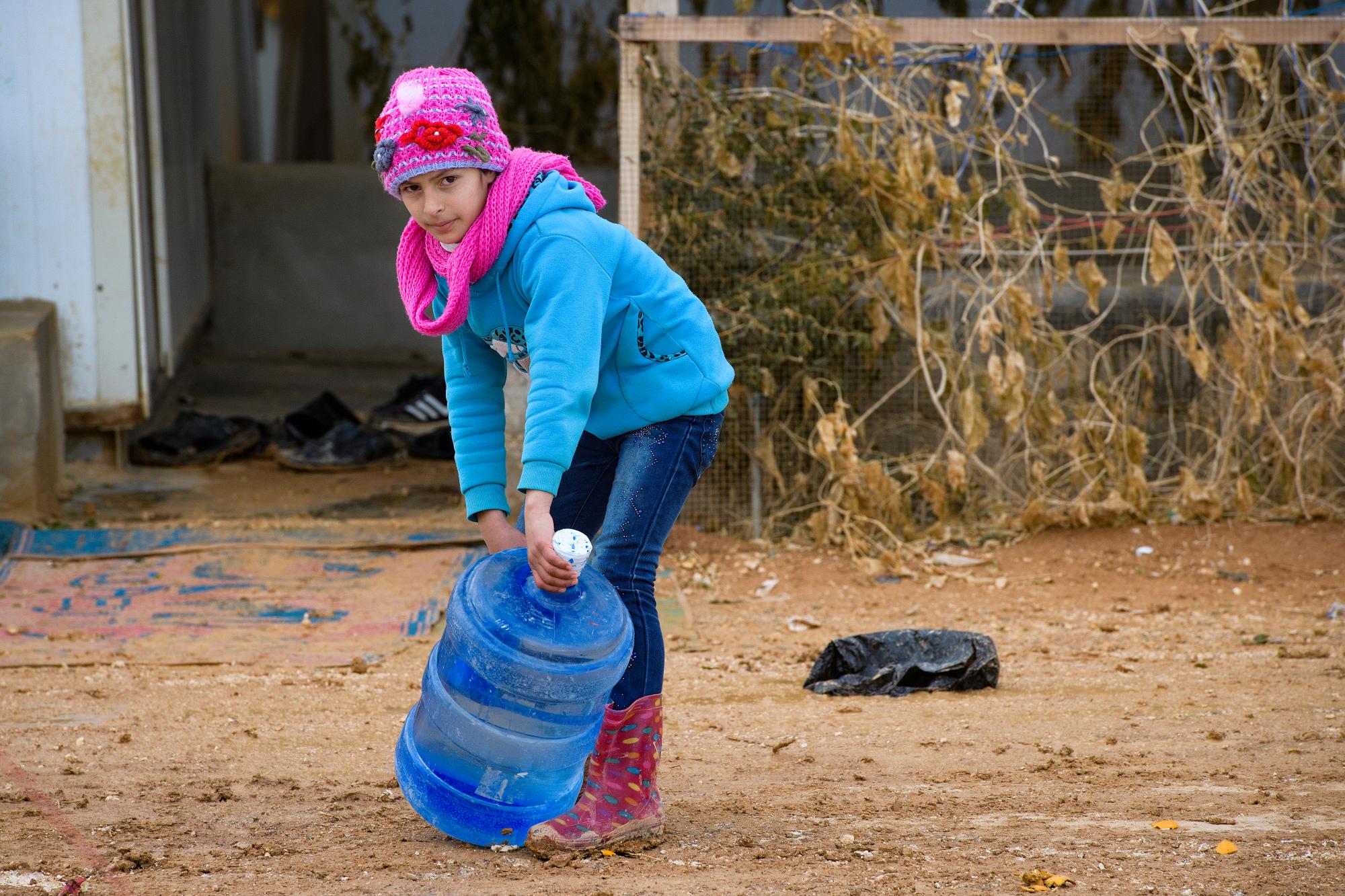
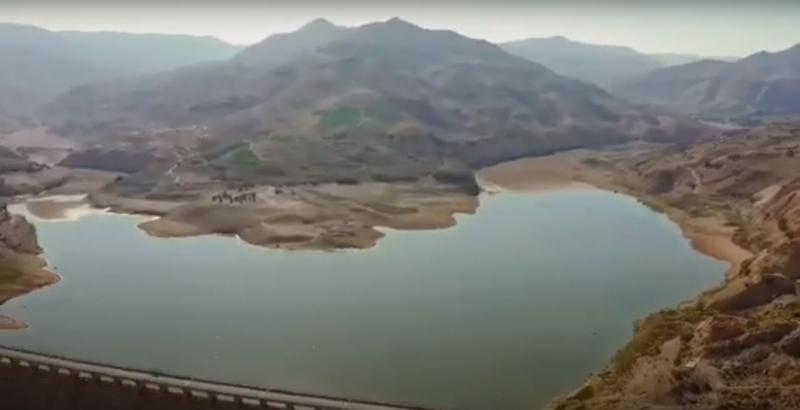
Viele Jordanierinnen und Jordanier haben keinen regelmäßigen Zugang zu Wasser und speichern Wasser deshalb in Tanks auf ihren Dächern. Das „Aqaba-Amman Water Desalination and Conveyance Project“ wird dies bis Ende 2028 ändern. Im Süden des Landes, am Golf von Akaba, wird Wasser aus dem Roten Meer entnommen, entsalzen, und 420 Kilometer nördlich in die Hauptstadt Amman und ihre Umgebung transportiert. So werden insgesamt 300 Millionen Kubikmeter dringend benötigtes Wasser geliefert, was dem Verbrauch von rund vier Millionen Menschen entspricht.
Geringe Umweltauswirkungen

Wasser zu entsalzen und durch das ganze Land zu transportieren, ist eine ökologische Herausforderung. Das Wasser wird mit begrenzter Geschwindigkeit in der Tiefe des Meeres und über eine große Fläche verteilt entnommen. Das schont die Tiere und Pflanzen unter Wasser. Die Entsalzungsanlage umfasst auch eine Kläranlage, damit keine Chemikalien ins Meer gelangen. Betrieben wird die Anlage mit Sonnenenergie. Die Fotovoltaikmodule werden aufgestellt, ohne dass Naturreservate zu Schaden kommen; auch der Flugweg der 500 Millionen Vögel, die jedes Jahr Jordanien durchqueren, wird nicht gestört.
"Als Klimabank haben wir mit der Regierung optimale Lösungen für die Stromversorgung des Projekts besprochen. Jordanien verfügt über reichlich erneuerbare Energiequellen, vor allem Sonne"
Finanzierung des Akaba-Amman-Entsalzungsprojekts

Die Europäische Investitionsbank war sehr früh schon an dem Projekt beteiligt. Jordanien plante eine neue Entsalzungsanlage und wandte sich 2019 an die Bank der EU, um eine Umwelt- und Sozialverträglichkeitsprüfung durchzuführen. Diese sollte als Grundlage für langfristige, ökologisch nachhaltige Best-Practice-Lösungen für die Wasserknappheit dienen. Die Projektkosten wurden mit rund 2,7 Milliarden Euro beziffert, die in der Bauphase voraussichtlich entstehenden Arbeitsplätze mit 4 000. Die jordanische Regierung hofft, noch vor Ende 2028 entsalztes Wasser nach Amman und Umgebung liefern zu können.
Medien zum Thema
Links
Projekte und Storys zum Thema
Energy storage: EIB Group supports EU tripartite initiative
The European Investment Bank (EIB) Group supports a new EU-level initiative to scale up energy storage as part of the clean energy transition. Announced alongside the meeting of EU energy ministers in Luxembourg, the tripartite agreement brings together public authorities, energy storage and renewables developers, and financial institutions to accelerate storage deployment, strengthen the energy system, stabilise prices and reduce reliance on fossil fuels.
EIB Global supports Trans-Caspian Transport Corridor with €150 million for road rehabilitation in Kazakhstan
The European Investment Bank (EIB) is providing a €150 million framework loan to Kazakhstan to support the rehabilitation of strategic road infrastructure along the Trans-Caspian Transport Corridor (TCTC), a key route connecting Central Asia and Europe.
Backed by the European Union under the Global Europe (NDICI) framework, the financing will support investments implemented by Kazakhstan's national road operator QazAvtoZhol. The operation will improve transport connectivity, strengthen road safety and climate resilience, and facilitate trade and economic development across the region.
The investment forms part of the European Union's Global Gateway strategy and follows the Memorandum of Understanding signed between the EIB and Kazakhstan in 2024 to strengthen sustainable transport connections between Europe and Asia.
The programme will finance the rehabilitation of approximately 1,370 kilometres of roads across central and southern Kazakhstan, including sections linking the country with neighbouring Central Asian states. By improving transport efficiency and resilience, the investment will reduce travel times, improve road conditions and facilitate the movement of goods and people along one of the region's most important transport corridors.
EIB Vice-President Marek Mora, who oversees the Bank's operations in Central Asia, including Kazakhstan, said:
"Good roads do more than connect places on a map. They connect people, they let businesses reach new markets, make travel safer and faster, and create opportunities for communities. By investing in key transport links across Kazakhstan, we are supporting a corridor that is becoming increasingly important for trade between Europe and Central Asia while delivering tangible benefits locally. Hard infrastructure is the backbone for trades. This is what sustainable connectivity is about: creating practical connections that support growth, resilience and cooperation."
EU Commissioner for International Partnerships, Jozef Síkela, stated:
"The Trans-Caspian Transport Corridor is playing an increasingly important role in connecting Europe and Central Asia. Through this investment, and together with our partners, we are supporting the development of safer, more resilient and more efficient transport infrastructure in Kazakhstan. This is a tangible example of Global Gateway in action, strengthening regional connectivity, supporting sustainable economic development and deepening our partnership with Kazakhstan and the wider region."
EU Ambassador to Kazakhstan Aleška Simkić commented:
"The Trans-Caspian Transport Corridor is one of the key priorities under the EU's Global Gateway strategy. Developing efficient, reliable and sustainable transport connections between Central Asia and Europe strengthens trade, enhances economic cooperation and contributes to the resilience of global supply chains. This investment demonstrates the European Union's long-term commitment to fostering connectivity, prosperity, and strong partnerships across the region."
The programme is expected to generate around 5,900 person-years of employment during implementation, creating opportunities for local communities and supporting economic activity. By strengthening one of the main transport links between Central Asia and Europe, the investment will facilitate trade, improve regional connectivity and contribute to the objectives of the EU-Kazakhstan partnership and the Global Gateway strategy.
EIB and Swedbank have secured EUR 200.75 million in financing for the developer of the Rūdninkai Military Town
The developer of part A of stage II of the Rūdninkai Military Town project, Rudina, has signed loan agreements with the European Investment Bank (EIB) and Swedbank: each institution is providing a loan of EUR 100.37 million. Rudina is indirectly managed by the INVL fund ‘INVL Defence Infrastructure Fund I’, together with the construction companies Conres and Fegda.