“We undertook an in-depth social analysis to develop criteria that reflect the context of Serbia and that seek to benefit those segments of the population who traditionally face additional barriers to accessing the labour market”
Signature(s)
Amount (.*)
€ 34,000,000
Countries
Sector(s)
Serbia
: € 34,000,000
Credit lines
: € 34,000,000
Signature date(s)
22/06/2020 : € 2,000,000
8/05/2024 : € 2,000,000
28/12/2023 : € 15,000,000
22/06/2020 : € 15,000,000
Other links
Summary sheet
Release date
25 October 2019
Status
Reference
Signed | 22/06/2020
20180329
Project name
Promoter - financial intermediary
UCBS IMPACT INCENTIVE LOAN FOR SMES & MID-CAPS
UNICREDIT BANK SRBIJA AD BEOGRAD
Proposed EIB finance (Approximate amount)
Total cost (Approximate amount)
EUR 34 million
not applicable
Location
Sector(s)
- Credit lines - Credit lines
Description
Objectives
The project consists of a loan facility with UniCredit Bank Srbija A.D. focused on supporting local businesses who commit to generate greater socio-economic impact and sustainable growth in Serbia.
The project supports SMEs and mid-caps who commit to generate positive socio-economic impact and contribute towards strengthening economic resilience and sustainable growth in Serbia. The operation aims to enhance the prospects of more resilient and inclusive growth, by creating sustainable employment opportunities and encouraging social inclusion, particularly for young people and women. An improved economic resilience of Serbia would make both the local and hosted communities less vulnerable to shocks and crises as well as address some of the potential drivers of immigration.
Environmental aspects
Procurement
Final beneficiaries will be requested to comply with applicable national and EU legislation, as appropriate.
Final beneficiaries will be requested to comply with applicable national and EU legislation, as appropriate.
Under ELM Guarantee
This operation is covered by the ELM Guarantee.
Other links
News & Stories
Link to source
Other links
Inside the project
How and Why
Affordable financing for socially responsible companies
Why
- Credit line that supports inclusive employment of women, youth, old, disabled and displaced
- Creating new job opportunities for vulnerable people
- Equal access to jobs on the Western Balkan markets
How
- Favourable access to financing to promote company business plans, while encouraging introduction of inclusive employment strategies
- Financial incentives for companies that manage to create new opportunities especially for vulnerable groups which are enabled through a €4 million investment grant from the Economic Resilience Initiative Fund
Sectors & Countries

Stories
Employing more women construction engineers

“Since we are already fostering inclusivity practices, our motivation for applying for this loan was to further develop these efforts, while reducing costs, effectively aligning value with purpose.”
The construction sector is particularly challenging for female workers due to long working hours and physically demanding conditions. With over 150 employees, the Belgrade company RAS Inžinjering is looking to address these issues with its inclusivity practices.
In the past, the company has traditionally employed women in its administration, bookkeeping, and financial departments, as well as for warehouse and human resources operations. They primarily held office positions.
However, over the last five years ago, the company began hiring female construction engineers and introduced a balanced ratio of men and women, when bringing on new engineers.
The construction sector is also unique for its highly flexible payment-due dates, often extending up to four months. Additionally, the prices of construction materials can fluctuate significantly in the market, impacting the cost of projects that may take two to three years to complete. Without access to bank credit lines or sufficient internal resources, a company may struggle to complete a project.

“Our Impact Finance Facility rewards small and medium-sized enterprises for their support to economically disadvantaged segments of the population.”
Fostering inclusivity in the poultry sector
When it comes to agriculture, social responsibility practices are gradually being implemented to ensure the competitiveness of Serbian products in the other markets. Although the country has yet to align its poultry sector regulations with the European Union, egg-production company Animal Commerce is already adopting the necessary practices to meet EU market expectations once exports are permitted. Inclusivity in employment is also a part of these efforts.
As the company’s business premises are located in Vojvodina, a region known for its multiculturalism, the company already provides equal opportunities within its local community. However, it wanted to step up these efforts and integrate inclusivity practices into its management strategy. The impact incentive credit line, along with accompanying technical assistance, has made this possible.


“What is new as a result of this credit line is the formalization of inclusivity processes and policies within our company's framework.”
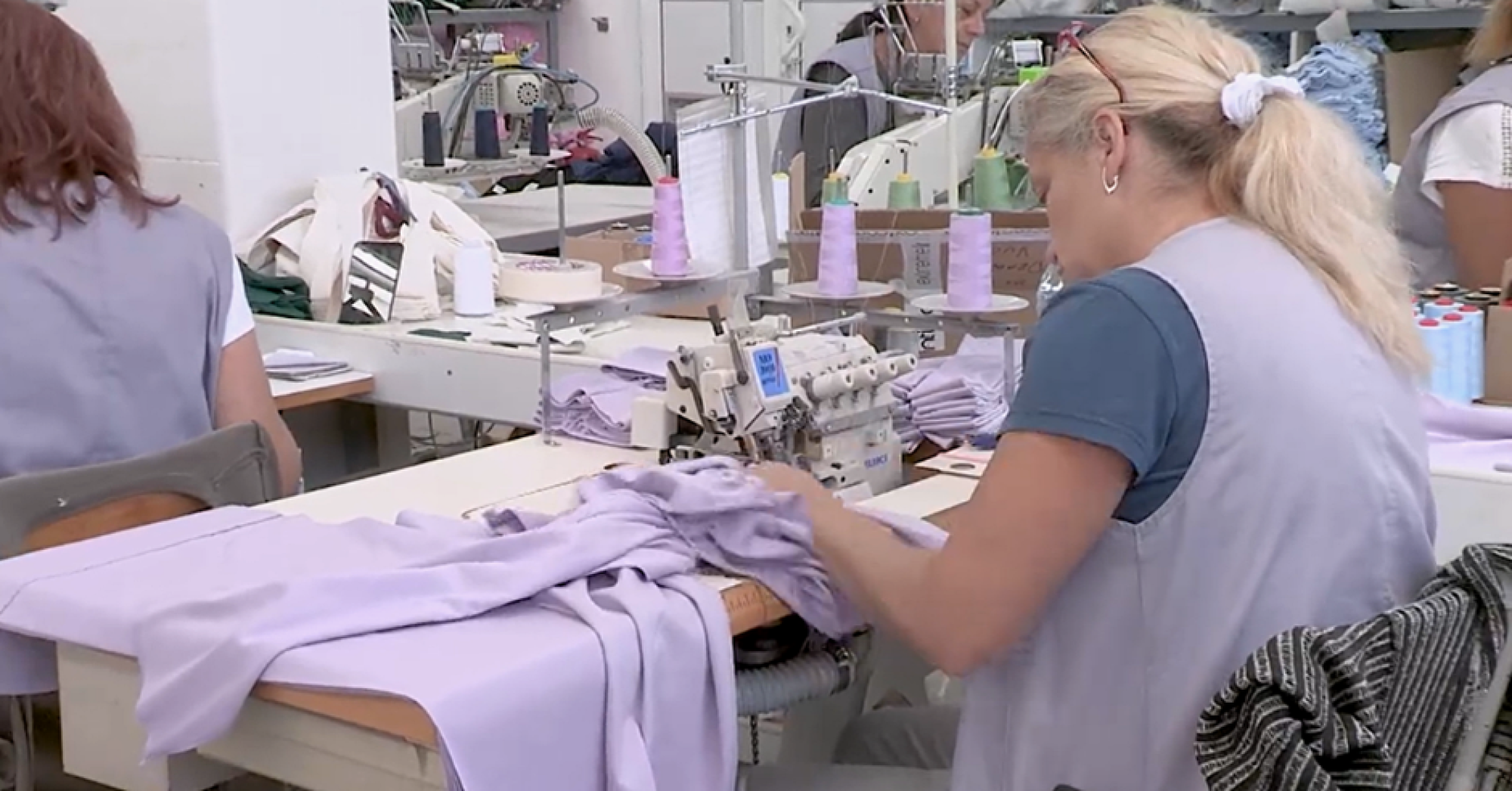
Reviving workforce interest in the struggling textile sector

“Our industry is labour-intensive, demanding significant employee involvement in both production and sales. That’s why we focus on enhancing the work environment through continuous training and education.”
Serbian textile company Jasmil, a beneficiary of this credit line, has long been committed to supporting the employment of women and people with disabilities. As a large company, it requires a wide range of roles, but attracting and retaining the workforce in the textile industry is particularly challenging due to the significant influx of imports from the Far East. Given current market conditions, the company recognizes the critical value of a skilled workforce and the need to work closely with them.
It applied for the loan to further promote the inclusion of women in all aspects of its operations and invest in working capital, committed to contribute to increasing the employment of women, especially in the municipalities where its production facilities are located, while also boosting the number of female managers.

Appointing women to managerial positions
Uspon Tehnika, a Čačak-based company, welcomed the opportunity to secure affordable financing for its business expansion, while promoting employment. Specialized in computer assembly and the distribution of technical equipment, the company nurtures a family atmosphere among its workforce, which now exceeds 100 employees.
Since securing the loan, the company has hired 25 new employees, including six women and 19 individuals under the age of 30. In addition to supporting business expansion, these new financial resources have enabled the promotion of women to leadership positions. It has also contributed to an increase in employment and the inclusion of individuals from marginalized groups.

“The credit line has given us the added momentum to invest in our employees through various trainings and programmes. ”
Related media
EIB Global’s impact finance operation with Intesa Sanpaolo Banka BiH receives the Impact-linked Deal of the Year 2022 award from Uxolo
Together with Intesa Sanpaolo Banka BiH, EIB Global received today a prestigious Uxolo Award for an innovative credit line for small and medium-sized enterprises (SMEs) with long-term social impact. The awards ceremony took place during the Uxolo and TXF Global 2023 Development and Impact Finance Conference in Lisbon. The jury selected the winners among the applications submitted in 2022 from around the world, on the merit of innovation, impact and pioneering solutions in the emerging markets.
Serbia: EIB provides €30 million to UniCredit Bank Serbia to improve social impact of SMEs
The European Investment Bank (EIB) and UniCredit Bank Srbija A.D. (UCBS) have signed the first €15 million tranche of an innovative €30 million impact finance loan to help Serbian small, medium and mid-cap companies to improve the social impact of their businesses in areas such as gender equality, youth employment and social inclusion.
Serbia: The EIB and UniCredit promote socially inclusive employment and entrepreneurship
The European Investment Bank (EIB) and UniCredit Bank Serbia (UniCredit) have officially launched a €30 million credit line aimed at supporting the employment, professional training and long-term retention of people from vulnerable social groups. These funds will enable UniCredit to on-lend to Serbian companies that are committed to improving the social impact of their businesses and creating long-term employment and entrepreneurship opportunities for women, young people and segments of the population that face higher entry barriers to the labour market. Representatives of the Government of the Republic of Serbia and the EU Delegation to Serbia attended the launch ceremony, expressing support for this kind of socially-oriented financial instruments.
Links
Related projects and stories
Spain in the EU: Four decades of transformation
From high-speed rail to space, here’s how four decades of EU membership helped Spain anchor its democracy, modernise its economy, and become an innovation hub.
Energy storage: EIB Group supports EU tripartite initiative
The European Investment Bank (EIB) Group supports a new EU-level initiative to scale up energy storage as part of the clean energy transition. Announced alongside the meeting of EU energy ministers in Luxembourg, the tripartite agreement brings together public authorities, energy storage and renewables developers, and financial institutions to accelerate storage deployment, strengthen the energy system, stabilise prices and reduce reliance on fossil fuels.
EIB Global supports Trans-Caspian Transport Corridor with €150 million for road rehabilitation in Kazakhstan
The European Investment Bank (EIB) is providing a €150 million framework loan to Kazakhstan to support the rehabilitation of strategic road infrastructure along the Trans-Caspian Transport Corridor (TCTC), a key route connecting Central Asia and Europe.
Backed by the European Union under the Global Europe (NDICI) framework, the financing will support investments implemented by Kazakhstan's national road operator QazAvtoZhol. The operation will improve transport connectivity, strengthen road safety and climate resilience, and facilitate trade and economic development across the region.
The investment forms part of the European Union's Global Gateway strategy and follows the Memorandum of Understanding signed between the EIB and Kazakhstan in 2024 to strengthen sustainable transport connections between Europe and Asia.
The programme will finance the rehabilitation of approximately 1,370 kilometres of roads across central and southern Kazakhstan, including sections linking the country with neighbouring Central Asian states. By improving transport efficiency and resilience, the investment will reduce travel times, improve road conditions and facilitate the movement of goods and people along one of the region's most important transport corridors.
EIB Vice-President Marek Mora, who oversees the Bank's operations in Central Asia, including Kazakhstan, said:
"Good roads do more than connect places on a map. They connect people, they let businesses reach new markets, make travel safer and faster, and create opportunities for communities. By investing in key transport links across Kazakhstan, we are supporting a corridor that is becoming increasingly important for trade between Europe and Central Asia while delivering tangible benefits locally. Hard infrastructure is the backbone for trades. This is what sustainable connectivity is about: creating practical connections that support growth, resilience and cooperation."
EU Commissioner for International Partnerships, Jozef Síkela, stated:
"The Trans-Caspian Transport Corridor is playing an increasingly important role in connecting Europe and Central Asia. Through this investment, and together with our partners, we are supporting the development of safer, more resilient and more efficient transport infrastructure in Kazakhstan. This is a tangible example of Global Gateway in action, strengthening regional connectivity, supporting sustainable economic development and deepening our partnership with Kazakhstan and the wider region."
EU Ambassador to Kazakhstan Aleška Simkić commented:
"The Trans-Caspian Transport Corridor is one of the key priorities under the EU's Global Gateway strategy. Developing efficient, reliable and sustainable transport connections between Central Asia and Europe strengthens trade, enhances economic cooperation and contributes to the resilience of global supply chains. This investment demonstrates the European Union's long-term commitment to fostering connectivity, prosperity, and strong partnerships across the region."
The programme is expected to generate around 5,900 person-years of employment during implementation, creating opportunities for local communities and supporting economic activity. By strengthening one of the main transport links between Central Asia and Europe, the investment will facilitate trade, improve regional connectivity and contribute to the objectives of the EU-Kazakhstan partnership and the Global Gateway strategy.