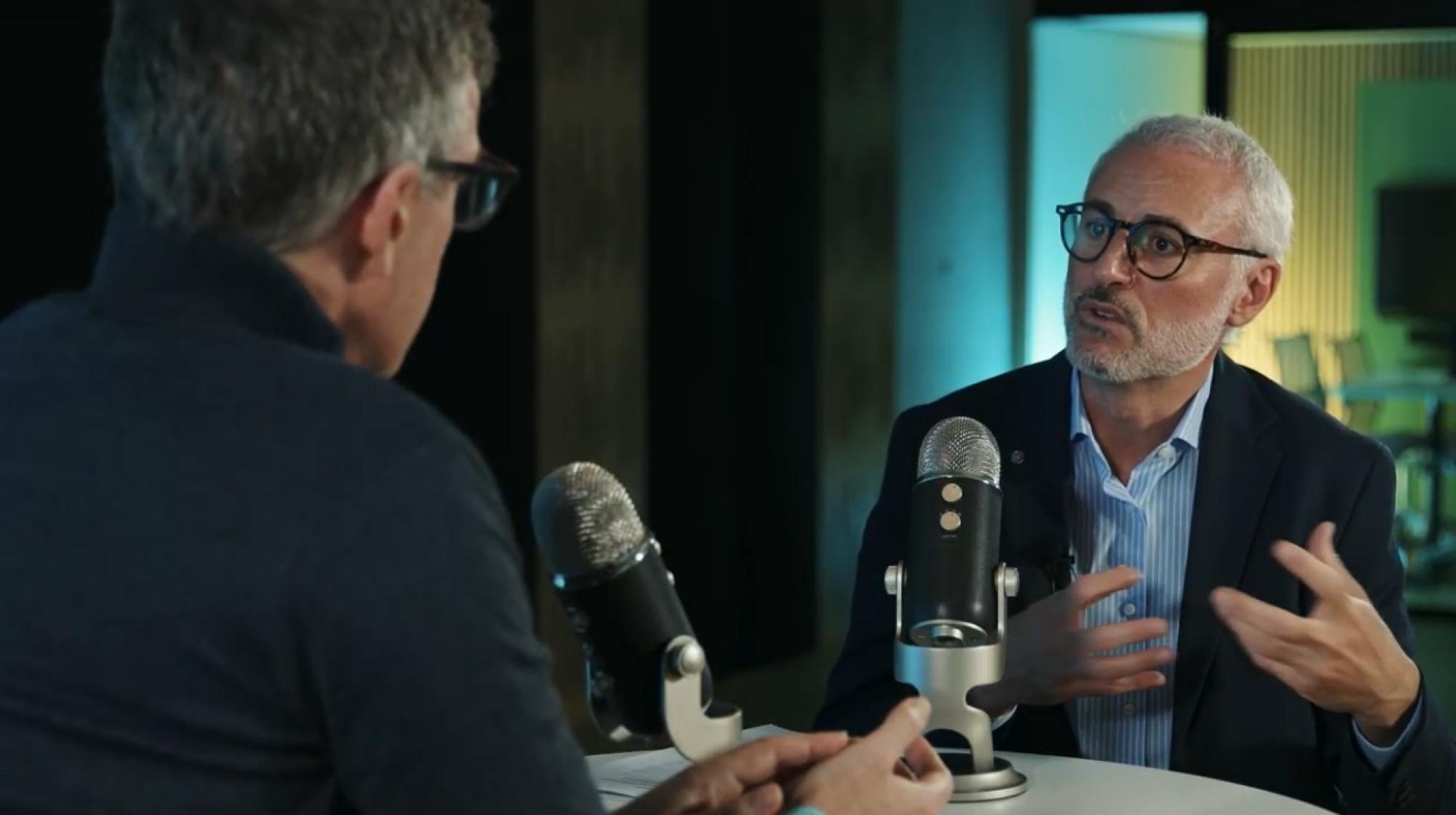
“We have to combine affordability with sustainability. Innovation is the way to combine these two objectives so that we have construction that is affordable and sustainable for all.”

Invested by Europe explores the forces shaping the European economy. In each episode, we hear from experts tackling the most pressing challenges—from housing and energy to innovation and infrastructure, security and defence. We look at what’s changing, what the solutions are, and how Europe is investing in its future.

What this episode is about
In this episode of Invested by Europe, we look at how innovation in construction materials, digital tools and industrialised processes could transform one of Europe’s most essential industries.
The conversation explores why construction has changed so little over recent decades, and how digitalisation, new materials and smarter design are beginning to unlock a more efficient, sustainable and attractive sector. From digital twins and artificial intelligence to factory‑built components and circular thinking, the episode shows how innovation can help construction meet two urgent and often competing goals: affordability and sustainability. As Europe faces housing shortages, labour constraints and climate pressures, rethinking how we build has become an economic and social necessity.

The conversation in brief
The episode begins with a clear diagnosis: construction productivity has stagnated for decades, while methods remain largely unchanged, heavily reliant on concrete and characterised by low reuse of materials. Overcoming this inertia requires innovation — not incremental change, but a shift in how buildings are designed, produced and managed across their entire life cycle.
A key focus is digitalisation, particularly Building Information Modelling (BIM). By creating a digital twin of a building, BIM integrates design, scheduling and cost data, improving accuracy and transparency from the earliest stages of a project. While already common in design, its wider use during construction, operation and maintenance — supported by sensors and real‑time data — promises long‑term efficiency gains and better asset management. For architects and engineers, these tools initially require more effort, but they also transform collaboration, bringing together architecture, engineering, energy systems and construction teams around a shared digital model.
The discussion then turns to industrialised construction: moving work from building sites to controlled factory environments where components are produced with greater precision, less waste and improved working conditions. Factory‑based, robotic production lowers costs through standardisation, and also makes construction jobs safer, more attractive and potentially more inclusive — helping address labour shortages, a gender imbalance, and an ageing workforce.
Innovation also opens creative possibilities. Artificial intelligence and generative design can expand architectural creativity, while smart building systems optimise energy use and adapt to weather conditions. Looking ahead, the episode argues for a life‑cycle approach to buildings — considering not just construction, but operation, adaptability and end‑of‑life reuse of materials. Ultimately, innovation is presented as the bridge between affordability and sustainability in Europe’s built environment.
Key takeaways
- Digital tools like BIM, AI and digital twins can dramatically improve productivity, collaboration and cost control across the construction value chain.
- Industrialised, factory‑based construction reduces waste, lowers costs and makes construction jobs safer and more attractive, helping address labour shortages.
- By combining innovation with circular, life‑cycle thinking, Europe can deliver buildings that are both affordable and sustainable — a necessity for meeting housing and climate goals.
About the guest
Fabrizio Seminara
A senior urban development specialist at the European Investment Bank in Luxembourg. He holds an MBA, a master’s degree in construction engineering, and a bachelor’s in architecture and urban planning. Fabrizio began his career at the European Parliament in Strasbourg, before moving to Paris to work with AS Architecture-Studio as an architect and urban planner. In 2010 he joined the European Investment Bank, overseeing construction of the Bank’s new headquarters building.
Listen and subscribe to Invested by Europe
You can watch or listen to Invested by Europe on:
- The full series on our website
- Apple Podcasts
- Spotify
- Deezer
- — or find us on your favourite podcast platform.
New episodes are released weekly.
Explore more
More homes. Better homes
EU’s commitment to renovating for energy efficiency, building affordable housing, and innovating the construction sector