It is rare to come across a project with such direct and tangible results on the ground.
Other links
Summary sheet
Release date
27 October 2023
Status
Reference
Signed | 19/07/2023
20220630
Project name
Promoter - financial intermediary
CROWDFARMING (IEU G)
CROWDFARMING SL
Proposed EIB finance (Approximate amount)
Total cost (Approximate amount)
EUR 15 million
EUR 38 million
Description
Objectives
CrowdFarming is a one-stop-shop platform for farmers seeking to sell directly to end-consumers without intermediaries. The investment programme addresses, among other activities, the further developments and enhancements of the digital marketplace, the integration of a broad and diversified range of payment methods to make user experience as frictionless as possible, the development of tools that foster order recurrence and promote transparency and sustainable agricultural practices, and the development of additional automation capabilities in logistics.
The project will finance mostly investments in research, development and innovation (RDI) activities, as well as the commercial growth of the company.
Additionality and Impact
The proposed operation is aligned with InvestEU objectives regarding the development, deployment and scaling-up of digital technologies and services and addresses the European Green Deal Innovations Main Policy Priority Area under the InvestEU Research, Innovation and Digitalisation Window (RIDW).
The project also supports the EIB's objective of innovation and digitalisation, as it supports the development and market introduction of specialized B2B2C digital products to allow farmers to sell their products directly to end-consumers, including logistics, marketing, customer-support, and an online marketplace.
The EIB financing addresses a financing market gap thanks to a combination of unique features such as a 3-year availability period associated with a long-term maturity date and a bullet repayment. This would enable the Borrower to focus on growing its business by deploying its technological and commercial roadmap.
The project will lead to the development and deployment of innovative product and process technologies with substantial environmental and social benefits, and it is aligned with the European Commission in its Farm to Fork strategy promoting organic food and enabling direct commercialization from farmers at a competitive price.
The project would not have been carried out (to the same extent) by the EIB without the InvestEU support.
Environmental aspects
Procurement
The related activities will be performed in existing buildings with no relevant environmental impacts expected. The project does not fall under the environmental impact assessment (EIA) Directive 2014/52/EU (amending EIA Directive 2011/92/EU) therefore no EIA is required.
The promoter has been assessed by the EIB as being a private company not operating in the utilities sector and not having a status of a contracting entity, and is thus not subject to EU rules on public procurement.
Milestone
Under appraisal
Approved
Signed
14 June 2023
19 July 2023
Related documents
Related projects
Documents
Environmental and Social Data Sheet (ESDS) - CROWDFARMING (IEU G)
Publication Date
31 Oct 2023
Document language
Main Topic
Lending
Document Number
168723514
Document Focus
Environmental Information
Document Type
Project Number
20220630
Sector(s)
Regions
Countries
Publicly available
Download now
Link to source
Other links
News & Stories
Link to source
Other links
Inside the project
How and Why
A win-win for farmers and consumers
Why
- Better for the farmers, who receive a fairer price
- Better for the consumers, who receive fresher food
- Better for the environment because it reduces transport and storage time and cuts food waste and unnecessary packaging
- Supports small-scale farmers, contributing to rural regions and strengthening local communities
How
- Directly links consumers and farmers, allowing consumers to know exactly where the food is grown and how
- CrowdFarming platform is helping to digitalise Europe’s agricultural sector and give producers more information on clients and demand
- Consumers can strengthen their relationship with farmers by adopting a tree or plot
Sectors & Countries

Story
Tasty and good for the planet
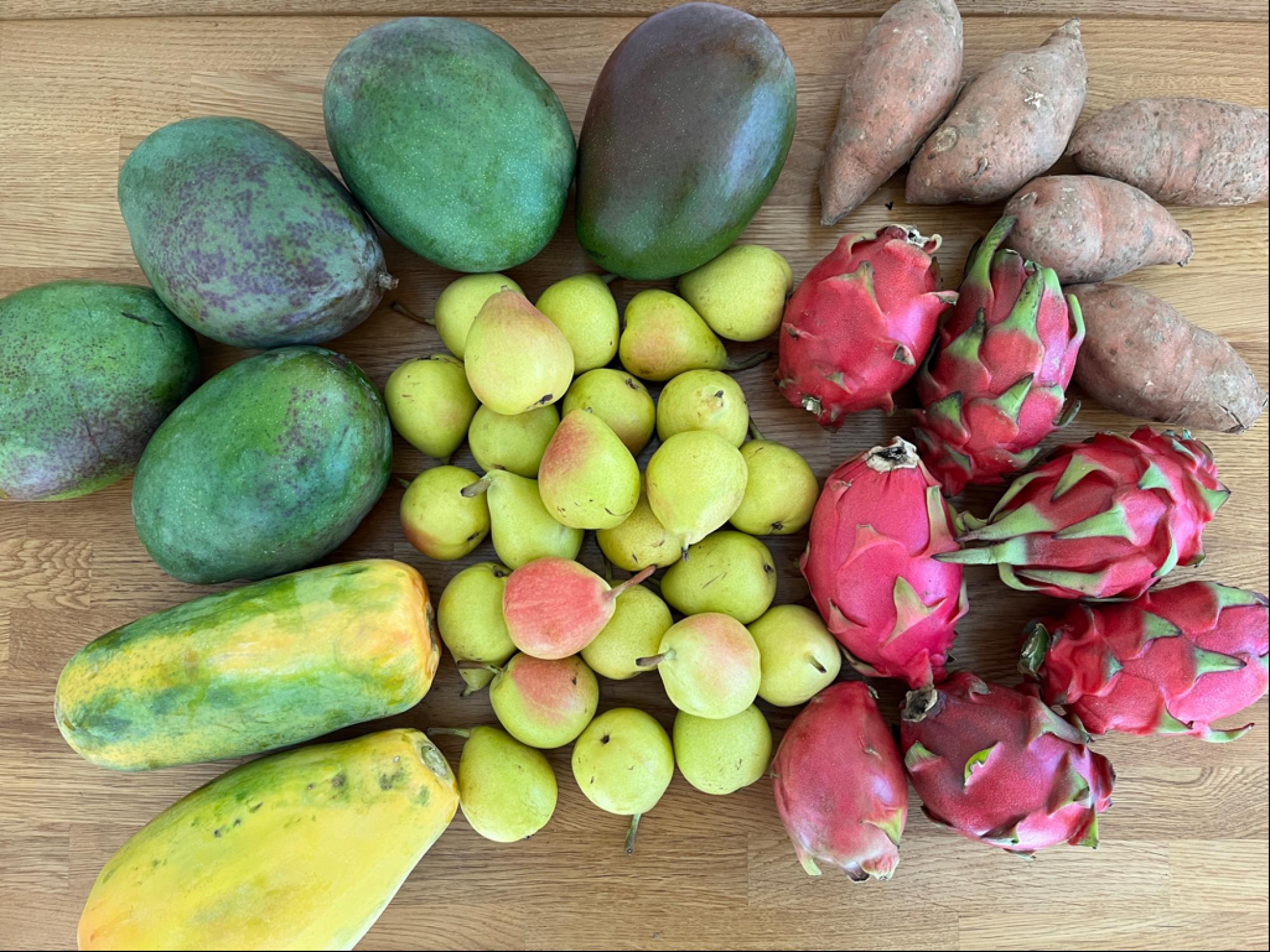
CrowdFarming represents 300 farmers from 15 countries, mainly in Europe. Customers have the option of ordering boxes of fruits and vegetables or products like honey and cheese. They can even adopt a tree, a plot of land or an animal and receive the harvest or other food.
Consumers buy products directly from farmers, which shortens the time between production and purchase and reduces food waste. Unlike some supermarkets, CrowdFarming does not store fruits and vegetables for weeks or spray it with antifungal chemicals to avoid spoilage. The efficient model benefits farmers and consumers.
The EIB has provided €15 million in venture debt to support CrowdFarming. This financing, backed by the InvestEU program, will enable the platform to scale reach more consumers and work directly with more farmers.

We are deeply committed to the concept of ‘farm to table.’
Related media
Beets to beat disease
French firm taps 200 years of experience in plant breeding to develop varieties that resist climate change and require less pesticide and fertilizer
A stay of chick execution
Dutch company offers hatcheries a quick, low-cost way to know a chick’s sex before it hatches. That could prevent the culling of 6.5 billion male chicks each year.
Good bacteria and stretchy mozzarella
The European Investment Bank is backing companies that look for alternatives to keep crops pest-free without conventional pesticides—and developing some unusual products, too.
A sustainable and social supermarket
How a mother of three financed her sustainable supermarkets in the Netherlands with Impact Finance and made a difference in her community
Links
Related projects and stories
Energy storage: EIB Group supports EU tripartite initiative
The European Investment Bank (EIB) Group supports a new EU-level initiative to scale up energy storage as part of the clean energy transition. Announced alongside the meeting of EU energy ministers in Luxembourg, the tripartite agreement brings together public authorities, energy storage and renewables developers, and financial institutions to accelerate storage deployment, strengthen the energy system, stabilise prices and reduce reliance on fossil fuels.
EIB Global supports Trans-Caspian Transport Corridor with €150 million for road rehabilitation in Kazakhstan
The European Investment Bank (EIB) is providing a €150 million framework loan to Kazakhstan to support the rehabilitation of strategic road infrastructure along the Trans-Caspian Transport Corridor (TCTC), a key route connecting Central Asia and Europe.
Backed by the European Union under the Global Europe (NDICI) framework, the financing will support investments implemented by Kazakhstan's national road operator QazAvtoZhol. The operation will improve transport connectivity, strengthen road safety and climate resilience, and facilitate trade and economic development across the region.
The investment forms part of the European Union's Global Gateway strategy and follows the Memorandum of Understanding signed between the EIB and Kazakhstan in 2024 to strengthen sustainable transport connections between Europe and Asia.
The programme will finance the rehabilitation of approximately 1,370 kilometres of roads across central and southern Kazakhstan, including sections linking the country with neighbouring Central Asian states. By improving transport efficiency and resilience, the investment will reduce travel times, improve road conditions and facilitate the movement of goods and people along one of the region's most important transport corridors.
EIB Vice-President Marek Mora, who oversees the Bank's operations in Central Asia, including Kazakhstan, said:
"Good roads do more than connect places on a map. They connect people, they let businesses reach new markets, make travel safer and faster, and create opportunities for communities. By investing in key transport links across Kazakhstan, we are supporting a corridor that is becoming increasingly important for trade between Europe and Central Asia while delivering tangible benefits locally. Hard infrastructure is the backbone for trades. This is what sustainable connectivity is about: creating practical connections that support growth, resilience and cooperation."
EU Commissioner for International Partnerships, Jozef Síkela, stated:
"The Trans-Caspian Transport Corridor is playing an increasingly important role in connecting Europe and Central Asia. Through this investment, and together with our partners, we are supporting the development of safer, more resilient and more efficient transport infrastructure in Kazakhstan. This is a tangible example of Global Gateway in action, strengthening regional connectivity, supporting sustainable economic development and deepening our partnership with Kazakhstan and the wider region."
EU Ambassador to Kazakhstan Aleška Simkić commented:
"The Trans-Caspian Transport Corridor is one of the key priorities under the EU's Global Gateway strategy. Developing efficient, reliable and sustainable transport connections between Central Asia and Europe strengthens trade, enhances economic cooperation and contributes to the resilience of global supply chains. This investment demonstrates the European Union's long-term commitment to fostering connectivity, prosperity, and strong partnerships across the region."
The programme is expected to generate around 5,900 person-years of employment during implementation, creating opportunities for local communities and supporting economic activity. By strengthening one of the main transport links between Central Asia and Europe, the investment will facilitate trade, improve regional connectivity and contribute to the objectives of the EU-Kazakhstan partnership and the Global Gateway strategy.
EIB and Swedbank have secured EUR 200.75 million in financing for the developer of the Rūdninkai Military Town
The developer of part A of stage II of the Rūdninkai Military Town project, Rudina, has signed loan agreements with the European Investment Bank (EIB) and Swedbank: each institution is providing a loan of EUR 100.37 million. Rudina is indirectly managed by the INVL fund ‘INVL Defence Infrastructure Fund I’, together with the construction companies Conres and Fegda.