
An investment in childcare is also an investment in gender equality because it relieves women from child-care duties and prevents them from taking time away from paid work.
By Nihan Koseleci, Angel Diez Fraile and Jean-Luc Revéreault
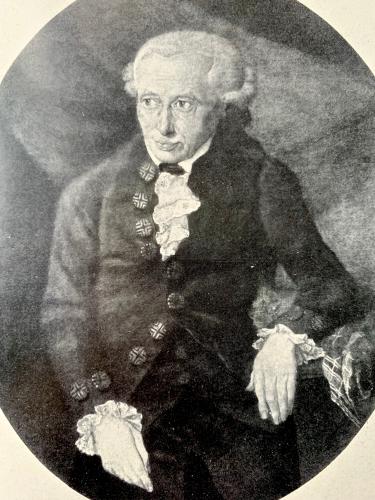
For the German philosopher Immanuel Kant we become humans only through education. We are, Kant tells us, defined by what we have achieved in education. Thus, education is essential, just like air and food.
After all, we begin our education from the moment we are born, just as we breathe and eat. Education gives us the tools – economic, social, technological and ethical – to improve our lives. It brings hope to the world’s poorest families, empowering women and driving economic growth.
Unfortunately, more than 120 million children do not complete primary education across the world. Half the children in Africa miss out on school. Many of these children are the hardest to reach, as they live in countries that are held back by conflict and disasters. It is vital to act quickly to bring them into education.
Here’s how the European Investment Bank is working globally to help. Together with the European Commission and other partners, we invest where the education needs are greatest, accompanying pupils from preschool to university.
Development begins with education
The word education derives from the latin educare, meaning 'to lead out ’, ‘to bring out’. Every child has innate powers, which should be properly nurtered and given scope to develop.
The life and the future of a child is marked by brain development in the early years. Learning and stimulation in childhood is a key building block to help young children reach their full potential.
Likewise, education starts at home. But, for many children home is an unpleasant and unsafe place to be. For them, kindergartens are a much-needed shelter. Kindergartens help children to mature in general. High quality pre-school and childcare are essential to help close the gap between children of different socio-economic backgrounds.
Investing in the early years is one of the smartest things we can do to eradicate poverty, boost economic growth and achieve better gender equality. In fact, mothers are more likely than fathers to take time away from paid work to care for a child, which can exacerbate a mother’s lifetime earnings gap. Therefore, an investment in childcare is also an investment on gender equality.

In Montenegro, the European Investment Bank is backing the renovation and construction of kindergartens, primary and secondary schools in the capital Podgorica and in nine municipalities across the country. By 2030, over 8 000 pupils will learn in better conditions and more than 2 000 will be accommodated in new schools across the country.
The European Investment Bank loan complements assistance by the European Union through the joint EU-Montenegro Programme for Employment, Education and Social Welfare. The project also benefits from an Economic Resilience Initiative €2.7 million grant, part of the European Union’s plan to help its Southern Neighbourhood and the Western Balkans.

A learning crisis
Being in school does not always mean learning. Hundreds of millions of pupils in school reach young adulthood without even the most basic skills, such as reading, writing or doing basic sums. However, not all children are affected in the same way by this “learning crisis” – the poorest children are the hardest hit.
During 2020 Covid-19 lockdowns, 90% of the world’s school-age children spent more than 20 weeks in a row away from school. This made the learning crisis even worse:
- given that time spent in education appears to shape adult IQ, the lockdowns may result in lifelong effects on pupils’ cognitive and social skills
- part from the missed opportunities in learning, many children and students are forgetting what they already know. This regression will be much harder to remedy and, again, may disproportionately affect the children who have fewer opportunities to learn and practice their second language outside of the home.
Read more about the Covid-19 effects on schooling attainment and learning.
Investing in good teachers
When Serbia went into lockdown in March, the Ministry of Education, Science and Technological Development began broadcasting educational content for elementary and high school students on Serbia’s national public television channels.
Luckily, Serbia had already been preparing its digital education content for the last few years developing interactive online teaching materials and textbooks. However, the digital infrastructure and teaching materials needed a revamp and an update.
Just dumping computers in schools would not help. Increasing resources, including computer-assisted learning, and training teachers to use them clearly came out as the most successful approach. Therefore, the project entailed some nationwide teacher trainings to equip teachers with some digital skills.
Students need good teachers to learn properly. At the European Investment Bank, we believe that good teachers and effective teaching are critical in serving the needs of learners. Our €70 million loan to Serbia backs teacher training, as well as the upgrade of digital infrastructure and digital teaching materials.
With the help of the EU bank, all Serbian schools will go digital by 2021. Ensuring equal access to education for all Serbian children is also an incentive to build their future and prosper in their country.
This project is part of the European Investment Bank’s ongoing support for education in Serbia. In the recent past, the European Investment Bank financed a school modernisation programme and a public sector research and development project.
How to educate the heart
Every year across the world 246 million children experience some kind of violence, such as bullying, discrimination and physical abuse. Education equips learners, of all ages, and notably young women and men, with the knowledge, values, attitudes and behaviours, which foster responsible global citizenship, critical thinking, empathy and the ability to take action against violence.
Education also means nurturing empathy, compassion, altruism and kindness. But how do we educate the heart ? Tunisia has some good solutions.
In 2017, the country set up a pilot Positive Behaviour Support programme to improve the educational climate in 80 secondary schools. This programme received € 1.5 million from the EU-backed Neighbourhood Investment Facility (and was part of a previous €70 million European Investment Bank loan to Tunisia’s Ministry of Education to renovate and build new schools across the country).
Supported by the European Investment Bank Institute, another educational programme organises after-school music clubs led by students in high schools all over the country, in particular in less developed and underprivileged areas. Tunisia88 has reached out to over 20 000 students.
During the COVID-19 lockdown, high-school students in the Tunisia88 programme continued to play music together, sharing it online.

When the Tunisian government decided to reopen schools for the end of year exams, masks and hand-sanitizers were needed quickly. We re-routed part of the loan to modernise Tunisian schools for COVID-19 measures. This helped 220 000 pupils and 160 000 teachers stay healthy and safe.
In less privileged urban areas, we are supporting the construction of new public secondary schools with state-of-the-art pedagogical equipment and transport. Safety and positive school climate are our top priority. We are also trying to narrow the gap between education needs and tight public resources.
We decided to re-route part of the loan to modernise Tunisian schools for COVID measures. This helped 220 000 pupils and 160 000 teachers stay healthy and safe.
The project is also covered by grants and technical assistance funded by the EU-backed Neighbourhood Investment Platform to implement further pedagogical activities (school-wide positive behaviour support programmes).

Nihan Koseleci is an education economist at the European Investment Bank. Angel Diez Fraile is a loan officer in the EU bank’s Latin America and Caribbean division. Jean-Luc Revéreault heads the European Investment Bank’s Tunis office.