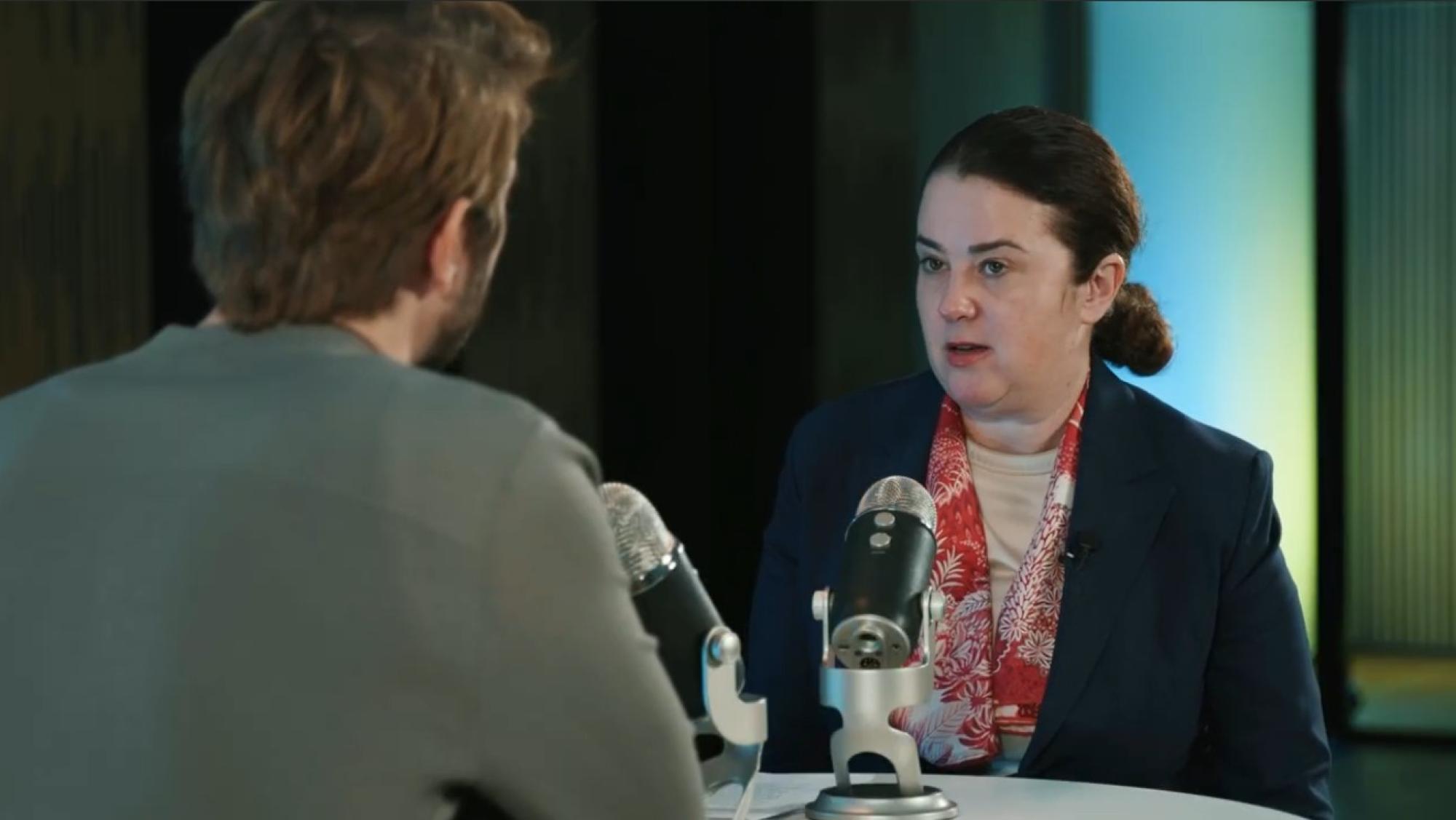
« L’investissement social est au cœur de la réussite économique de l’Europe. »

La série Invested by Europe explore les forces à l’œuvre dans l’économie européenne. Dans chaque épisode, nous donnons la parole à des spécialistes qui abordent les défis les plus urgents, qu’il s’agisse du logement et de l’énergie, de l’innovation et des infrastructures, ou encore de la sécurité et de la défense. Nous examinons ce qui change, quelles sont les solutions et comment l’Europe investit dans son avenir.

Quel est le thème de cet épisode ?
L’investissement social façonne le tissu de la vie quotidienne en Europe, depuis les écoles fréquentées par les enfants et les logements dans lesquels nous vivons, jusqu’à l’accès aux soins de santé, aux services de garde d’enfants et à l’apprentissage tout au long de la vie. Dans cet épisode du podcast Invested by Europe, nous examinons pourquoi investir dans les infrastructures sociales n’est pas seulement un impératif social, mais aussi l’une des bases de la réussite économique à long terme de l’Europe.

Résumé de l’épisode
L’investissement social couvre les services et les infrastructures dont nous dépendons tout au long de notre vie – éducation, santé, garde d’enfants, logement et formation – et joue un rôle central dans le modèle économique et social européen. Emily Sinnott explique comment ces investissements agissent à la fois comme une assurance face aux aléas de la vie et comme des leviers, permettant aux personnes de participer plus pleinement au marché du travail et de contribuer à la société.
La discussion met en lumière les enjeux économiques. Selon l’analyse de la BEI, augmenter la participation des femmes et des groupes défavorisés au marché du travail pourrait accroître le PIB de l’UE d’environ 4 %, tout en contribuant à compenser l’impact du vieillissement de la population. Pourtant, des lacunes subsistent. L’Europe manque d’environ 750 000 places d’accueil de la petite enfance, tandis que l’accès au logement est devenu l’une des préoccupations les plus pressantes pour la population. Actuellement, les niveaux de construction restent inférieurs aux pics d’avant la crise financière. Pour répondre à la demande, il faudra innover pour accroître la productivité, investir dans des logements économes en énergie et renforcer considérablement l’offre de logements abordables. L’Europe a besoin de plus de deux millions de logements supplémentaires.
Les pénuries de compétences et de main-d’œuvre constituent un autre défi grandissant, 77 % des entreprises de l’UE déclarant avoir des difficultés à trouver une main-d’œuvre qualifiée. S’il est vrai que des vies professionnelles plus longues et en meilleure santé ouvrent des perspectives, la discussion souligne aussi l’importance de la formation et du développement des compétences, en particulier à l’heure où les outils numériques et l’IA transforment les lieux de travail. L’éducation préscolaire est essentielle, les résultats atteints en matière d’apprentissage jusqu’à l’âge de 18 ans influençant fortement la participation à la formation plus tard dans la vie.
Malgré les pressions budgétaires croissantes, l’épisode soutient que l’investissement social reste essentiel. L’innovation, y compris l’utilisation intelligente de l’IA, peut contribuer à fournir des services plus efficacement. Avec environ 10 milliards d’euros d’investissements par an, la BEI renforce son appui dans tous les secteurs sociaux. Elle intervient notamment dans le logement abordable et durable, consolidant ainsi les fondations de l’avenir économique et social de l’Europe.
Principaux points à retenir
- Il permet à davantage de personnes de participer et de contribuer à l’économie européenne.
- Combler les lacunes en matière de garde d’enfants, de logement et de compétences pourrait considérablement stimuler la productivité et le PIB, tout en aidant l’Europe à s’adapter à l’évolution démographique.
- En investissant à grande échelle dans les infrastructures sociales et l’innovation, la BEI renforce durablement les fondations du modèle social européen.
À propos de l’invitée
Emily Sinnott
Cheffe de la division Politique et stratégie, au sein du département Analyses économiques de la Banque européenne d’investissement.
Écoutez et abonnez-vous à Invested by Europe
Vous pouvez regarder ou écouter Invested by Europe sur :
- notre site web, où l’intégralité de la série est disponible
- Apple Podcasts
- Spotify
- Deezer
- — ou nous retrouver sur votre plateforme de podcasts préférée.
Découvrez chaque semaine de nouveaux épisodes de notre podcast.
Pour en savoir plus
Pouvoir se loger plus près de son lieu de travail à Prague
De nouveaux logements abordables offrent à des travailleurs essentiels des loyers stables, des trajets plus courts et une plus grande proximité avec leur travail.
Des logements plus nombreux et de meilleure qualité
L’UE s’engage en faveur de la rénovation énergétique, de la construction de logements abordables et de l’innovation dans le secteur de la construction
Bridging opportunity gaps: EIB Group investments in education, health and housing
This study shows how targeted investment in schools, healthcare and affordable and sustainable housing drives inclusion, resilience and long-term growth across the European Union.