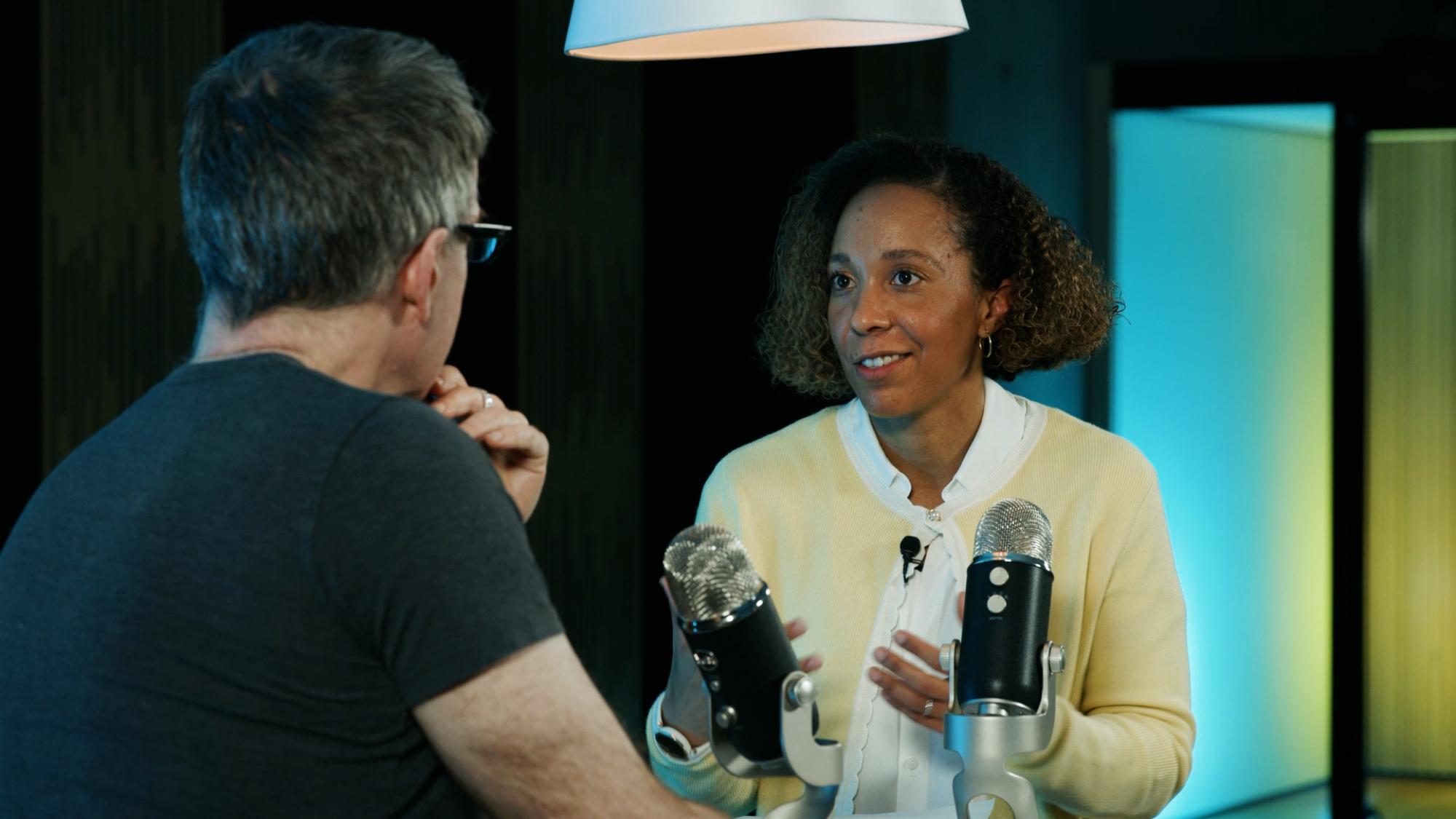
“The emphasis here is on diversification. We don't want to be dependent.”

Invested by Europe explores the forces shaping the European economy. In each episode, we hear from experts tackling the most pressing challenges—from housing and energy to innovation and infrastructure, security and defence. We look at what’s changing, what the solutions are, and how Europe is investing in its future.

What this episode is about
Critical raw materials are essential to modern life and central to Europe’s energy transition. From smartphones to solar panels, from batteries to wind turbines, these materials underpin technologies people use every day.
In this episode of Invested by Europe, Lerato Kotelo, a critical raw materials specialist at the European Investment Bank, explains what these materials are, why they matter, and how Europe can strengthen its resilience through diversified supply, recycling, innovation, and strategic partnerships.

The conversation in brief
Critical raw materials are defined differently around the world, but the European Commission identifies 34 materials that are essential to economic resilience — including a subset of 17 strategic raw materials. These substances feed into many industries, from electronics and batteries to renewable energy and advanced manufacturing.
A smartphone is a simple example of how deeply embedded these materials are in everyday technologies. Batteries rely on lithium for energy storage; casings and internal structures use aluminium and copper; and the electronics depend on specialised metals, too. These materials determine not only the performance of the device but also the scale at which modern economies operate.
Renewable energy also depends on critical raw materials. Solar panels rely on aluminium, copper, and silicon metal. Wind turbines require rare earth elements for the powerful magnets that enable efficient power generation. As Europe accelerates toward decarbonisation, demand for these materials will only increase — making secure, diversified supply chains more important.
Europe has a long mining history, particularly in the Nordic countries, which still host well‑established copper and nickel operations. The European Investment Bank has recently financed projects such as a lithium mine and integrated processing facilities in Finland, demonstrating the potential and the need for domestic production. But mining is only one part of the value chain. Processing, refining, and advanced transformation are just as essential, and Europe must ensure it has the technological know‑how and sufficient feedstock to sustain these activities.
Recycling plays a major role. Europe leads in areas such as aluminium and copper recycling, and innovations are improving recovery rates, efficiency and environmental performance. Secondary material sources increasingly contribute to supply and reduce dependency on imported raw materials.
Supply diversification is a core objective of the EU’s Critical Raw Materials Act — not to replace global trade, but to avoid over-reliance on single jurisdictions or vulnerable value chains. Strategic partnerships with countries in Africa, Latin America, and elsewhere offer opportunities for mutually beneficial cooperation. The European Investment Bank applies the same environmental and social standards outside its borders as it does within Europe, ensuring projects meet rigorous criteria and support long-term development.
Innovation is also reshaping extraction. Lerato Kotelo highlights lithium sourced from geothermal brines by Vulcan Energy — deep underground reservoirs where dissolved lithium can be extracted with lower environmental impact than traditional methods. This approach offers Europe a pathway to increase domestic lithium production while minimising water use and land disruption. She’s also a fan of a recycling company called ROSI.
Mining itself has evolved significantly. Automation and mechanisation improve safety and efficiency, creating distance between workers and hazardous environments. These innovations contribute to competitiveness while reducing health and safety risks.
Key takeaways
- Europe has mining and processing strength, especially in the Nordics, but still relies heavily on imports.
- Innovation — such as extracting lithium from geothermal brines — offers new possibilities.
- Diversifying supply is central to the Critical Raw Materials Act and responsible global partnerships are essential for long-term resilience.
About the guest
Lerato Kotelo is a critical raw materials specialist at the European Investment Bank. Trained as a metallurgical engineer, she focuses on investment projects across the raw materials value chain, including mining, refining, processing and recycling. Her work examines how materials contribute to Europe’s economic resilience and how innovation can reduce environmental impacts while strengthening supply security.
Listen and subscribe to Invested by Europe
You can watch or listen to Invested by Europe on:
- The full series on our website
- Apple Podcasts
- Spotify
- Deezer
- — or find us on your favourite podcast platform.
New episodes are released weekly.
Explore more
Germany: Vulcan Energy secures €250 million EIB financing for landmark lithium project
The European Investment Bank (EIB) has agreed to provide €250 million in financing for Vulcan Energy’s Phase One Lionheart Project in Germany’s Upper Rhine Valley. The €2 billion project will build an integrated, battery‑quality lithium supply chain based on geothermal brines, helping to reduce Europe’s reliance on imported raw materials and support the decarbonisation of transport and industry.
Critical raw materials
Towards a greener, more competitive Europe
What is a virgin raw material?
Examples of virgin raw materials are timber, coal, natural gas, and metal ores. Using recycled material, instead of taking more products from nature, is often better for the environment and uses less energy.
ZERO CARBON LITHIUM
The project intends to produce 24 kt/yr of battery-quality lithium hydroxide, by combining extraction from the underground brine with associated geothermal plants under a closed fluid cycle, a lithium extraction plant and a refining plant. In addition, the project will produce electricity to cover most of its own consumption and heat for district heating in nearby towns, thereby targeting low emissions. The project will be mostly located in the Upper Rhine Valley of Germany.
TECHEU VD ROSI PV PANEL RECYCLING (IEU GT)
The Project aims to finance the construction of two commercial plants for the recycling of end-of-life photovoltaic panels into high-quality secondary raw materials (i.e. high purity silicon, silver, copper, aluminium and glass). The first plant is located in Spain (capacity 10,000 t/y), and the second in Germany (capacity 30,000 t/y). The Project is complemented by investments in the associated RDI activities at the demonstration plant in France (capacity 5,000 t/y).