“We were trying to use all the knowledge and the advances that had been made in the biotechnology space and put them at the service of farmers.”
What you need to know
GreenLight Biosciences harnesses RNA technology to protect plants against the insects and diseases that plague agriculture.
Why this matters
New RNA technologies and biocontrols propose an alternative solution and reduce the need for synthetic pesticides, protecting farmers’ livelihoods while addressing public concerns about chemicals in soil.
A number that tells the story
The global market for agricultural solutions using RNA interference (RNAi) technology was about $1.2 billion in 2024 and is projected to more than quadruple in the next decade, aiming to replace segments of the $65 billion global market for chemicals used in agriculture.
Natural molecules to address global problems

As a child in Barcelona, Marta Ortega-Valle dreamt of herding sheep on her grandparents farm in the rural Soria region, fertile home of the Duero River valley with its Rioja-rivalling wines.
“I spent the summer there, and I dreamt I would grow to be part of that life,” she says. By the time Ortega-Valle left for university, she had settled on engineering. “I wanted to invent things that would change the world for the better”
After completing her engineering and business studies at the Massachusetts Institute of Technology (MIT), she went to work for a venture capital firm in Boston, where she met the future co-founders of GreenLight Biosciences. Together, they founded a company based on the belief that natural molecules could be used to address global problems that were often solved with synthetic chemistry, problems such as how to protect humans and agriculture from pests and disease. They ultimately focused on a natural biological process that cells use to control protein production in all living forms.
The process is called ribonucleic acid (RNA) interference. When applied to plants, RNA can prevent insects and diseases like fungus from producing essential proteins they need to survive, eliminating the scourges without toxic pesticides.
How the process works
- Double-stranded RNA molecules are introduced to a pest or disease through a spray to plant leaves or seed treatment.
- Those RNA molecules trigger the breakdown of messenger RNA in the pest, fungus or disease, preventing the production of essential proteins needed for the organism to survive.
- The molecules not absorbed by the pest degrade quickly, minimising harm to other organisms and the environment.
GreenLight has released three products so far:
- Calantha, which protects against the potato beetle
- Norroa, which protects bees from varroa mites
- Fortivance, an adjuvant that maximises the performance of insecticides against pests like caterpillars
Farm-to-fork food research in the Guadalquivir valley
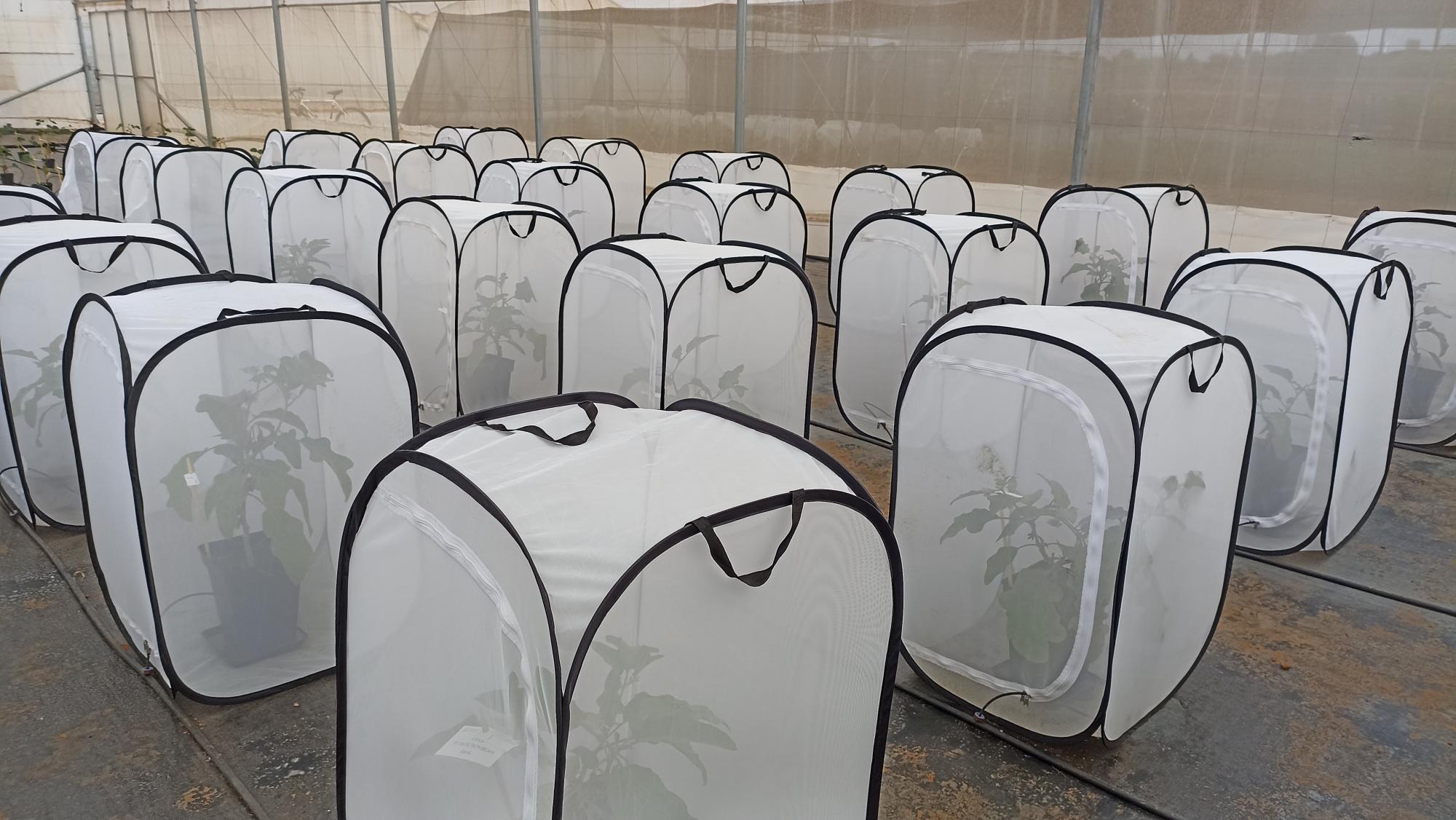
GreenLight Biosciences new global research centre is located outside Seville in the Guadalquivir river valley, where the temperate climate allows for a long growing season. A host of other global companies developing crop-protection products also have research centres in the area. The Seville centre is GreenLight’s main research facility outside the United States. The company also has operations in Brazil.
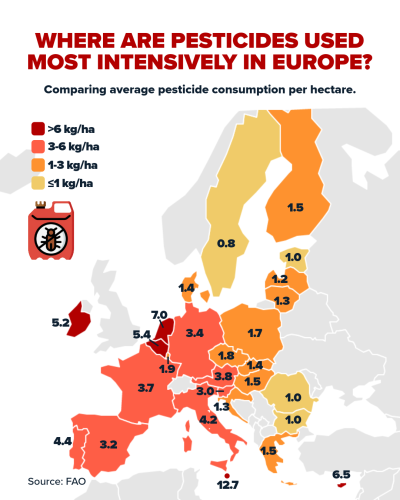
Europe is ripe for the company’s products. Under its Farm to Fork strategy, the European Union aims to reduce the use of chemical pesticides by 50% by 2030.
Public finance can support the large-scale manufacturing required to bring the price of RNAi solutions to levels that are competitive with synthetic chemicals, thereby addressing the market gap for sustainable crop protection.
The European Investment Bank is backing the Spanish research centre with a €35 million venture debt investment signed in February 2025. The investment was made possible by an InvestEU guarantee.

Greenlight Biosciences
Expert insight

Sebastien Collot is a European Investment Bank lead engineer who worked on the GreenLight investment.
Q: What is changing in the European agricultural sector?
A: The sector is undergoing a structural transition because of higher restrictive regulation on chemical-plant protection combining with climate pressure and geopolitical uncertainty. Farmers face higher constraints but have insufficient tools with which to deal with them. Therefore, there is a need to intensify research and development into alternative solutions that will reduce the most hazardous chemical inputs, deliver climate resilience, be economically viable for farmers, and ensure stable food production.
Biocontrols as alternative to pesticides
GreenLight’s technology works by targeting specific proteins in pests, fungi, or diseases at the cellular level, effectively disrupting their viability without harming other species or leaving toxic residues. This method enables the company to develop highly selective and environmentally friendly crop-protection products that can be sprayed on plants or used to treat seeds.
“When we create a product, we read from the Book of Life,” Ortega-Valle says. “We just industrialise the process to produce the solution in a large-scale and effective manner.”
GreenLight expects to release another three products in the next two years and to have 11 products on the market by 2032. The three products coming out in 2026 and 2027 target:
- powdery mildew, a fungus that mainly affects grapes
- spider mites, mites that are devastating to a wide range of crops
- late blight, a fungus that infects potatoes
GreenLight’s Norroa product was recently introduced in the United States. An outbreak of the varroa mite in the United States in early 2025 affected an estimated 1.7 million bee colonies, causing $600 million in damage.
“The chemical alternatives for treating these mites aren’t sufficient,” says Cyril Teixeira da Silva, the loan officer responsible for the European Investment Bank investment in GreenLight Biosciences. “Across Europe and the United States, there are terrible losses in beehives because of these mites.”
The European Medicines Agency is currently reviewing Norroa.

©Kuttelvaserova Stuchelova/Shutterstock
Europe’s potential and challenges
- Challenge: European approval processes for biocontrols are long. It can take five to seven years to bring a biocontrol to market, compared to one or two years in the United States and Brazil.
- Solution: A more agile review process well-tailored to biocontrols would allow European talent to drive agricultural innovation forward. “The talent we have in Europe is of very high quality,” Ortega-Valle says.
“The process in Europe is not conducive to fast innovation,” she adds. “That disincentivises innovators from creating products, because you have to wait so long to recover revenue.”
Take GreenLight’s Calantha. It was approved in the United States in 2023 and has already captured a significant share of the US market for products protecting against the Colorado potato beetle. The company began operating in Europe three years ago and recently received emergency use authorisation in Belgium for Calantha.
“We aren’t advocating deregulation,” Ortega-Valle says. “We are just advocating for a more agile review that that is well-tailored to biocontrols.”
GREENLIGHT BIO (IEU G)
The project concerns the research & development, registration, commercialisation and manufacturing of a pipeline of innovative active substances and plant protection products for plant health and bee health.