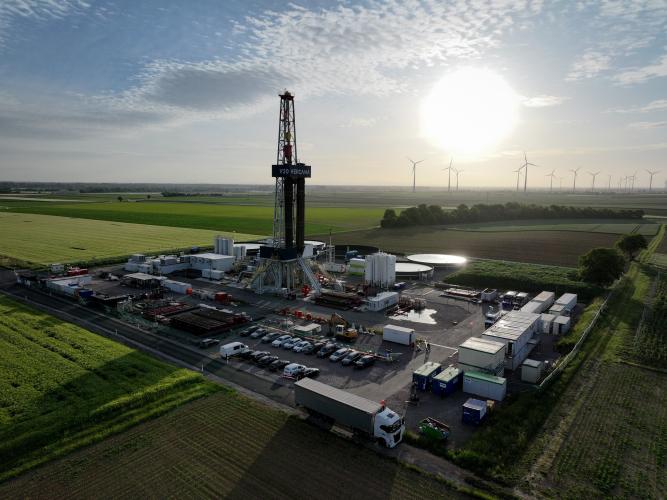
- Vulcan’s €2 billion Lionheart project to deliver an integrated, battery‑quality lithium supply in Europe, advancing sustainable raw material sourcing for the EU.
- First Direct Lithium Extraction project in Europe that combines lithium production with renewable and affordable heat and power.
- Lionheart will serve as a key enabler of Europe’s battery and electric vehicle value chain.
- European Investment Bank and 12 leading financial institutions back the strategic investment in Europe’s raw material security.
The European Investment Bank (EIB) has agreed to provide €250 million in financing for Vulcan Energy’s Phase One Lionheart Project in Germany’s Upper Rhine Valley. The €2 billion project will build an integrated, battery‑quality lithium supply chain based on geothermal brines, helping to reduce Europe’s reliance on imported raw materials and support the decarbonisation of transport and industry.
Vulcan’s process extracts lithium from naturally heated brine while at the same time generating renewable heat and power. This reduces carbon emissions and surface impact compared with conventional methods of lithium extraction and evaporation ponds.
“Lionheart is Europe’s first project to combine Direct Lithium Extraction with renewable energy generation, setting a new standard for sustainable lithium. By securing a strategic supply of lithium for European industry, we are strengthening Europe’s sovereignty and supporting the energy transition. With innovative geothermal technology, domestic production, and strong public-private cooperation, the project puts the EU’s Critical Raw Materials Act into practice and reinforces Europe’s supply chain resilience,” said Nicola Beer, Vice‑President of the EIB.
“The EIB’s participation underlines the significance of developing a European, sustainable lithium supply chain while supporting local innovation, employment, and a carbon-neutral future,” said Vulcan Energy’s Managing Director and CEO Cris Moreno.
Lithium is recognised as both a critical and strategic raw material under the Critical Raw Materials Act, and the EIB is increasingly backing projects that diversify supply while maintaining high environmental and social standards.
The EIB’s support for Lionheart is part of its Critical Raw Materials Strategic Initiative, which focuses on projects that can provide secure and responsible supplies of key materials for Europe’s energy, digital and defence sectors and backed by the EIB’s TechEU initiative, which backs cutting-edge technologies that strengthen Europe’s strategic autonomy and industrial competitiveness.
Securing lithium for electric vehicle battery production and Europe’s strategic autonomy
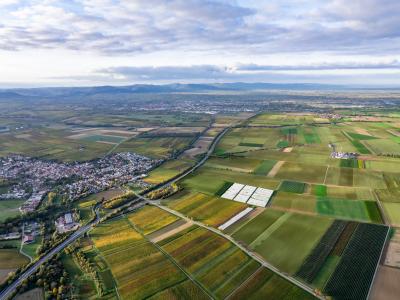
Phase One Lionheart Project, located in Landau and Frankfurt‑Höchst, Germany, is designed to produce 24,000 tonnes of lithium hydroxide monohydrate (LHM) per year, enough for the production of 500,000 electric vehicles. Commercial construction is expected to last around two and a half years with the start of production targeted for 2028.
The project is expected to provide approximately 12% of Europe’s projected demand for lithium hydroxide in 2030, significantly reducing the dependency of European industry on imports and directly supporting the objectives of the EU’s Critical Raw Materials Act.
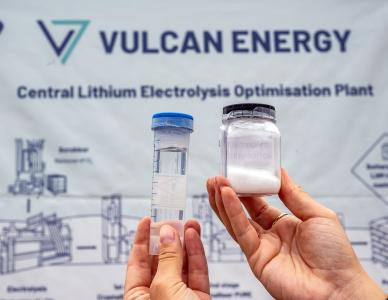
Vulcan has already proven its approach at optimisation‑plant scale. Since April 2024, its Lithium Extraction Optimisation Plant (LEOP) has produced high‑purity lithium chloride from geothermal brine. This is further processed into battery‑quality LHM at the Central Lithium Extraction Optimisation Plant (CLEOP) in Frankfurt. Phase One will scale up these facilities to commercial capacity, creating a local, low‑carbon supply of lithium for Europe’s battery industry.
Vulcan’s technology is not only a first for Europe. but also positions the region as a leader in sustainable lithium production. The project’s integrated model—combining lithium extraction with renewable energy generation—has strong export potential and serves as a blueprint for similar initiatives globally. By pioneering this approach, Europe is demonstrating its capacity to offer innovative solutions for sustainable raw material supply chains in other parts of the world.
Providing heat to Landau
Through deep geothermal wells, Vulcan supplies renewable heat to municipal energy provider EnergieSüdwest AG (ESW) in Landau. This heat feeds into the city’s district heating systems, cutting fossil fuel use for space and water heating and supporting a long‑term shift to renewable heat for households and businesses.
EIB, commercial banks and German government combining financial support
Alongside the EIB, the Project is being supported by the commercial lenders ABN AMRO, BNP Paribas, ING, KommunalKredit Austria, Natixis, OCBC and Unicredit, and the export credit agencies Bpifrance, Export Development Canada, Export Finance Australia, Export and Investment Fund of Denmark (EIFO), and the Italian SACE. This broad participation signals strong confidence in Vulcan’s geothermal‑based model and in the growth of Europe’s clean technology value chain.
Earlier this year, Vulcan Energy received two grants from the German government totalling EUR 204 million.
In addition, the project has also secured additional equity backing from the German Federal Government’s raw materials fund, managed by KfW. Siemens, Hochtief and Demeter’s Climate Infrastructure Fund have likewise contributed equity to the project.
This combination of EIB financing, commercial lending, private equity and public grants underscores the project’s strategic importance for Europe’s climate and industrial policy.
Background information
EIB
The European Investment Bank (ElB) is the long-term lending institution of the European Union, owned by its Member States. Built around eight core priorities, we finance investments that contribute to EU policy objectives by bolstering climate action and the environment, digitalisation and technological innovation, security and defence, cohesion, agriculture and bioeconomy, social infrastructure, the capital markets union, and a stronger Europe in a more peaceful and prosperous world.
The EIB Group, which also includes the European Investment Fund (EIF), signed nearly €89 billion in new financing for over 900 high-impact projects in 2024, boosting Europe’s competitiveness and security.
More details on the EIB’s support for Critical Raw Materials and the EIB Critical Raw Materials strategic initiative can be found here.
Vulcan Energy
Vulcan Energy (ASX: VUL, FSE: VUL) is building the world’s first carbon neutral, integrated lithium and renewable energy business to decarbonise battery production. Vulcan’s Lionheart Project, located in the Upper Rhine Valley Brine Field bordering Germany and France, is the largest lithium resource in Europe[1] and a tier-one lithium project globally. Harnessing natural heat to produce lithium from sub-surface brines and to power conversion to battery-quality material and using its in-house industry-leading technology VULSORB®, Vulcan is building a local, low-cost source of sustainable lithium for European electric vehicle batteries. For more information, please go to https://v-er.eu/
[1] On a lithium carbonate equivalent (LCE) basis, according to public information, as estimated and reported in accordance with the JORC Code 2012. See Appendix 4 of Vulcan's Equity Raise Presentation dated 11 December 2024 for comparison information.
Vulcan Energy secures €250 million EIB financing for landmark lithium project
©EIB
Download original
Vulcan Energy secures €250 million EIB financing for landmark lithium project
©EIB
Download original
Vulcan Energy secures €250 million EIB financing for landmark lithium project
©EIB
Download original