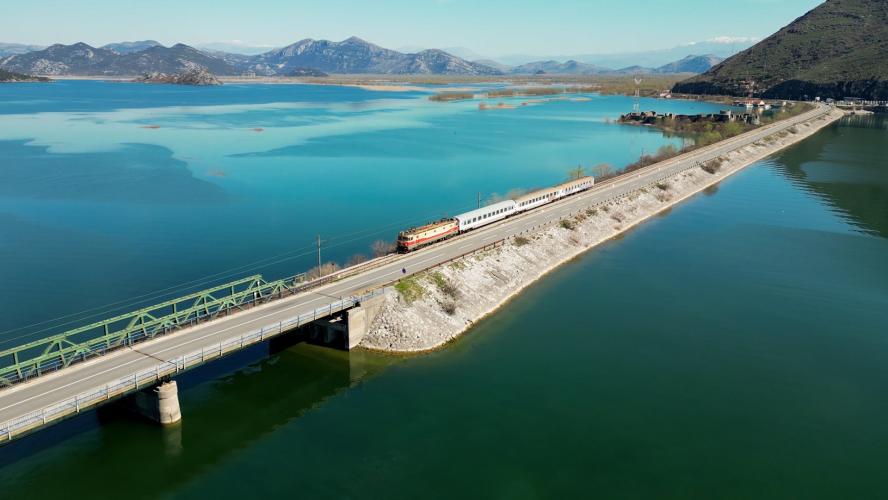
- The European Union is committing €175 million to modernise the Bar–Golubovci railway link, a strategic section of Rail Route 4 on the extended TEN-T Core Network.
- The EIB will provide a €63 million loan alongside an EU grant of €112.6 million.
- The upgrade will boost train speeds and significantly improve reliability, safety, and capacity.
To strengthen regional connectivity and integration, the European Union is providing a €175.6 million financial package for the reconstruction of 39 km of the Bar–Golubovci railway line, a key section of Rail Route 4 on the extended TEN-T Core Network. This vital corridor connects Belgrade to the Port of Bar, linking Montenegro and the Western Balkans with Central Europe. Once completed, the upgrade will increase train speeds and improve railway reliability, safety, and capacity. The project will raise the quality of rail service, accommodating 1.3 million passengers and transporting 1.85 million tonnes of freight annually. It will promote multimodal transport, strengthen resilience to climate change, and advance Montenegro’s green transition by shifting traffic from road to rail.
This package includes a €63 million loan from the European Investment Bank (EIB) and a €112.6 million EU grant from the European Commission under the Western Balkans Investment Framework, a landmark investment that underscores the EU’s strong commitment to Montenegro. The total project cost, estimated at €230.8 million, will also be supported by a €50 million loan from the European Bank for Reconstruction and Development and €5.2 million from the government of Montenegro.
“This investment is another tangible step toward aligning Montenegro’s core infrastructure with EU standards and accelerating the country’s path toward accession”, said EIB Vice-President Robert de Groot. “With these latest agreements, EIB Global’s support for the transport sector in Montenegro will reach a total of €500 million, directly improving regional connectivity, boosting trade and tourism, and helping to create a more integrated common regional market.”
“With the conclusion of the €63 million loan agreement with the European Investment Bank, a stable and favourable source of financing has been secured for one of the key infrastructure projects in the railway sector”, said Finance Minister Novica Vuković. “The loan arrangement is fully aligned with the medium-term fiscal policy framework and the public debt management strategy, while enabling the implementation of a project with strong developmental relevance and European significance. Cooperation with the EIB once again confirms the institution’s confidence in Montenegro’s fiscal stability and the country’s capacity to responsibly manage major infrastructure investments. ”
The European Commission and the EIB advisory programme JASPERS provided technical support that ensured the project was prepared in line with EU environmental, social, and technical standards.
“Modern, sustainable infrastructure is at the heart of Montenegro’s European future. By investing in railways, we are investing in greener transport, better connectivity, and stronger economic integration with the region and the EU. With one of the biggest single grant from EU taxpayers, and help of our partners, it is finally time to start long-awaited reconstruction of the Bar–Golubovci railway,” said EU Ambassador to Montenegro Johann Sattler.
“This project represents one of the most important investments in Montenegro’s railway infrastructure in decades and a clear signal of trust from our European partners”, said Montenegrin Minister of Transport Maja Vukićević. “Our long-standing cooperation with the European Investment Bank has been crucial in modernising the Bar–Belgrade railway corridor, which is the backbone of sustainable transport in Montenegro. By upgrading the Bar–Golubovci section, we are not only improving safety, efficiency, and service quality, but also strengthening Montenegro’s role as a key transport hub between the Western Balkans and the European Union. This investment directly supports our green transition, economic development, and EU accession goals.”
Background information
About the EIB and EIB Global
The EIB is the long-term financing institution of the European Union, owned by its Member States. It makes long-term finance available for sound investment in order to contribute towards EU policy goals. The EIB supports projects in four priority areas: infrastructure, innovation, climate and environment, and small and medium-sized enterprises (SMEs). EIB Global is the EIB Group’s specialised arm devoted to increasing the impact of international partnerships and development finance, and a key partner of Global Gateway. It aims to support €100 billion of investment by the end of 2027 – around one-third of the overall target of this EU initiative. Within Team Europe, EIB Global fosters strong, focused partnerships alongside fellow development finance institutions and civil society. EIB Global brings the EIB Group closer to local people, companies and institutions through its offices around the world.
About the EIB in Montenegro
The EU bank has been an active partner of Montenegro, providing almost €1.1 billion in loans to the country, mostly in support of SMEs, education and transport infrastructure. For more information on EIB projects in Montenegro, visit https://www.eib.org/en/projects/regions/enlargement/the-western-balkans/montenegro/index.htm. For detailed information on the EIB’s activities in the Western Balkans, visit www.eib.org/en/publications/the-eib-in-the-western-balkans.
Montenegro: European Union to invest €175 million to upgrade Bar-Golubovci railway line
©EIB
Download original
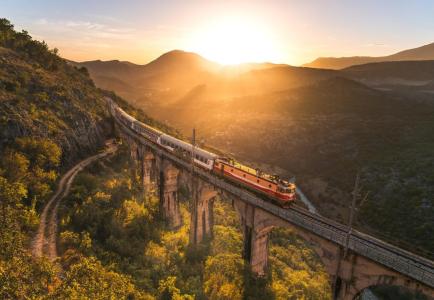
Montenegro: European Union to invest €175 million to upgrade Bar-Golubovci railway line
©EIB
Download original
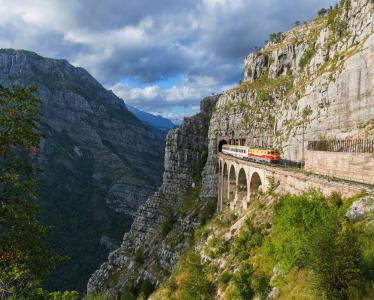
Montenegro: European Union to invest €175 million to upgrade Bar-Golubovci railway line
©EIB
Download original