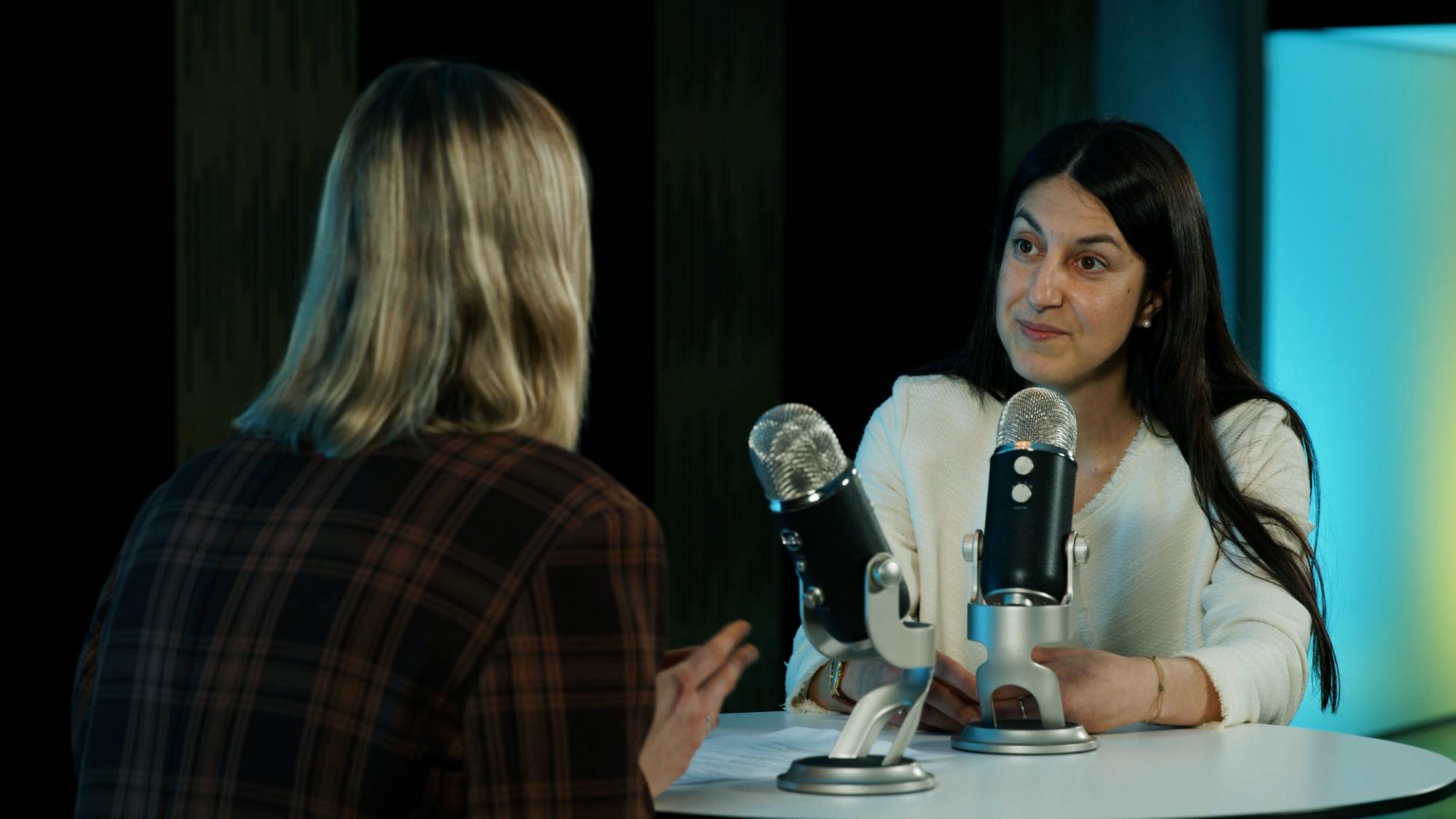
“It’s not a niche investment theme. It’s a real full-scale industrial transformation.”

Invested by Europe explores the forces shaping the European economy. In each episode, we hear from experts tackling the most pressing challenges—from housing and energy to innovation and infrastructure, security and defence. We look at what’s changing, what the solutions are, and how Europe is investing in its future.

What this episode is about
Cleantech technologies reduce environmental footprints and help societies adapt to climate change. Originally focused on reducing dependence on fossil fuels through clean energy sources such as solar, wind and biofuels, cleantech has since expanded to include everything related to decarbonisation — from mobility and energy storage to green infrastructure.
In this episode of the Invested by Europe podcast, Sofia Viola, an investment officer at the European Investment Bank who works with the European Innovation Council Fund, explains how cleantech has evolved, where the biggest challenges lie, and why scaling these technologies is essential for Europe’s energy transition.

The conversation in brief
Cleantech began with the development of renewable energy technologies aimed at reducing reliance on fossil fuels. Today, it encompasses a much broader set of solutions focused on decarbonisation across the economy, including mobility, energy storage and green infrastructure.
Renewable energy generation has accelerated rapidly in recent years, and capacity is no longer the main constraint. The challenge now lies in connecting this generation to the grid and balancing supply and demand in real time. Energy storage, particularly batteries, plays a critical role by allowing electricity to be stored and used later. This stabilises the system and enables a higher share of renewable energy to be integrated into the grid.
Industrial decarbonisation is another major priority. Heavy industries such as steel, cement and chemicals account for a significant share of global emissions. Addressing emissions in these sectors is essential not only for climate goals, but also for maintaining Europe’s industrial competitiveness.
The European Innovation Council Fund, which is funded by the European Commission, invests in deep tech companies in digital, green and life science technologies. The fund evaluates investment opportunities that emerge from the EIC Accelerator programme and supports companies after investment by helping them raise additional capital and connecting with specialised investors.
The European Innovation Council Fund aims to bridge the gap between innovation and scale‑up by crowding in private investment. Its focus is on impact rather than maximising financial returns, with the goal of de‑risking and catalysing investment in transformative technologies.
From an investor’s perspective, cleantech is no longer a niche theme. It represents a full-scale industrial transformation and a major economic opportunity. At the same time, competition is intensifying as countries and industries seek to position themselves in this global race. Scaling up these technologies requires substantial capital.
Many cleantech companies struggle to raise capital because their development timelines are longer than some investors are willing to accept. This is where the EIB Group plays a critical role, supporting startups and deep tech breakthroughs and providing venture debt once companies become more mature and bankable.
Sofia Viola highlights the quality of founding teams in cleantech, combining scientific expertise with a strong commitment to building viable businesses. This mix of talent and conviction, particularly in a sector driven by real-world problems that need solving, is a source of confidence for the future.
Key takeaways
- Cleantech now covers all aspects of decarbonisation, not just clean energy generation.
- Energy storage is critical to balancing renewable supply and demand. Industrial decarbonisation is essential for climate goals and competitiveness.
- Long development timelines make access to patient capital a challenge. The EIB Group plays a key role in supporting scale‑up and reducing financing gaps.
About the guest
Sofia Viola is a finance professional with more than 15 years of experience in investment banking and advisory, including her time at JPMorgan in New York. She has advised on a range of transactions and sectors. She is now focused on venture capital investments in deep tech and clean technologies, supporting the growth of innovative companies driving the transition to a more sustainable and resilient economy.
Listen and subscribe to Invested by Europe
You can watch or listen to Invested by Europe on:
- The full series on our website
- Apple Podcasts
- Spotify
- Deezer
- — or find us on your favourite podcast platform.
New episodes are released weekly.
Explore more
La circularité de l’acier
Une entreprise finlandaise travaille avec une aciérie italienne pour recycler le métal et valoriser le laitier dans l’asphalte et d’autres matériaux innovants.
Nouveau programme à Chypre pour les batteries et l’énergie solaire
Un nouveau programme qui aidera l’île à exploiter le potentiel de l’énergie solaire bénéficie de subventions de l’UE et de l’assistance de la BEI
De l’hydrogène comprimé pour ravitailler les véhicules lourds
La société néerlandaise Resato Hydrogen Technology améliore la sécurité et la fiabilité de l’hydrogène pour le transport longue distance