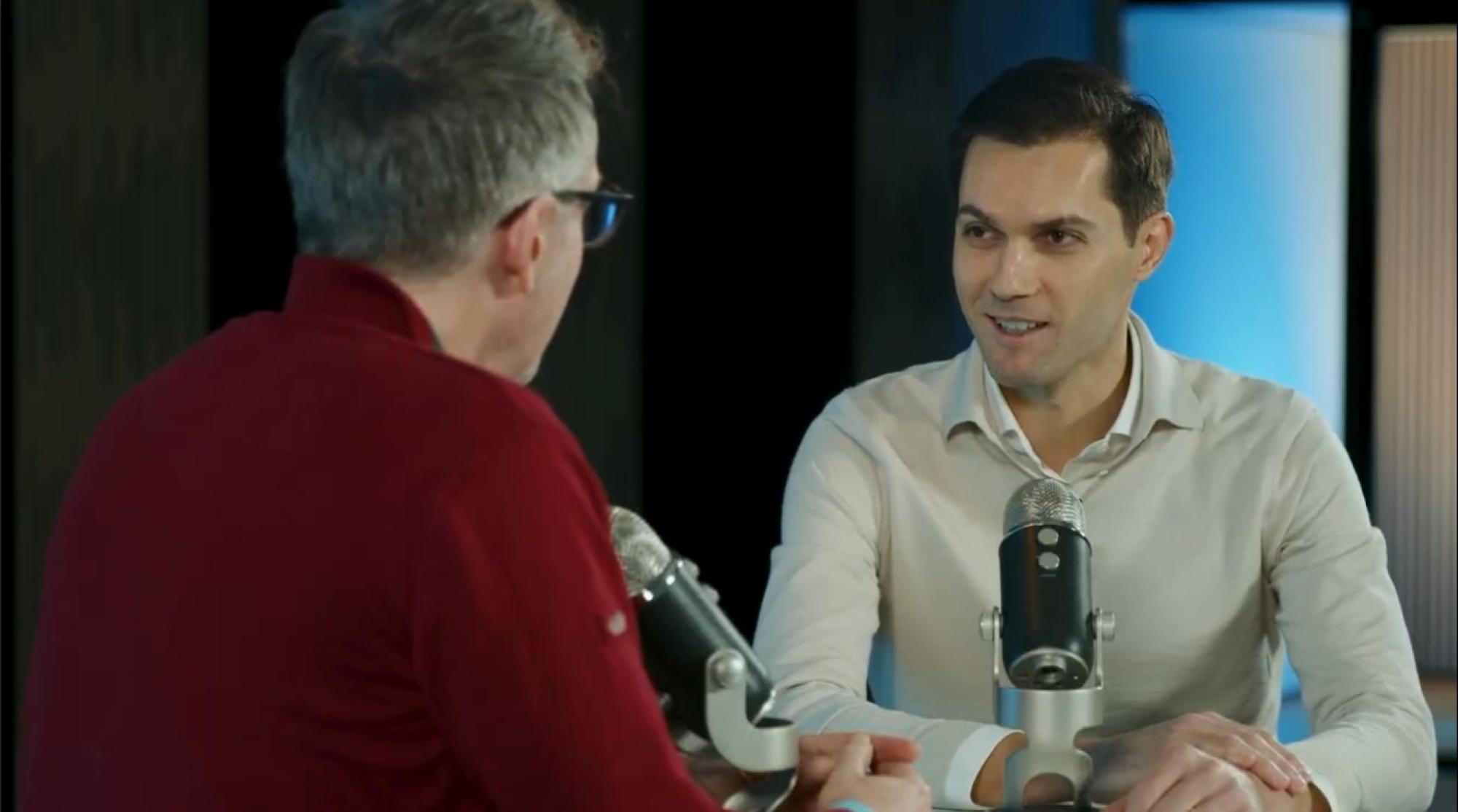
« Si la fusion nucléaire devient une réalité à grande échelle, il n’y aura plus besoin d’aucune autre source d’énergie. »

La série Invested by Europe explore les forces à l’œuvre dans l’économie européenne. Dans chaque épisode, nous donnons la parole à des spécialistes qui abordent les défis les plus urgents, qu’il s’agisse du logement et de l’énergie, de l’innovation et des infrastructures, ou encore de la sécurité et de la défense. Nous analysons ce qui change, les solutions possibles et la manière dont l’Europe investit dans son avenir.

Quel est le thème de cet épisode ?
La fusion nucléaire est le processus par lequel le soleil et les étoiles produisent de l’énergie. Lorsque deux noyaux atomiques fusionnent pour n’en former plus qu’un, une petite partie de leur masse est convertie en énergie selon l’équation d’Einstein E = mc². Cette infime perte de masse se traduit par une énorme production d’énergie.
La fusion nucléaire a été réalisée en laboratoire, sans toutefois atteindre des niveaux d’efficacité et d’échelle compatibles avec une utilisation industrielle. Dans cet épisode d’Invested by Europe, Franz Derler, chargé d’investissement à la Banque européenne d’investissement, explique ce qu’est la fusion, en quoi elle est déterminante, comment les investisseurs abordent ce domaine des technologies de rupture (deep tech) et ce que cela signifie pour la position stratégique de l’Europe.

Résumé de l’épisode
Si la fusion devient une réalité à grande échelle, les conséquences pour les systèmes énergétiques seront considérables. En théorie, la fusion pourrait fournir une source d’énergie propre pratiquement illimitée. Mais, dans la pratique, d’autres sources d’énergie – y compris les énergies renouvelables et la fission nucléaire – continueront de coexister pendant de nombreuses décennies. La demande d’énergie augmente rapidement et les technologies existantes, déjà installées à grande échelle, ne seront pas abandonnées. En revanche, l’importance relative des combustibles fossiles pourrait diminuer fortement si la fusion devenait une réalité, car elle pourrait assurer la production d’électricité de base stable que les combustibles fossiles fournissent aujourd’hui.
La fusion relève de la catégorie plus large des technologies de rupture, c’est-à-dire des technologies fondées sur des percées scientifiques qui représentent un changement fondamental plutôt que des améliorations par petites touches. Pour les investisseurs, la fusion se distingue nettement des projets d’énergies renouvelables ou de fission nucléaire déjà bien implantés. Les investissements énergétiques reposent généralement sur des cadres réglementaires matures et des rendements prévisibles. La fusion, au contraire, requiert des capitaux patients de long terme et des investisseurs prêts à prendre des risques associés à des jalons technologiques encore à atteindre. Elle attire ainsi un profil d’investisseur différent : capital‑risque public et privé, fonds souverains et acteurs disposés à investir sur le long terme dans des technologies susceptibles de générer des retombées très importantes en cas de succès.
Il existe deux grandes approches technologiques de la fusion :
• la fusion par confinement magnétique, qui utilise des aimants puissants pour confiner un plasma extrêmement chaud contenant le combustible de fusion ;
• la fusion par confinement inertiel (par laser), qui utilise des lasers puissants pour comprimer une cible de combustible.
Dans les deux cas, l’objectif ultime est de produire de la chaleur et de l’électricité. Ces deux approches ont attiré des financements importants. Au cours des cinq dernières années, plus de 10 milliards de dollars ont été investis dans des projets privés de fusion. La plus grande part de ces financements a été allouée à la fusion par confinement magnétique. La société ayant levé le plus de capitaux est Commonwealth Fusion Systems, aux États-Unis, dont les recherches s’appuient sur des réacteurs tokamak – de grandes installations utilisant des aimants puissants pour contenir le plasma.
L’Europe conserve la capacité de jouer un rôle important dans l’avenir de la fusion, mais seule une faible part des financements privés mondiaux dans ce domaine est allée à des entreprises européennes. La dynamique est toutefois bien réelle : des entreprises telles que Proxima Fusion et Marvel Fusion ont récemment bouclé d’importantes levées de fonds auprès d’investisseurs de premier plan.
Si la fusion devenait réalité, les conséquences seraient immenses pour le climat, l’économie et même la géopolitique mondiale. Certains affirment que, si la fusion aboutissait à grande échelle, elle pourrait résoudre la moitié des grands problèmes de l’humanité.
Principaux points à retenir
- Dans la fusion nucléaire, les noyaux atomiques fusionnent en libérant de grandes quantités d’énergie.
- Transposée à grande échelle, la fusion pourrait transformer les systèmes énergétiques mondiaux.
- L’Europe dispose de solides atouts, mais doit renforcer sa position concurrentielle.
À propos de l’invité
Franz Derler travaille à la Banque européenne d’investissement depuis 2015 et a rejoint en 2022 l’équipe de conseil à l’appui des investissements du Fonds du Conseil européen de l’innovation. Il a participé à des investissements liés à la fusion et supervise aujourd’hui, au sein de la BEI, les activités du Fonds dans ce secteur. Il dispose d’une solide expérience à la croisée de la finance et des technologies de rupture, en particulier dans le domaine des technologies énergétiques innovantes. Franz Derler est titulaire d’un master en finance de l’université du Liechtenstein et détient la certification CFA.
Écoutez et abonnez-vous à Invested by Europe
Vous pouvez regarder ou écouter Invested by Europe sur :
- notre site web, où l’intégralité de la série est disponible
- Apple Podcasts
- Spotify
- Deezer
- — ou nous retrouver sur votre plateforme de podcasts préférée.
Découvrez chaque semaine de nouveaux épisodes de notre podcast.
Pour en savoir plus
La fusion froide : une affaire classée ?
Comment la fusion froide fonctionne-t-elle ? Comment la BEI aide-t-elle les entreprises du secteur des énergies renouvelables ?
Italie : Plan Juncker - la BEI prête 250 millions d’EUR à ENEA en faveur de la recherche sur l’énergie de fusion propre
Pour relever le défi de produire, en toute sécurité, de l’énergie nucléaire de fusion propre d’ici 2050, l’UE peut désormais compter sur un dispositif expérimental d’avant-garde, qui sera construit en Italie.
TechEU
Plus grand programme de financement de l’UE à l’appui des innovateurs européens, de l’idée à l’introduction en Bourse et du laboratoire au rang de chef de file
ENEA - DIVERTOR TOKAMAK TEST FACILITY
Design and construction of the Divertor Tokamak Test facility ("DTT"), a research infrastructure that is aimed at contributing to the realization of the fusion energy. The project is a key milestone of the European Fusion Roadmap and it is planned to be developed in Italy over the 2018-2025 period.