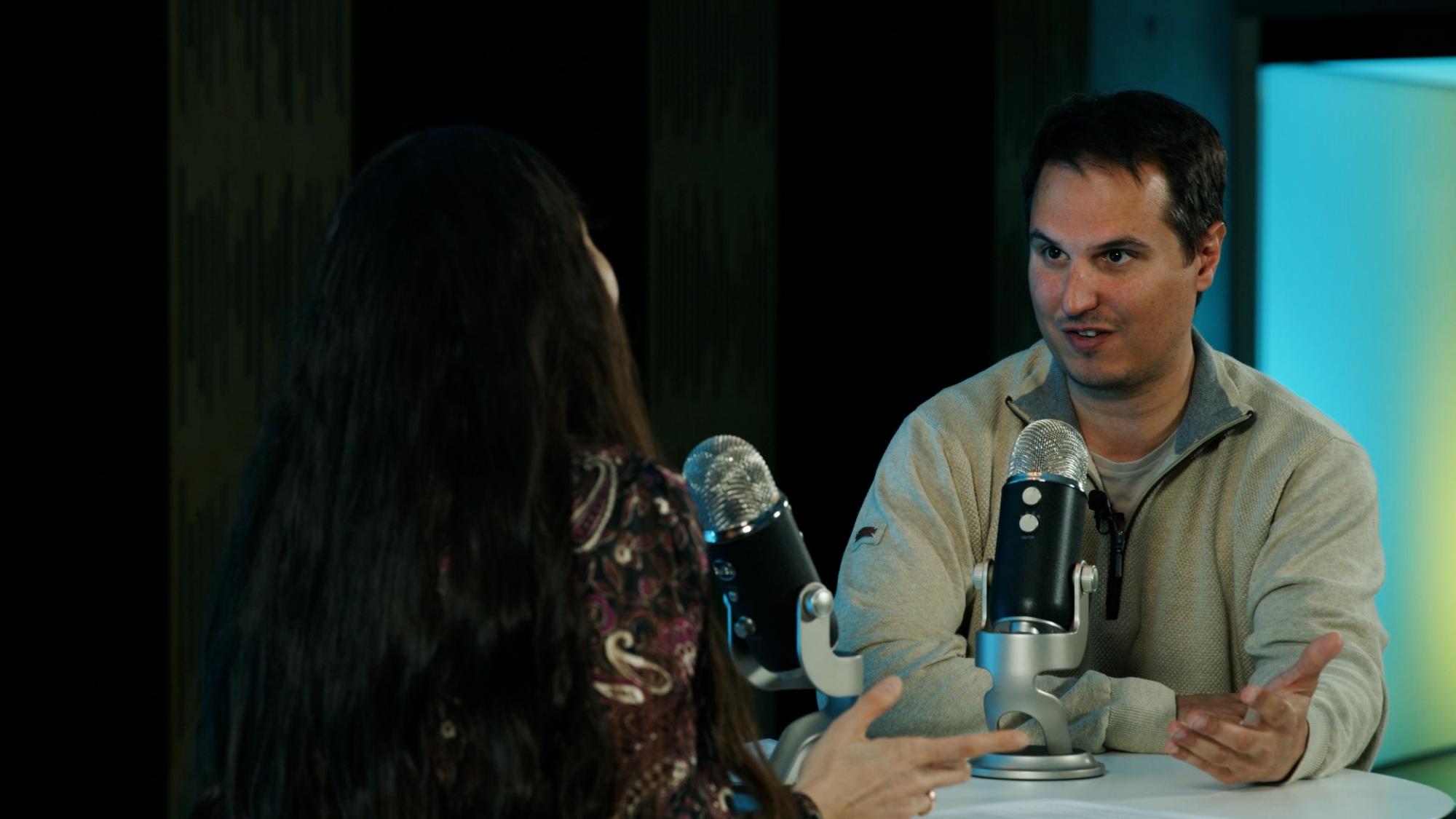
« Ce n’est pas un aspect que nous pouvons déléguer ou sous-traiter à d’autres pays. »
La série Invested by Europe explore les forces à l’œuvre dans l’économie européenne. Dans chaque épisode, nous donnons la parole à des spécialistes qui abordent les défis les plus urgents, qu’il s’agisse du logement et de l’énergie, de l’innovation et des infrastructures, ou encore de la sécurité et de la défense. Nous analysons ce qui change, les solutions possibles et la manière dont l’Europe investit dans son avenir.

Quel est le thème de cet épisode ?
Les biotechnologies jouent un rôle central dans les systèmes de santé, la capacité d’innovation et la résilience économique de l’Europe. Il peut s’agir de la mise au point de vaccins et de médicaments qui interagissent avec la biologie du corps humain, de dispositifs médicaux tels que des outils de chirurgie robotique et des équipements de diagnostic, et de la médecine numérique qui utilise de nouvelles technologies pour améliorer les diagnostics et accélérer le développement de produits.
Dans cet épisode du podcast Invested by Europe, Antoine de Lachaux, chef de l’unité Sciences de la vie et biotechnologie de la Banque européenne d’investissement, explique l’importance stratégique des biotechnologies pour l’Europe et le rôle essentiel des investissements à long terme pour mettre l’innovation au service des patients.

Résumé de l’épisode
Les biotechnologies représentent un vaste écosystème qui englobe les produits pharmaceutiques, les vaccins, les dispositifs médicaux et la médecine numérique. Font partie de cet écosystème des technologies clés telles que l’intelligence artificielle et, de plus en plus, des outils informatiques avancés qui aident les chercheurs et chercheuses à améliorer les diagnostics et à accélérer la mise au point de nouveaux produits.
L’Europe occupe une position solide dans les sciences de la vie et les biotechnologies, sur les plans tant de l’excellence scientifique que de la capacité d’innovation. Mais le secteur présente également des défis majeurs. La mise au point d’un produit des sciences de la vie est un travail de longue haleine, qui nécessite des capitaux importants et présente un fort risque d’échec. Le taux d’attrition est élevé : de nombreux projets ne vont pas jusqu’au stade de la mise sur le marché.
L’un des principaux défis de l’Europe est la fragmentation. Contrairement aux États-Unis, où les entreprises peuvent d’emblée toucher un marché de près de 350 millions de personnes, l’Europe reste scindée en marchés nationaux dotés de règles et de systèmes différents. Cette fragmentation rend le passage à l’échelle plus complexe et renchérit les coûts pour les entreprises qui cherchent à mener des activités transfrontalières.
L’accès aux capitaux est un autre enjeu crucial. Les biotechnologies se caractérisent par une très forte intensité de capital et nécessitent des investissements importants bien avant de générer le moindre chiffre d’affaires. Si le marché américain du capital-risque montre une forte propension pour ce type de risque de long terme, l’Europe a relativement peu d’investisseurs disposant de l’expertise et de la capacité financière nécessaires pour accompagner des entreprises tout au long du cycle de développement.
L’Europe prend des mesures pour renforcer l’écosystème. Parmi les initiatives récentes, la proposition de règlement sur les biotechnologies vise à faciliter l’accès au marché, à harmoniser les règles entre les pays de l’UE et à améliorer la protection par brevet. L’objectif est de créer des incitations pour que les entreprises mènent des activités dans l’ensemble des 27 États membres, plutôt que de se limiter à leur marché national.
La Banque européenne d’investissement joue un rôle majeur dans le soutien au secteur. Au cours des dix dernières années, le bras financier de l’UE a investi 4 milliards d’euros dans environ 150 entreprises. La Banque a ainsi contribué à mettre sur le marché des produits de santé vitaux et à établir de solides relations dans l’ensemble de l’écosystème des biotechnologies, des fonds de capital-risque aux entreprises pharmaceutiques et aux fabricants de dispositifs médicaux. L’amélioration de l’accès aux capitaux est également un objectif clé de l’union de l’épargne et des investissements, qui a vocation à créer un environnement européen plus intégré pour les investissements.
BioNTech est l’un des investissements les plus emblématiques de la BEI, qui a financé l’entreprise avant la pandémie de COVID-19 pour ses travaux sur la technologie de l’ARNm. Au bout du compte, ses travaux de recherche ont conduit à la mise au point du vaccin anti-COVID le plus largement utilisé.
L’intelligence artificielle devrait jouer un rôle porteur de transformation dans les biotechnologies. Elle accélère la mise au point de médicaments du fait qu’elle peut optimiser les toutes premières phases de criblage, automatiser l’analyse de grandes bibliothèques de protéines ou de molécules et améliorer les diagnostics en repérant dans les images médicales des caractéristiques difficiles à déceler pour l’œil humain. Elle peut également aider à rationaliser les processus réglementaires. À terme, l’IA est susceptible d’influer sur chaque étape du parcours de soins, du diagnostic au traitement.
Principaux points à retenir
- Les biotechnologies sont un secteur stratégique pour la santé, l’économie et la souveraineté de l’Europe.
- La fragmentation du marché européen rend le passage à l’échelle plus difficile qu’aux États-Unis. Des initiatives telles que le règlement sur les biotechnologies ont vocation à renforcer l’écosystème européen.
- L’intelligence artificielle devrait accélérer l’innovation dans l’ensemble du secteur.
À propos de l’invité
Antoine de Lachaux dirige l’unité Sciences de la vie et biotechnologie à la Banque européenne d’investissement. Il supervise les investissements dans les biotechnologies, les produits pharmaceutiques, les dispositifs médicaux et la santé numérique, en mettant l’accent sur le soutien à l’innovation, l’amélioration de l’accès aux capitaux et le renforcement de l’écosystème européen des sciences de la vie.
Écoutez et abonnez-vous à Invested by Europe
Vous pouvez regarder ou écouter Invested by Europe sur :
- notre site web, où l’intégralité de la série est disponible
- Apple Podcasts
- Spotify
- Deezer
- — ou nous retrouver sur votre plateforme de podcasts préférée.
Découvrez chaque semaine de nouveaux épisodes de notre podcast.
Pour en savoir plus
Une obligation pour soutenir les pharmaciennes en Espagne
Le premier financement intermédié axé sur les entrepreneuses dans l’UE soutient les pharmaciennes et les pharmacies employant principalement des femmes en Espagne.
Comment les entreprises de l’UE s’ouvrent à l’intelligence artificielle, aux mégadonnées et à d’autres outils numériques
D’après une enquête du Groupe BEI, une proportion comparable d’entreprises européennes et américaines utilise des technologies numériques de pointe, mais les entreprises américaines intègrent mieux l’IA dans leurs processus
Des anticorps qui s’adaptent
Fabentech met au point des anticorps s’adaptant aux virus mutants à l’origine des pandémies. Ces anticorps pourraient empêcher la propagation des virus.
ANTIVIRAL VACCINE RDI (COVID-19)
The promoter is a biopharmaceutical company at the forefront of developing next generation immunotherapies. The project supports the development of a prophylactic vaccine against severe acute respiratory syndrome coronavirus 2 (SARS-CoV-2). The investment plan includes R&D expenditures for the development of the product and the design and construction a of large-scale facility for the commercial manufacturing of the vaccine.