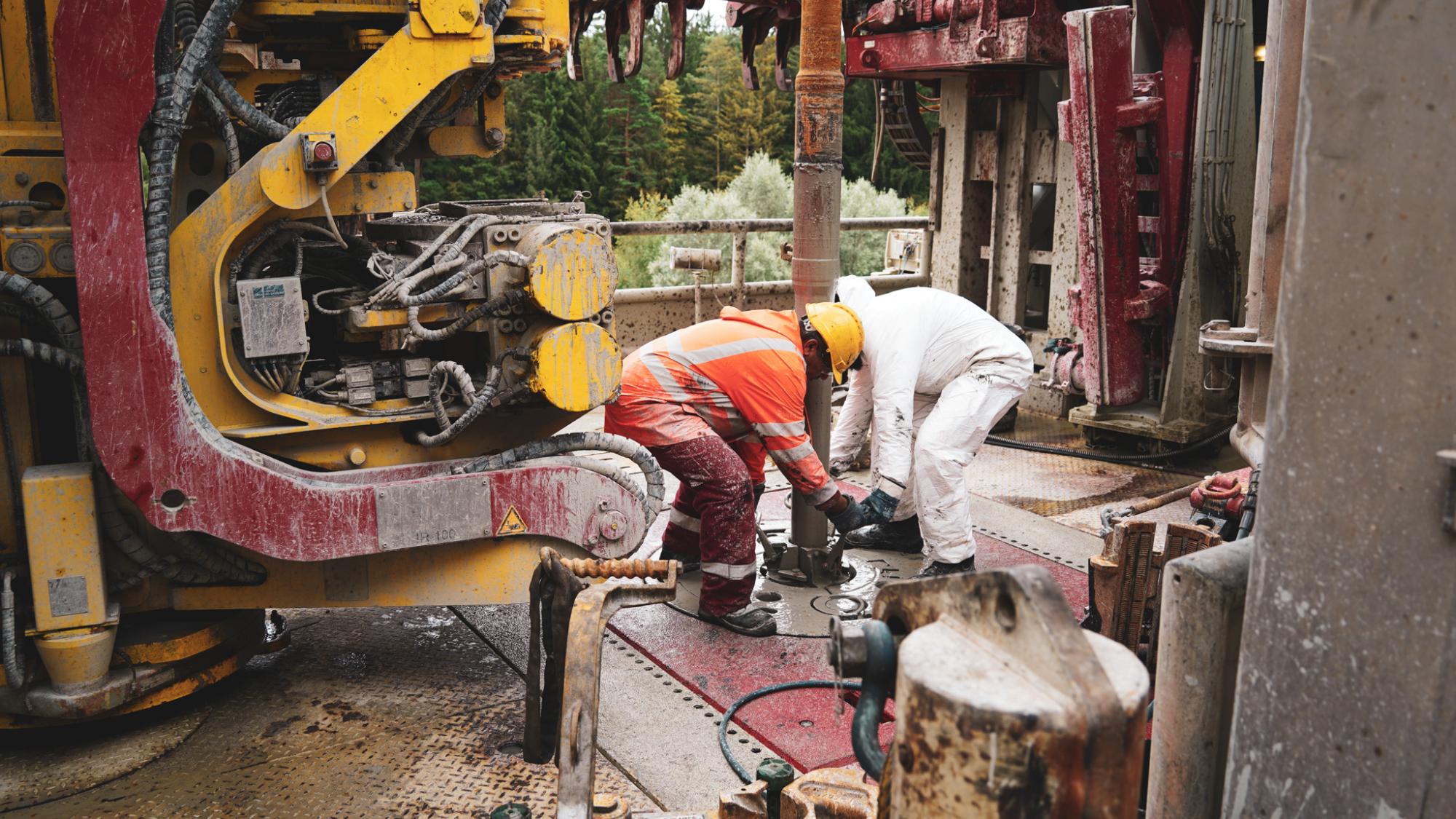
« La production de chaleur est l’un des plus grands défis de la transition énergétique en Europe, car c’est elle qui consomme le plus d’énergie et produit le plus de dioxyde de carbone. »
Autres liens
Fiche récapitulative
Date de publication
15 novembre 2023
Statut
Référence
Signé | 26/04/2024
20230481
Nom du projet
Promoteur – Intermédiaire financier
EAVOR LOOP (IEU GT)
EAVOR ERDWARME GERETSRIED GMBH & CO KG
Montant BEI envisagé (montant approximatif)
Coût total (montant approximatif)
EUR 44 million
EUR 368 million
Lieu
Secteur(s)
Description
Objectifs
The project represents the first commercial scale implementation of an innovative closed loop geothermal technology to generate baseload combined heat and power, through heat conduction transfer between rocks in the subsurface and a wellbore-isolated cycling fluid. This is expected to progress the feasibility, competitiveness and scalability of the technology by demonstrating its application to diverse geological settings, with the potential to be applied to a wider range of locations compared to conventional geothermal energy.
The objective is to support the integration of geothermal heat and power in the energy system and as a baseload source of energy with the aim to reduce emissions of greenhouse gases, in line with the EU and national renewable energy targets. The project will also contribute to further innovative technologies in the energy sector and thus support learning-by-doing and positive knowledge externalities.
Additionnalité et impact
The Project supports the deployment and integration of a sustainable renewable combined heat and power source (geothermal) applying innovative technologies. It generates positive externalities in the form of reduced greenhouse gases and other hazardous emissions through the switching to a baseload source of sustainable energy. The Project also contributes at increasing learning-by-doing through the first commercialisation stage of an innovative sustainable technology, which should support costs reductions over time. The Project contributes to the 2030 national RE penetration targets of Germany, i.e. 80% RE in the power sector and 65% RE in the heating sector. The Project also contributes to maintaining or increasing safe delivery of energy.
The Project therefore addresses the following market failures: reducing carbon and air pollution externalities, security of supply and costs reduction of innovative low-carbon technologies.
The Project is aligned with EIB's Energy Lending Policy (Decarbonising Energy Supply and Innovation) and Climate Action (Mitigation / Renewable Energy) eligibility criteria and the policy contribution for Renewable Energy Sources is thus rated as Excellent.
The Project also complies with the eligibility criteria set out in Annex I-A of the InvestEU Agreement, in particular in relation to eligibility as per article 8.2, as the operation falls under the Thematic product (generation of clean, safe and sustainable renewable energy sources and solutions), through a technology at TRL 8. As a first-of-a kind commercial demonstration operation, the Project entails a
number of risks (credit, tehnology, construction, offtake) which cannot be fully mitigated due to its early-stage nature. This is combined with the limited experience of the Promoter as a start-up company.
EIB will be a key lender that will provide adequate terms and capacity to attract other specialized institutions to complete the funding plan of this project. The EIB financing further complements the EU Innovation Fund grant to provide a financial package which covers the distinctive risks of the Project. The Project would therefore not have been carried out (to the same extent) by the EIB without the InvestEU support.
Aspects environnementaux
Passation des marchés
Based on their technical characteristics, the subsurface components of the project fall within Annex II of the Environmental Impact Assessment Directive (EIA) 2014/52/EU amending 2011/92/EU, which requires the national competent authority to determine the need for an EIA. The EIA screening-out decision was issued in 2021 and the project main operating plan (Hauptbetriebsplan) was approved in 2022. The environmental impacts are overall expected to be minor and mostly temporary during construction. The specific impacts related to drilling, completion and subsurface operations are expected to be limited with the implementation of appropriate mitigation measures and as the geothermal subsurface system will operate as a closed loop.
The promoter, as a private undertaking operating in the utility sector, is not subject to the EU Public Procurement Directives. The project, which will be supplying utilities already active in the energy sector, is deemed to not benefit from any special or exclusive rights, within the meaning of the Utilities Directives. Therefore, the private procurement procedures used by the promoter are acceptable for the project.
Étapes
À l'examen
Approuvé
Signé
15 novembre 2023
26 avril 2024
Documents liés
Autres liens
Communiqués associés
Documents
Fiche technique sur les aspects sociaux et environnementaux - EAVOR LOOP (IEU GT)
Date de publication
26 Apr 2024
Langue
Sujet général
Prêts
Numéro du document
189054238
Thématique du document
Information Environnementale
Type de document
Numéro du projet
20230481
Secteur(s)
Régions
Pays
Disponible au public
Télécharger maintenant
Lien vers la source
Autres liens
À la une
Lien vers la source
Autres liens
Au cœur du projet
Pourquoi et comment
Le projet Eavor à Geretsried
Pourquoi
- La géothermie, c’est de l’énergie propre.
- Elle contribue à la réduction des émissions dues aux combustibles fossiles.
- Elle permet d’accélérer la transition énergétique en Allemagne.
Comment
- L’énergie géothermique provenant des roches souterraines est disponible partout, toute l’année.
- L’Eavor-Loop émet moins de gaz à effet de serre que les systèmes géothermiques conventionnels.
- La chaleur produite permettra de remplacer les chaudières à gaz et d’éviter ainsi le rejet de 45 000 tonnes de dioxyde de carbone par an.
Secteurs et pays

Récit
Prélever la chaleur directement dans les roches
Daniel Mölk avait déjà travaillé une première fois dans la ville bavaroise de Geretsried au début des années 2010, sur un projet consistant à rechercher des réservoirs souterrains d’eau chaude dans le cadre d’un plan de production d’énergie hydrothermale de l’entreprise locale de services collectifs. Il n’avait alors pas réussi à trouver d’eau, mais, avec son équipe, il a appris à peu près tout ce qu’il y a à savoir sur la terre et les formations rocheuses qui entourent la ville, située à 40 kilomètres au sud de Munich. Ces travaux ont jeté les bases d’un projet géothermique révolutionnaire mis en œuvre au même endroit 13 ans plus tard.
Daniel Mölk est aujourd’hui le directeur général d’Eavor Allemagne, qui installe le système Eavor-Loop, une sorte de radiateur souterrain géant, sur le site de l’époque. « Depuis que j’ai effectué les premiers forages ici il y a plus de dix ans, j’ai eu l’occasion de travailler sur de nombreux autres projets hydrothermaux dans d’autres endroits du monde », explique-t-il. « C’est vraiment très particulier d’être de retour à Geretsried aujourd’hui et de montrer – avec la technologie d’Eavor – que la production d’énergie géothermique à grande échelle fonctionne également sans eau thermale. »
L’Allemagne est en pleine transition énergétique. Celle-ci a démarré au début des années 2010, avec pour objectif de délaisser l’énergie nucléaire au profit de l’énergie renouvelable.
L’Eavor-Loop de Geretsried fournira du chauffage en hiver et une centrale électrique implantée sur le site convertira la chaleur géothermique en électricité tout au long de l’année.
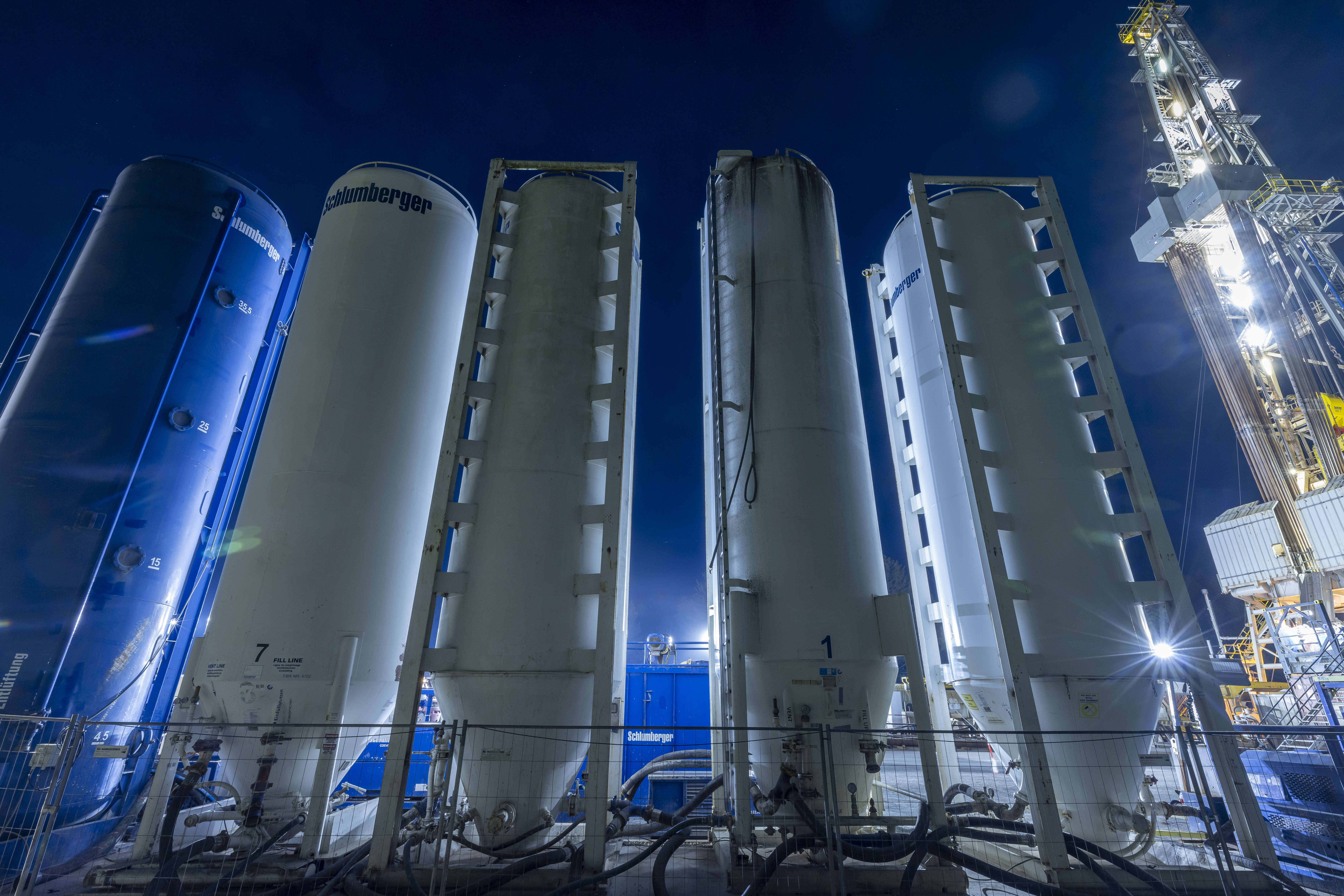
« La combinaison de solutions éoliennes, solaires et géothermiques profondes est très intéressante pour assurer la sécurité de l’approvisionnement énergétique pour une grande économie comme celle de l’Allemagne. »
Sur le même sujet
De la tourbe à l’éolien
Plus grand parc éolien des pays baltes construit en Estonie : plus d’électricité verte et renforcement de l’indépendance énergétique et de l’économie locale
Liens
Projets et articles associés
Celebrating diversity, equity and inclusion at Luxembourg Pride Week
The European Investment Bank (EIB) Group is taking part in Luxembourg Pride Week from 2 to 12 July, celebrating the LGBTIQ+ community and reaffirming its strong commitment to diversity, equity and inclusion.
Local leaders and EIB join forces to pool public and private funds for affordable houses
Intensifying their cooperation with the European Investment Bank, regions and cities on 2 July discussed the EU’s housing policy with President Calvino, Members of the European Parliament and associations. During their debate in a plenary session of the European Committee of the Regions, they also voiced concerns that the next EU budget will weaken EU support for social, energy and climate projects
EIB Group Complaints Mechanism outreach and dispute resolution workshop in Zagreb, Croatia
The EIB Group Complaints Mechanism, in collaboration with the Independent Complaint Mechanism for DEG, FMO and Proparco (ICM), and the Dispute Resolution Service (DRS) of the World Bank Accountability Mechanism, organised a regional workshop in Zagreb from 8 to 11 June 2026, with the support of the CEE Bankwatch Network.