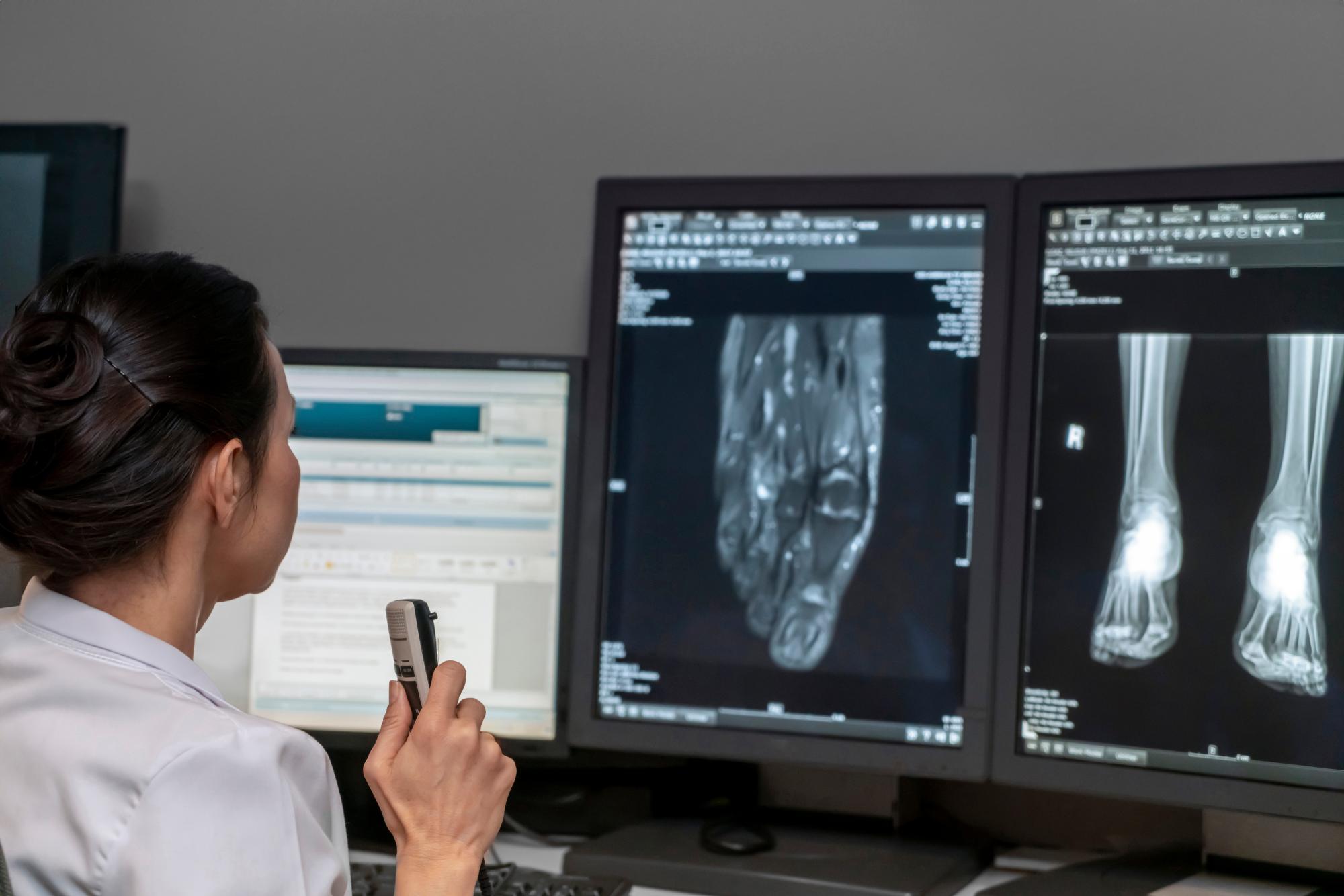
L’entreprise emploie plus de 80 personnes, dont un nombre important de médecins. Son logiciel est utilisé par plus de 15 000 professionnels dans plus de 90 pays.
Autres liens
Fiche récapitulative
Date de publication
18 avril 2023
Statut
Référence
Signé | 04/04/2023
20210254
Nom du projet
Promoteur – Intermédiaire financier
SMART REPORTING (IEU LS)
SMART REPORTING GMBH
Montant BEI envisagé (montant approximatif)
Coût total (montant approximatif)
EUR 15 million
EUR 31 million
Description
Objectifs
The promoter develops artificial intelligence (AI) enabled medical documentation technology to efficiently capture, structure and process clinical data at the source. The investment plan will mostly cover the development of the next generation reporting software.
The project will contribute to the digitalisation of healthcare, thereby improving efficiency and quality level, thus creating new possibilities for the use of healthcare data in clinical trials and drug development.
Additionnalité et impact
The purpose of the loan is to provide direct equity-type financing under the Research, Innovation and Digitalization window of InvestEU, benefiting from the EC guarantee, to finance research and development activities of an innovative synoptic and data-driven reporting solution Company that speeds up reporting time, enhances reporting quality and improves the communication in radiology and beyond. The financing of this project addresses the failure in financial markets for RDI-driven European SMEs suffering from systemic shortages of large, non-dilutive financing options for growth investments. Creation of knowledge and support of skilled jobs in Germany will further contribute positively towards the EU's 3% RDI intensity target. Currently, the Company does not have access either to non-dilutive or to long-term debt funding sources in the necessary amount. Due to volatility of European markets which has significantly increased in 2022, access to both equity markets and commercial debt providers has been highly limited for innovative but risky companies such as Smart Reporting.
Structuring the financing as venture debt caters to the investment needs of the Company, with a long tenor and deferred interest minimising cash outflows during the investment period, while most of the EIB remuneration will be driven by the equity kicker.
Aspects environnementaux
Passation des marchés
The project concerns investments in research and development activities carried out by the promoter and its partners in existing facilities without changing their already authorised scope. The research and development activities of the project do not fall under either Annex I or Annex II of the Environmental Impact Assessment (EIA) Directive 2011/92/EU amended by Directive 2014/52/EU.
The promoter is a private company not operating in the utilities sector and not having the status of a contracting authority. Thus, it is not covered by EU Directives on procurement. The Bank will require that all project contracts are procured in accordance with the applicable EU procurement legislation.
Étapes
À l'examen
Approuvé
Signé
27 mars 2023
4 avril 2023
Documents liés
Projets associés
Autres liens
Documents
Fiche technique sur les aspects sociaux et environnementaux - SMART REPORTING (IEU LS)
Date de publication
20 Apr 2023
Langue
Sujet général
Prêts
Numéro du document
164611148
Thématique du document
Information Environnementale
Type de document
Numéro du projet
20210254
Secteur(s)
Régions
Pays
Disponible au public
Télécharger maintenant
Lien vers la source
Autres liens
À la une
Lien vers la source
Autres liens
Au cœur du projet
Pourquoi et comment
Réduire le plus possible le temps consacré aux comptes rendus
Pourquoi
- Le médecin ordinaire consacre plus d’un tiers de ses heures de travail à rédiger des rapports.
- 40 % des médecins européens sont proches de l’âge de la retraite, de sorte que l’Europe fait face à la menace d’une pénurie imminente de médecins.
- Les radiologues sont des professionnels particulièrement recherchés. Plus de 80 % des systèmes de santé signalent des pénuries en matière de radiologie.
Comment
- Smart Reporting s’appuie sur la technologie numérique pour standardiser l’établissement de comptes rendus et réduire le plus possible le temps consacré à leur rédaction.
- L’entreprise s’associe à des ingénieurs en informatique et à des médecins pour élaborer des modèles pouvant être mis à jour régulièrement.
- Ces modèles comprennent des champs prédéfinis où saisir les informations pertinentes, ainsi que des informations cliniques générales et le fruit des recherches les plus récentes disponibles sur le sujet.
- Le logiciel est intégralement commandé par la voix, donc les médecins n’ont plus besoin de cliquer une seule fois.
Secteurs et pays

Récit
Des modèles qui sauvent des vies
Au début des années 2010, Wieland Sommer était un jeune radiologue enthousiaste qui venait de commencer à travailler dans l’un des plus grands hôpitaux d’Europe, la LMU Klinikum à Munich. Il ne lui a pas fallu longtemps pour se rendre compte qu’au lieu de se concentrer sur ses patients, il passait la plupart de son temps à rédiger des comptes rendus. « Même dans un domaine tel que la radiologie, qui repose traditionnellement beaucoup sur les comptes rendus, je me suis dit que mon temps aurait pu être mieux utilisé », raconte-t-il.

Et puis Wieland Sommer a eu une idée : s’appuyer sur la technologie numérique pour standardiser l’établissement de comptes rendus et réduire le plus possible le temps consacré à leur rédaction. Il a fondé l’entreprise et s’est associé à des ingénieurs en informatique pour élaborer des modèles pouvant être mis à jour régulièrement, afin que les médecins aient toujours accès aux informations les plus pertinentes.
Prenons, par exemple, une radiographie du thorax. Près de 40 % des radiographies thoraciques sont pratiquées pour dépister le cancer du poumon. Dans ce cas, le radiologue peut simplement sélectionner le modèle élaboré pour ce type de dépistage. Le modèle de compte rendu comprend des champs prédéfinis où saisir les informations pertinentes, ainsi que des informations cliniques générales et le fruit des recherches les plus récentes disponibles sur le sujet. Le radiologue ne doit plus partir de zéro pour rédiger son compte rendu.
Le système élaboré par la société pourrait se révéler très utile pour les médecins moins spécialisés travaillant dans les petits hôpitaux, qui seront en mesure de choisir un modèle pertinent afin d’évaluer le patient, ce qui leur permettra de prendre des décisions et de formuler des diagnostics plus éclairés.
Récit
Une intelligence artificielle pour des médecins en chair et en os
Smart Reporting intègre également l’intelligence artificielle dans son outil. L’IA mesure l’ampleur des anomalies enregistrées sur le cliché d’un patient, de sorte que, lors de l’examen suivant, son médecin peut facilement comparer les résultats et voir si des changements significatifs sont intervenus depuis sa visite précédente. « Le logiciel intègre automatiquement les résultats donnés par l’IA dans le rapport, sans remplacer le médecin », explique Peter Vanovertveld, co-directeur général de l’entreprise.

Rendre visible l’invisible
Les comptes rendus établis avec le logiciel de Smart Reporting contiennent des données qui peuvent être extraites pour servir ensuite à la recherche médicale. Actuellement, seulement 3 % des données recueillies dans les hôpitaux peuvent être évaluées à d’autres fins.
Tout comme la radiologie rend l’invisible visible, ce logiciel détecte ce qui est caché sous la surface. Par exemple, les tendances en matière de santé au sein de la population. « Imaginez si l’utilisation de cet outil avait été largement répandue en 2019 lorsque les premiers cas de COVID-19 ont commencé à apparaître », conclut Peter Vanovertveld. « Les responsables hospitaliers, ayant accès à la plateforme, auraient pu remarquer qu’un phénomène inhabituel se produisait. »
Nous serons peut-être en mesure de prévenir la prochaine pandémie.
Sur le même sujet
Rendre l’invisible visible
Une start-up allemande de technologie médicale utilise l’IA pour réduire le temps consacré aux rapports médicaux, passer au numérique et améliorer les soins.
Liens
Projets et articles associés
Energy storage: EIB Group supports EU tripartite initiative
The European Investment Bank (EIB) Group supports a new EU-level initiative to scale up energy storage as part of the clean energy transition. Announced alongside the meeting of EU energy ministers in Luxembourg, the tripartite agreement brings together public authorities, energy storage and renewables developers, and financial institutions to accelerate storage deployment, strengthen the energy system, stabilise prices and reduce reliance on fossil fuels.
EIB Global supports Trans-Caspian Transport Corridor with €150 million for road rehabilitation in Kazakhstan
The European Investment Bank (EIB) is providing a €150 million framework loan to Kazakhstan to support the rehabilitation of strategic road infrastructure along the Trans-Caspian Transport Corridor (TCTC), a key route connecting Central Asia and Europe.
Backed by the European Union under the Global Europe (NDICI) framework, the financing will support investments implemented by Kazakhstan's national road operator QazAvtoZhol. The operation will improve transport connectivity, strengthen road safety and climate resilience, and facilitate trade and economic development across the region.
The investment forms part of the European Union's Global Gateway strategy and follows the Memorandum of Understanding signed between the EIB and Kazakhstan in 2024 to strengthen sustainable transport connections between Europe and Asia.
The programme will finance the rehabilitation of approximately 1,370 kilometres of roads across central and southern Kazakhstan, including sections linking the country with neighbouring Central Asian states. By improving transport efficiency and resilience, the investment will reduce travel times, improve road conditions and facilitate the movement of goods and people along one of the region's most important transport corridors.
EIB Vice-President Marek Mora, who oversees the Bank's operations in Central Asia, including Kazakhstan, said:
"Good roads do more than connect places on a map. They connect people, they let businesses reach new markets, make travel safer and faster, and create opportunities for communities. By investing in key transport links across Kazakhstan, we are supporting a corridor that is becoming increasingly important for trade between Europe and Central Asia while delivering tangible benefits locally. Hard infrastructure is the backbone for trades. This is what sustainable connectivity is about: creating practical connections that support growth, resilience and cooperation."
EU Commissioner for International Partnerships, Jozef Síkela, stated:
"The Trans-Caspian Transport Corridor is playing an increasingly important role in connecting Europe and Central Asia. Through this investment, and together with our partners, we are supporting the development of safer, more resilient and more efficient transport infrastructure in Kazakhstan. This is a tangible example of Global Gateway in action, strengthening regional connectivity, supporting sustainable economic development and deepening our partnership with Kazakhstan and the wider region."
EU Ambassador to Kazakhstan Aleška Simkić commented:
"The Trans-Caspian Transport Corridor is one of the key priorities under the EU's Global Gateway strategy. Developing efficient, reliable and sustainable transport connections between Central Asia and Europe strengthens trade, enhances economic cooperation and contributes to the resilience of global supply chains. This investment demonstrates the European Union's long-term commitment to fostering connectivity, prosperity, and strong partnerships across the region."
The programme is expected to generate around 5,900 person-years of employment during implementation, creating opportunities for local communities and supporting economic activity. By strengthening one of the main transport links between Central Asia and Europe, the investment will facilitate trade, improve regional connectivity and contribute to the objectives of the EU-Kazakhstan partnership and the Global Gateway strategy.
EIB and Swedbank have secured EUR 200.75 million in financing for the developer of the Rūdninkai Military Town
The developer of part A of stage II of the Rūdninkai Military Town project, Rudina, has signed loan agreements with the European Investment Bank (EIB) and Swedbank: each institution is providing a loan of EUR 100.37 million. Rudina is indirectly managed by the INVL fund ‘INVL Defence Infrastructure Fund I’, together with the construction companies Conres and Fegda.