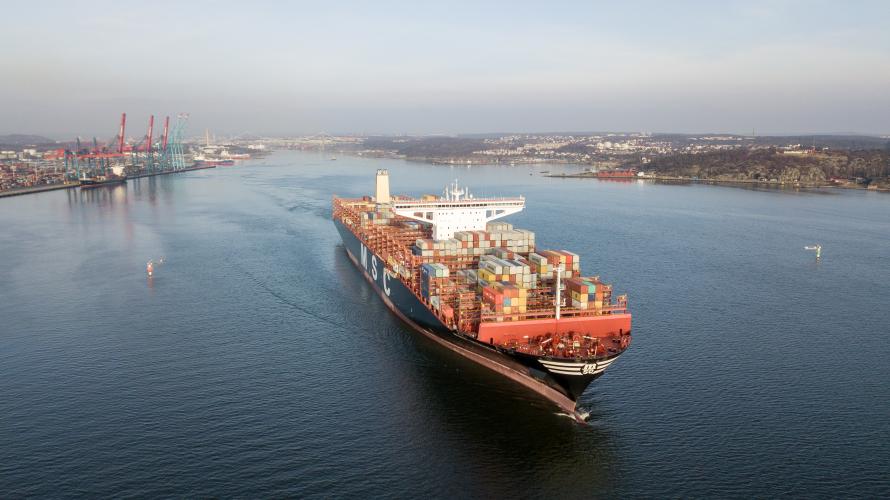
- Finanzierung für Ausbauprojekt Skandia Gateway zur Vertiefung der Fahrrinne und Verstärkung der Kaianlagen im Hafen von Göteborg
- Künftig können auch ganz große Containerschiffe voll beladen in den Hafen einlaufen; Projekt vermindert den Fernverkehr auf der Straße
- Investitionen stärken Schwedens Exportkapazitäten und verbessern Europas Verkehrsanbindung
Die Europäische Investitionsbank (EIB) stellt dem Hafen von Göteborg 850 Millionen schwedische Kronen (rund 77,5 Millionen Euro) für das Großprojekt Skandia Gateway zur Verfügung. Bei dem Infrastrukturvorhaben geht es um die Vertiefung der Fahrrinne und die Verstärkung der Kaianlagen. Nach den Arbeiten können die größten Containerschiffe der Welt voll beladen in den Hafen einlaufen. Das stärkt Schwedens Handelskapazitäten und macht die Transportketten nachhaltiger. Das Projekt wird zusammen mit der schwedischen Verkehrsbehörde, der schwedischen Seeschifffahrtsbehörde und dem Hafen von Göteborg durchgeführt.
Der Hafen von Göteborg ist der größte in den nordischen Ländern und der einzige skandinavische Hafen mit direkten Hochseeverbindungen zu Zielen weltweit. Jährlich werden dort 39 Millionen Tonnen Güter umgeschlagen – fast ein Drittel des schwedischen Außenhandels. Allerdings sind Fahrrinne und Hafenbecken derzeit zu flach, um ganz große Schiffe bei vollem Tiefgang aufzunehmen. Das schränkt seine Kapazität ein.
Mit dem Projekt Skandia Gateway will der Hafen nun die Fahrrinne um vier Meter vertiefen und die Kaianlagen auf einer Länge von rund 700 Metern verstärken und modernisieren. Neben Baggerarbeiten sind ein neuer Kranbahnbalken, eine neue Kaimauer, Erosionsschutzmaßnahmen und moderne Ausrüstung für eine sichere Navigation geplant. Die Arbeiten beginnen voraussichtlich im August 2026.
EIB-Vizepräsident Karl Nehammer: „Der Hafen von Göteborg ist für Schwedens Anbindung an die Welthandelsströme enorm wichtig. Mit unserer Finanzierung für Skandia Gateway stärken wir Europas Verkehrsanbindung, senken die Emissionen und machen den internationalen Seeverkehr effizienter. Das entspricht den Verkehrs- und Klimazielen der EU.“
Sobald Göteborg mehr Kapazitäten hat, müssen weniger Frachtschiffe zu anderen Häfen in Nordeuropa umgeleitet werden. Das vermindert den Fernverkehr auf der Straße, dämmt Staus und Emissionen ein und macht die Transportkette resilienter.
Jan Andersson, Leiter des Hafenprojekts: „Das Projekt Skandiaporten ist für Schweden unverzichtbar, um stärker am Welthandel teilzunehmen. Und der Hafen braucht die Investitionen, um weiterhin als internationales Drehkreuz agieren zu können. Die Investitionen dienen nicht nur langfristig unserer Zukunftssicherheit. Sie erhöhen unmittelbar die Kapazität des Hafens und machen die schwedische Industrie wettbewerbsfähiger.“
Das Projekt fördert den Ausbau des transeuropäischen Verkehrsnetzes (TEN-V), das wichtige Häfen, Bahnverbindungen, Straßen und Logistikzentren verbindet und dadurch die Transportströme in der EU schnell, sicher und nachhaltig macht. Der Hafen von Göteborg gehört zum TEN-V-Kernnetz.
Hintergrundinformationen
EIB
Die Europäische Investitionsbank (EIB) ist die Einrichtung der Europäischen Union für langfristige Finanzierungen. Ihre Anteilseigner sind die Mitgliedstaaten. Ausgehend von acht Kernprioritäten finanzieren wir Investitionen, die zu den Zielen der EU beitragen. So fördern wir die Bereiche Klima und Umwelt, Digitalisierung und technologische Innovationen, Sicherheit und Verteidigung, Kohäsion, Landwirtschaft und Bioökonomie, soziale Infrastruktur, die Kapitalmarktunion und ein stärkeres Europa in einer stabileren und friedlichen Welt.
Die EIB-Gruppe, zu der neben der EIB auch der Europäische Investitionsfonds (EIF) gehört, unterzeichnete 2024 knapp 89 Milliarden Euro an neuen Finanzierungen für mehr als 900 wirkungsstarke Projekte, die Europa wettbewerbsfähiger und sicherer machen.
Alle von der EIB-Gruppe finanzierten Projekte entsprechen dem Pariser Klimaabkommen – so wie in unserem Klimabank-Fahrplan zugesagt. Fast 60 Prozent ihrer jährlichen Finanzierungen fließen in Projekte, die direkt zu Klimaschutz, Klimaanpassung und einer gesünderen Umwelt beitragen.
Die Gruppe setzt sich für eine stärkere Integration der Märkte ein und mobilisiert mit ihrem Engagement zusätzliche Investitionen. 2024 stieß sie Rekordinvestitionen von mehr als 100 Milliarden Euro in Europas Energiesicherheit an und mobilisierte 110 Milliarden Euro an Wachstumskapital für Start-ups, Scale-ups und europäische Pioniere. Rund die Hälfte der EIB-Finanzierungen innerhalb der EU fließt in Kohäsionsregionen, wo das Pro-Kopf-Einkommen unter dem EU-Durchschnitt liegt.
Auf unserer Website finden Sie hochwertige, aktuelle Fotos vom Sitz der EIB-Gruppe.
Hafen von Göteborg
Der Hafen von Göteborg ist der größte Hafen in Skandinavien. Über ihn werden rund 20 Prozent des schwedischen Außenhandels und mehr als die Hälfte des gesamten Containerverkehrs abgewickelt. Der Hafen bietet die meisten Schifffahrtsverbindungen in Skandinavien und bindet die schwedische Wirtschaft direkt an ihre wichtigsten Märkte an. Um den Güterverkehr klimaverträglicher zu machen, setzt er auf Nachhaltigkeit, Innovation und Digitalisierung. Der Hafen von Göteborg bietet Terminals für Energieprodukte, Autos, RoRo-Ladung, Container und Passagiere. Weitere Informationen unter www.goteborgshamn.se