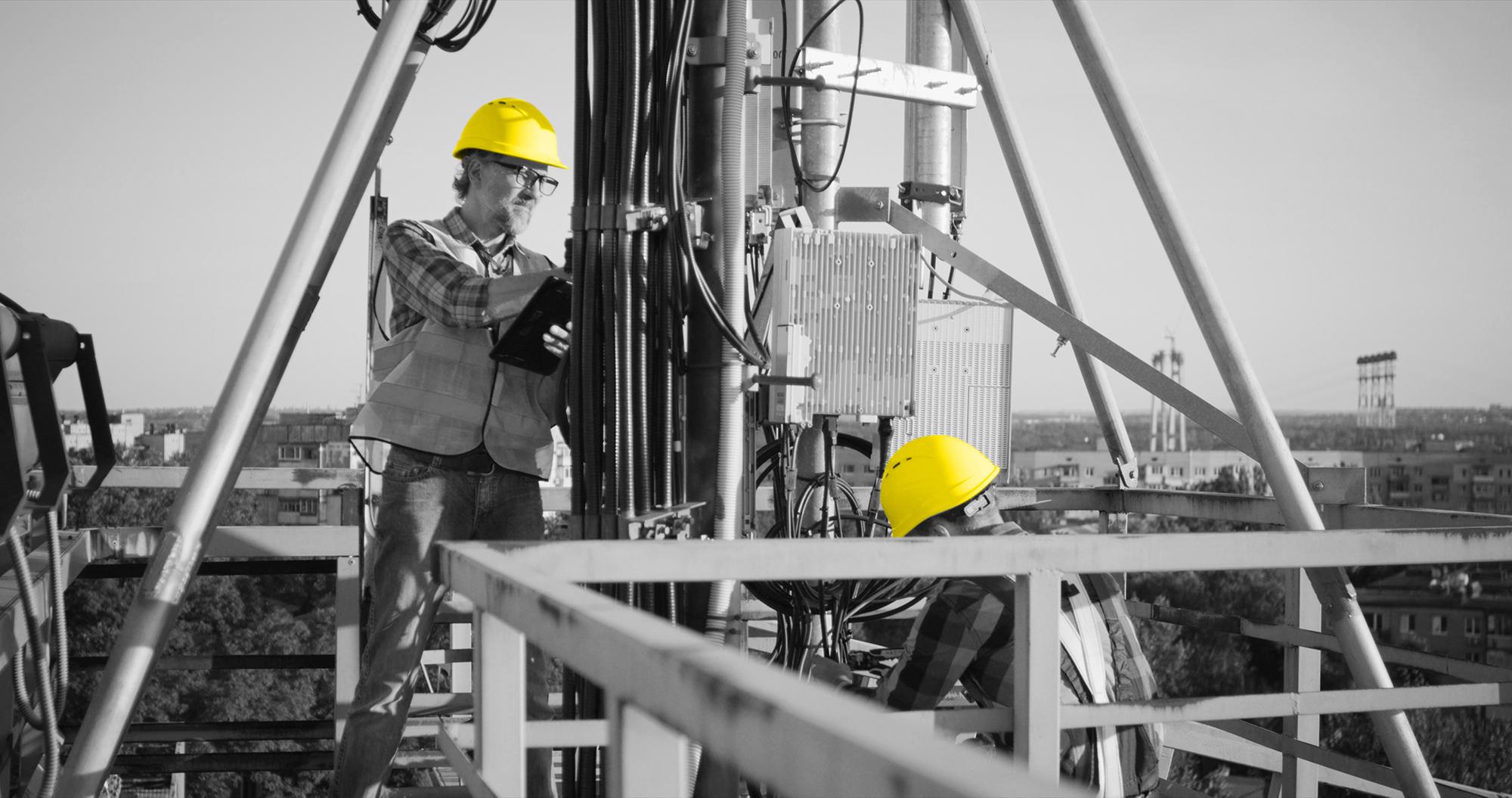
We were the first mobile company to bring 4G to Malta, and now it’s time to build a new network. The financing gives us credibility and helps us accelerate the project.
Other links
Summary sheet
Release date
10 September 2021
Status
Reference
Signed | 22/04/2022
20210442
Project name
Promoter - financial intermediary
EPIC MALTA MOBILE AND FIXED NETWORK EVOLUTION
EPIC COMMUNICATIONS LTD
Proposed EIB finance (Approximate amount)
Total cost (Approximate amount)
EUR 20 million
EUR 43 million
Description
Objectives
The project concerns investments in the upgrade of the Promoter's mobile network with advanced 4G/LTE, early deployment of 5G, roll-out of fixed very high capacity (VHC) network as well as upgrades to the core network and the IT systems. The project implementation is planned for the years 2021 to 2024.
The Fiber to the Home (FTTH) access component of the project aims to cover the main villages of Malta with FTTH. The project's mobile component foresees deployment of the new generation equipment in order to benefit from the superior roadmap and performance as part of the 5G rollout strategy and plans. At project completion, the Promoter foresees a nationwide 70% coverage of 5G services.
Additionality and Impact
The project contributes to the policy objectives of Innovation and Digitalisation. It concerns investments to upgrade the mobile telecommunications network and initiate the expansion of the fixed telecommunications network operated by the promoter in Malta. Investments in innovative telecommunications infrastructure face an uncertain business model due to significant investment costs in front of uncertain revenue flows, which leads to delayed availability of services with significant economic costs for the consumers. The project will accelerate the deployment of innovative telecommunication technologies and thus generate positive network externalities by enabling more users to benefit from improved and faster access to information and innovative digital services. The project also generates further externalities to other sectors of the economy by supporting innovation and competitiveness. These benefits are not fully captured by the project revenues. The promoter is experienced in the design and operation of telecommunication networks, being the first company offering mobile services in Malta. The promoter has an experienced management team and in-depth understanding of market needs and drivers, which will support project implementation, results delivery and address the market failures. The EIB contribution resides in the diversification, flexibility and positive signaling effect from the financing of thematic projects.
Environmental aspects
Procurement
Investments in fixed and mobile telecommunications projects do not fall under Annex I or II of the EIA Directive 2014/52/EU amending the Directive 2011/92/EU. The systems have limited environmental effects, apart from disturbances during civil work constructions, which will be mitigated by appropriate measures.
The Promoter has been assessed by the EIB as being a private company not subject to EU rules on public procurement or concessions. However, if at the project appraisal, the EIB were to conclude that the Promoter is subject to EU public procurement legislation then the Bank would duly inform the Commission Services and would require the Promoter to apply those rules.
Related documents
Other links
Documents
Environmental and Social Data Sheet (ESDS) - EPIC MALTA MOBILE AND FIXED NETWORK EVOLUTION
Publication Date
22 Feb 2022
Document language
Main Topic
Lending
Document Number
150872882
Document Focus
Environmental Information
Document Type
Project Number
20210442
Sector(s)
Regions
Countries
Publicly available
Download now
Link to source
Other links
News & Stories
Link to source
Other links
Inside the project
How and Why
Supporting Malta’s digital transformation
Why
- Modernise Malta’s 5G network for better speed, coverage, and connectivity
- Support tourism, finance, and information technology sectors that are important for Malta’s economy
- Boost the island’s digitalisation and help it become a digital powerhouse
How
- Enable Epic to continue its network expansion and the rollout of its 5G network
- Deploy ultrafast fibre-to-the-home infrastructure in parts of the island
- Upgrade over 300 sites with new technology
Sectors & Countries

Having reliable connectivity to download new things and to communicate fast is integral to an island. Malta needs to be connected to the rest of the world to remain competitive and to progress.
Why a good connection is important?
The importance of network connectivity cannot be overstated in today's digital age. We rely daily on seamless connectivity to navigate a multitude of tasks, from communication and entertainment to business and education. It also plays a pivotal role in the modern economy by fostering innovation, digital transformation and supporting the green transition. A reliable and robust network can improve remote working, telecommuting and global connectivity, while attracting investment, boosting productivity and enhancing economic competitiveness.
As a small island nation, Malta relies heavily on sectors such as tourism, finance and information technology. A better network can enhance these sectors by providing faster and more stable connectivity, benefiting businesses, entrepreneurs and visitors.

What is 5G?
5G, or fifth-generation wireless technology, represents a significant advancement in mobile communications. It operates on higher frequency bands, and it aims to create a networks that connects everyone and everything, from people to machines and objects.
5G also offers:
- Faster speeds then 4G, enabling quicker downloads, smoother streaming, and reduced latency
- Reduced latency that is crucial for applications like autonomous vehicles, remote surgery, and augmented reality, where split-second reactions are essential
- Greater capacity to accommodate a significantly larger number of devices simultaneously, from smart home appliances to industrial sensors
- More reliable connections even in crowded areas or during peak times
- Innovative applications, such as augmented and virtual reality experiences, remote telemedicine, and smart manufacturing, ushering in a new era of technological possibilities
- Lower energy consumption by about 50% to 95% when all data traffic is moved to 5G networks
Related media
5G for future generations
5G mobile technology is good news for the first generation of people to care about climate change, because it will bring energy efficiency gains
Small island, big impact
Bank of Valetta helps Malta SMEs innovate and create new jobs after the COVID-19 pandemic
Links
Related projects and stories
Spain in the EU: Four decades of transformation
From high-speed rail to space, here’s how four decades of EU membership helped Spain anchor its democracy, modernise its economy, and become an innovation hub.
Energy storage: EIB Group supports EU tripartite initiative
The European Investment Bank (EIB) Group supports a new EU-level initiative to scale up energy storage as part of the clean energy transition. Announced alongside the meeting of EU energy ministers in Luxembourg, the tripartite agreement brings together public authorities, energy storage and renewables developers, and financial institutions to accelerate storage deployment, strengthen the energy system, stabilise prices and reduce reliance on fossil fuels.
EIB Global supports Trans-Caspian Transport Corridor with €150 million for road rehabilitation in Kazakhstan
The European Investment Bank (EIB) is providing a €150 million framework loan to Kazakhstan to support the rehabilitation of strategic road infrastructure along the Trans-Caspian Transport Corridor (TCTC), a key route connecting Central Asia and Europe.
Backed by the European Union under the Global Europe (NDICI) framework, the financing will support investments implemented by Kazakhstan's national road operator QazAvtoZhol. The operation will improve transport connectivity, strengthen road safety and climate resilience, and facilitate trade and economic development across the region.
The investment forms part of the European Union's Global Gateway strategy and follows the Memorandum of Understanding signed between the EIB and Kazakhstan in 2024 to strengthen sustainable transport connections between Europe and Asia.
The programme will finance the rehabilitation of approximately 1,370 kilometres of roads across central and southern Kazakhstan, including sections linking the country with neighbouring Central Asian states. By improving transport efficiency and resilience, the investment will reduce travel times, improve road conditions and facilitate the movement of goods and people along one of the region's most important transport corridors.
EIB Vice-President Marek Mora, who oversees the Bank's operations in Central Asia, including Kazakhstan, said:
"Good roads do more than connect places on a map. They connect people, they let businesses reach new markets, make travel safer and faster, and create opportunities for communities. By investing in key transport links across Kazakhstan, we are supporting a corridor that is becoming increasingly important for trade between Europe and Central Asia while delivering tangible benefits locally. Hard infrastructure is the backbone for trades. This is what sustainable connectivity is about: creating practical connections that support growth, resilience and cooperation."
EU Commissioner for International Partnerships, Jozef Síkela, stated:
"The Trans-Caspian Transport Corridor is playing an increasingly important role in connecting Europe and Central Asia. Through this investment, and together with our partners, we are supporting the development of safer, more resilient and more efficient transport infrastructure in Kazakhstan. This is a tangible example of Global Gateway in action, strengthening regional connectivity, supporting sustainable economic development and deepening our partnership with Kazakhstan and the wider region."
EU Ambassador to Kazakhstan Aleška Simkić commented:
"The Trans-Caspian Transport Corridor is one of the key priorities under the EU's Global Gateway strategy. Developing efficient, reliable and sustainable transport connections between Central Asia and Europe strengthens trade, enhances economic cooperation and contributes to the resilience of global supply chains. This investment demonstrates the European Union's long-term commitment to fostering connectivity, prosperity, and strong partnerships across the region."
The programme is expected to generate around 5,900 person-years of employment during implementation, creating opportunities for local communities and supporting economic activity. By strengthening one of the main transport links between Central Asia and Europe, the investment will facilitate trade, improve regional connectivity and contribute to the objectives of the EU-Kazakhstan partnership and the Global Gateway strategy.