Summary sheet
The project will finance the deployment of solar home systems in Benin. The solar home systems are composed of a solar panel, a central unit (including battery storage, an energy management system / charge controller and communication technology) and several appliances and will be sold on a payment plan basis to individual beneficiaries located in Benin under pay-as-you-go contracts.
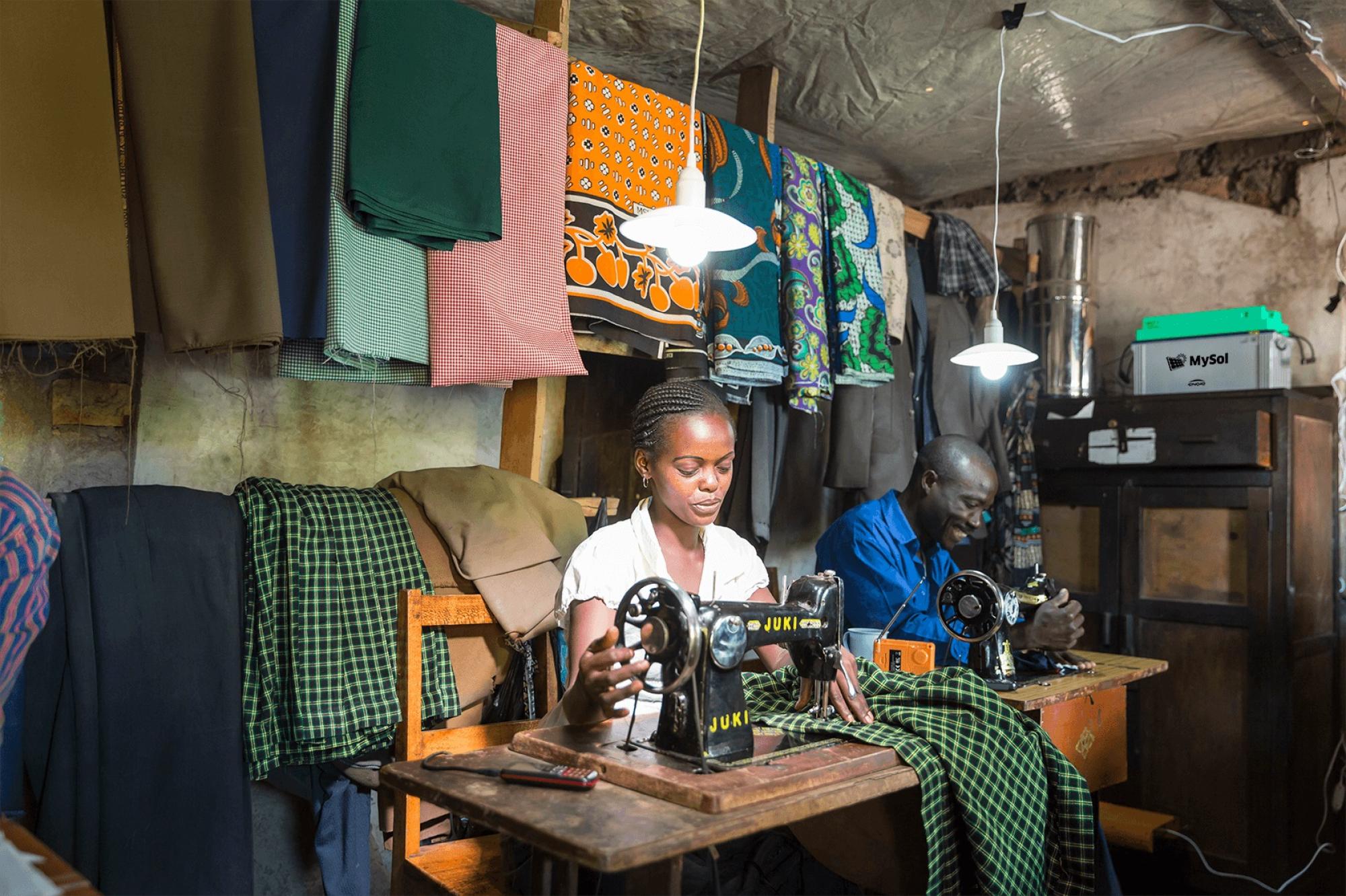
The operation aims at facilitating access to energy for households and micro-entrepreneurs in Benin by financing the design, production, distribution, installation and payment plans of about 107 000 Solar Home Systems. These Solar Home Systems provide basic, clean energy services, such as lighting and phone charging to households without grid access, who otherwise have to rely on inferior and more expensive alternatives. The operation is expected to significantly improve the living conditions of the final beneficiaries and thereby generate high development impact
The EIB financing will support the Promoter in providing clean and sustainable energy to currently un-electrified households in Benin, replacing the use of polluting fossil fuel alternatives. The operation thereby contributes to Climate Action, Environmental Sustainability and sustainable economic development goals and is therefore aligned with the current and upcoming National Indicate Programme, as well as with EIB lending priority objectives.
Such clean energy solutions, as financed by this project, suffer from market failures linked to the non-internalisation of the climate, environmental, and health benefits from sustainable energy solutions, which inhibit a stronger uptake of solar home systems and result in an overuse of polluting fossil fuel alternatives.
SHS companies suffer from financing constraints due to the relative novelty of this business model and the credit risk from providing payment plans to low-income clients without formal employment. The resulting difficulty to raise funding restrains the possibility of companies to offer the PAYGo (lease-to-own schemes) which are critical for the affordability of SHS.
EIB financing enables the Promoter to finance the growth of their business and offer affordable rates to end customers. It is expected that the operation will create a very high social benefit, by providing clean and reliable electricity and replacing polluting and harmful off-grid alternatives. The promoter has a solid governance system in place which appears well suited for the governance risks of the promoter's business environment.
The operation is expected to have overall significant positive environmental and social impact by providing clean energy to households that are currently un-served or under-served by the grid and mostly reliant on polluting and dangerous energy sources. Limited negative environmental impacts could arise from health and safety issues related to the inappropriate handling of batteries (notably at the time of disposal) and disposal of old devices (e.g. kerosene lanterns, candles, flashlights and generators for lighting). Considerable e-waste is only expected to arise from the operation in five to seven years and the Promoter is looking into potential e-waste handling schemes in the country/in the region, to ensure the maximisation of the re-use of components, whilst ensuring the appropriate handling of polluting items like batteries.
The Bank will require the Promoter to ensure that implementation of the project will be done in accordance with the Bank's Guide to Procurement.
Documents
News & Stories
Inside the project
How and Why
Transforming access to electricity in West Africa
Why
- Around 600 million people lack access to electricity in sub-Saharan Africa
- In Benin, only 40% of the population has electricity
- Households rely on kerosene for lighting and cell phone charging, which are expensive, polluting and inefficient
- Clean, sustainable energy sources like solar devices and solar home systems are expensive
How
- Pay-as-you-go solution to unlock solar home systems for 20 cents a day
- Customers don’t bear the full cost of the solar systems, such as solar panels and mini grids
- Deployment of 107 000 high-quality solar home systems in Benin
Sectors & Countries

Story
Unlocking solar systems at less than 20 cents a day
In Benin, there’s a significant disparity between access to electricity for urban residents (70%) and people living in rural areas (18%). About five million people lack access to electricity. Only 10% of households are currently using off-grid solar products.
Clean and sustainable energy sources like solar devices and solar home systems for off-grid households are expensive, a challenge to low- and medium-income households.
ENGIE Energy Access, the leading pay-as-you-go and mini-grids provider in Africa, provides a pay-as-you-go solution. Customers can make small payments to unlock the system for a day or week of usage at a time, until they have paid the full price and the systems are permanently unlocked.
This payment solution makes the affordability of basic electricity more accessible and affordable. Customers don’t have to pay the full cost of the solar system upfront and are able to repay the cost of the equipment over some years at less than 20 cents a day.
Off-grid solar power devices can also lead to a significant reduction in household air pollution by removing kerosene lamps from the picture, reducing health issues and accidents.
Listen to our podcast on climate energy solutions:

"More than one million households don’t have access to modern and sustainable energy in Benin alone."
Off-grid solar power tackles energy distribution challenges in Africa
Off-grid solar energy solutions, such as solar home systems, offer immediate access to affordable, clean and reliable electricity in places where grid or mini-grid connections aren’t economically or technically feasible yet.
It tackles the “last-mile” distribution problem of bringing critical goods and services (such as lighting, mobile phone charging, radio, television, and refrigeration) to remote, rural communities using solar powered technologies.
“Ultimately, this new initiative will provide economic, social, education and health benefits for households and micro-entrepreneurs who cannot be connected to the national electricity network,” says Romain Constant, an investment officer at the European Investment Bank.

Related media
Solar power for rural Africa
Crisis to spur green transition
Finance in Africa 2022: Navigating the financial landscape in turbulent times
Related projects and stories
Energy storage: EIB Group supports EU tripartite initiative
The European Investment Bank (EIB) Group supports a new EU-level initiative to scale up energy storage as part of the clean energy transition. Announced alongside the meeting of EU energy ministers in Luxembourg, the tripartite agreement brings together public authorities, energy storage and renewables developers, and financial institutions to accelerate storage deployment, strengthen the energy system, stabilise prices and reduce reliance on fossil fuels.
EIB Global supports Trans-Caspian Transport Corridor with €150 million for road rehabilitation in Kazakhstan
The European Investment Bank (EIB) is providing a €150 million framework loan to Kazakhstan to support the rehabilitation of strategic road infrastructure along the Trans-Caspian Transport Corridor (TCTC), a key route connecting Central Asia and Europe.
Backed by the European Union under the Global Europe (NDICI) framework, the financing will support investments implemented by Kazakhstan's national road operator QazAvtoZhol. The operation will improve transport connectivity, strengthen road safety and climate resilience, and facilitate trade and economic development across the region.
The investment forms part of the European Union's Global Gateway strategy and follows the Memorandum of Understanding signed between the EIB and Kazakhstan in 2024 to strengthen sustainable transport connections between Europe and Asia.
The programme will finance the rehabilitation of approximately 1,370 kilometres of roads across central and southern Kazakhstan, including sections linking the country with neighbouring Central Asian states. By improving transport efficiency and resilience, the investment will reduce travel times, improve road conditions and facilitate the movement of goods and people along one of the region's most important transport corridors.
EIB Vice-President Marek Mora, who oversees the Bank's operations in Central Asia, including Kazakhstan, said:
"Good roads do more than connect places on a map. They connect people, they let businesses reach new markets, make travel safer and faster, and create opportunities for communities. By investing in key transport links across Kazakhstan, we are supporting a corridor that is becoming increasingly important for trade between Europe and Central Asia while delivering tangible benefits locally. Hard infrastructure is the backbone for trades. This is what sustainable connectivity is about: creating practical connections that support growth, resilience and cooperation."
EU Commissioner for International Partnerships, Jozef Síkela, stated:
"The Trans-Caspian Transport Corridor is playing an increasingly important role in connecting Europe and Central Asia. Through this investment, and together with our partners, we are supporting the development of safer, more resilient and more efficient transport infrastructure in Kazakhstan. This is a tangible example of Global Gateway in action, strengthening regional connectivity, supporting sustainable economic development and deepening our partnership with Kazakhstan and the wider region."
EU Ambassador to Kazakhstan Aleška Simkić commented:
"The Trans-Caspian Transport Corridor is one of the key priorities under the EU's Global Gateway strategy. Developing efficient, reliable and sustainable transport connections between Central Asia and Europe strengthens trade, enhances economic cooperation and contributes to the resilience of global supply chains. This investment demonstrates the European Union's long-term commitment to fostering connectivity, prosperity, and strong partnerships across the region."
The programme is expected to generate around 5,900 person-years of employment during implementation, creating opportunities for local communities and supporting economic activity. By strengthening one of the main transport links between Central Asia and Europe, the investment will facilitate trade, improve regional connectivity and contribute to the objectives of the EU-Kazakhstan partnership and the Global Gateway strategy.
EIB and Swedbank have secured EUR 200.75 million in financing for the developer of the Rūdninkai Military Town
The developer of part A of stage II of the Rūdninkai Military Town project, Rudina, has signed loan agreements with the European Investment Bank (EIB) and Swedbank: each institution is providing a loan of EUR 100.37 million. Rudina is indirectly managed by the INVL fund ‘INVL Defence Infrastructure Fund I’, together with the construction companies Conres and Fegda.