- Digitalisation and AI are boosting innovation and productivity, and Croatian firms aim to catch up with their EU peers in adopting advanced digital technologies
- Future policy support in Croatia should prioritise impact and the mobilisation of private capital, particularly for scale‑ups, to build on the effectiveness of pan‑European instruments.
- The European economy has shown resilience despite unprecedented shocks and geopolitical challenges. In Croatia, 89% of firms continue to invest, slightly above the EU average.
The European Investment Bank (EIB) Group and the Croatian National Bank (HNB) today hosted the conference “Shaping Croatia’s AI‑Ready Economy: Financing, Skills and Policies”, bringing together policymakers, financial institutions and business leaders to advocate accelerating the adoption of artificial intelligence (AI) in Croatia.
Participants examined the major impact of AI will have on the long‑term competitiveness of the Croatian economy and its ability to offer better jobs, higher wages and more resilient and sustainable long‑term economic growth. Participants discussed how to accelerate AI adoption through better deploy financing instruments, develop public policies, strengthen regulatory frameworks and mobilise private investment at scale. The discussions also focused on best ways to reinforce the local innovation ecosystem and improve access to finance and skills for smaller firms.
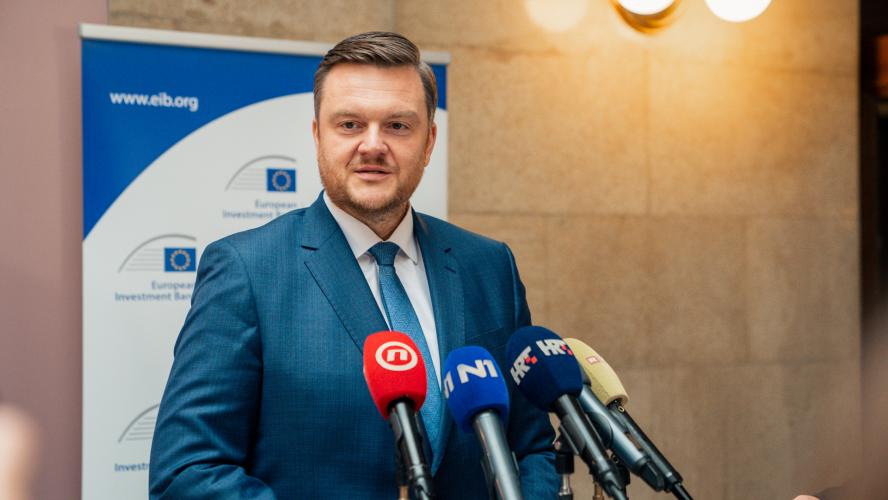
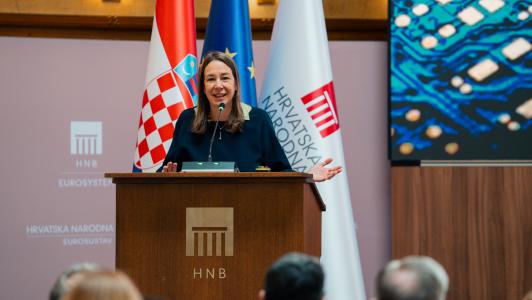
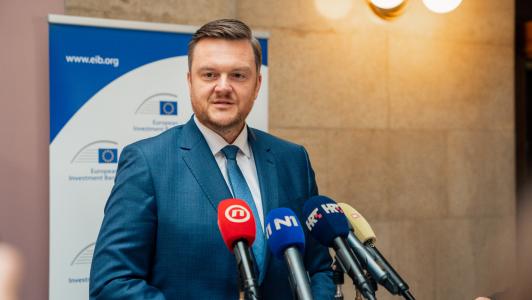
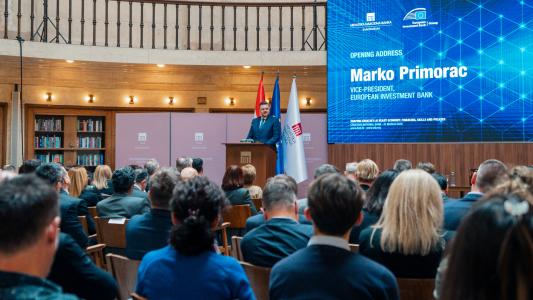
Tomislav Ćorić, Deputy Prime Minister and Minister of Finance of Croatia, Boris Vujčić, Governor of the Croatian National Bank, and Marko Primorac, Vice‑President of the European Investment Bank delivered keynote addresses. The event marked Vice‑President Primorac’s first public appearance representing the EIB in his new role.
“Accelerating AI adoption is essential for Croatia’s long‑term competitiveness,” said Marko Primorac, Vice‑President of the EIB. “This requires sustained investment not only in technology, but also in capital markets, skills development and closer cooperation between public institutions, financial partners and industry.”
"Many firms, especially smaller ones, face real challenges in adopting AI: limited access to finance, a shortage of skilled workers, fragmented data, and regulatory uncertainty. In some cases, there is also a lack of clarity about what AI can realistically deliver!“ said Boris Vujčić, Governor of the Croatian National Bank. „Overcoming these barriers requires a coordinated effort, which brings me to the three key pillars highlighted in today's conference: financing, skills, and policies. Of course, as a central banker, I cannot avoid mentioning the risks such as overreliance in AI and its implications for the labour market. So yes, we should embrace AI—but with both ambition and caution."
EIB survey highlights untapped AI potential in Croatian firms
During the conference, Debora Revoltella, Chief Economist of the EIB Group, presented the latest findings of the EIB Investment Survey 2025 for Croatia, alongside the policy conclusions of the EIB Investment Report 2025/2026, which together provide a comprehensive assessment of AI adoption among Croatian firms.
The survey shows that Croatian companies continue to invest at a high rate, with 89% of firms investing, slightly above the EU average. However, only around one in five firms systematically uses generative AI, well below the EU average, and usage remains largely confined to internal processes. This underscores significant untapped potential for productivity growth.
“Croatia can build on its strong engineering skills and active technology sector to accelerate AI adoption,” said Debora Revoltella, EIB Group Chief Economist. “Success will be critical to boosting productivity, moving towards higher value‑added activities and strengthening integration into European and global value chains, supporting sustainable job creation and long‑term income growth for Croats.”
According to the latest EIB Investment Report 2025/2026 the solution toolkit includes the completion of the EU`s Internal Market to deliver business opportunities and resilience, by creating the Savings and Investments Union to increase and simplify pan-European financing, especially for scale-up financing and advancing the transformation of the energy market and leveraging the potential of AI. Finally, the report suggests developing business environment & co-investment in skills: reducing bureaucracy to reduce firm’s costs and accelerate digitalisation while investments in skills are key enablers of digitalisation.
A central role in strengthening Europe’s artificial intelligence for EIB Group
The European Investment Bank (EIB) Group plays a central role in strengthening Europe’s artificial intelligence (AI) ecosystem by financing innovation, scaling technology companies and supporting the development of strategic digital infrastructure. Under its flagship TechEU programme, the EIB Group aims to provide €70 billion in equity, quasi‑equity, loans and guarantees between 2025 and 2027, mobilising up to €250 billion in total investment for innovation, including AI, digitalisation, semiconductors and advanced technologies.
In 2025 alone, the EIB Group delivered more than €22 billion in financing for innovation and digitalisation, including targeted support for AI‑enabled technologies and data‑driven business models.
Through cooperation with the European Commission, the EIB Group supports the InvestAI initiative, that aims at mobilising €20 billion in public funding to develop up to five AI gigafactories across the EU, with EIB advisory and potential co‑financing to crowd in private capital.
Background information
EIB Group
The European Investment Bank (ElB) Group is the financing arm of the European Union, owned by the 27 Member States, and one of the largest multilateral development banks in the world. In 2025, the EIB Group signed €100 billion of new financing and advisory services for over 870 high-impact projects in eight core priorities that support EU policy objectives: climate action and the environment, digitalisation and technological innovation, security and defence, territorial cohesion, agriculture and the bioeconomy, social infrastructure, strong global partnerships and the savings and investment union. Beyond long-term loans for large infrastructure, the EIB Group crowds-in private investment for high-risk innovative projects and businesses, with a growing role in Europe’s markets for venture debt, venture capital, guarantees and securitisations.
The European Investment Fund (EIF) is the subsidiary of the EIB Group specialised in providing guarantees and equity to improve access to finance for small and medium-sized businesses and startups across Europe. Acting as an anchor investor and through its extensive network of partnering banks and investment funds, the EIF mobilises private investment and nurtures the ecosystem of venture capital funds to support innovative European entrepreneurs.
In 2023, the EIF together with six member states (France, Germany, Italy, Spain, Belgium and the Netherlands) launched the European Tech Champions Initiative, a fund of funds to scale up innovative startups. This initiative has already enabled the creation of 14 European venture capital mega-funds and scaled up 40 companies, including 11 unicorns (with more than €1 billion in capital).
EIB and Croatian National Bank highlight artificial intelligence role in strengthening Croatia’s economy
©EIB
Download original
EIB and Croatian National Bank highlight artificial intelligence role in strengthening Croatia’s economy
©EIB
Download original

EIB and Croatian National Bank highlight artificial intelligence role in strengthening Croatia’s economy
©EIB
Download original
EIB and Croatian National Bank highlight artificial intelligence role in strengthening Croatia’s economy
©EIB
Download original
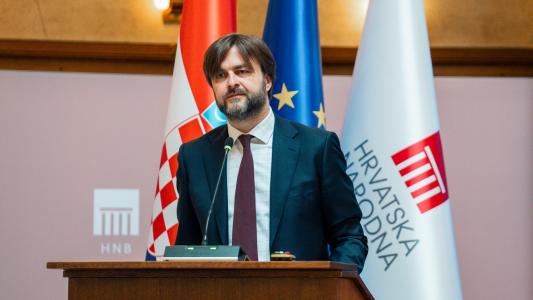
EIB and Croatian National Bank highlight artificial intelligence role in strengthening Croatia’s economy
©EIB
Download original
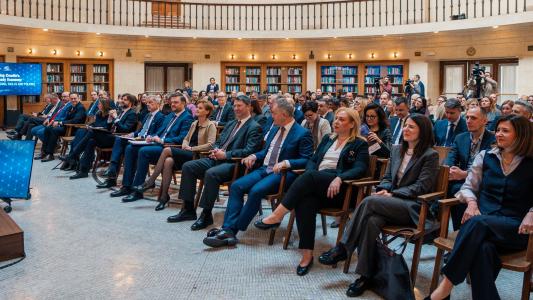
EIB and Croatian National Bank highlight artificial intelligence role in strengthening Croatia’s economy
©EIB
Download original
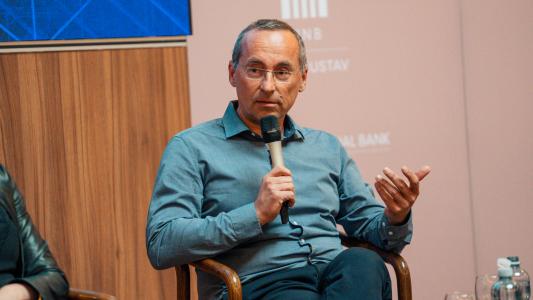
EIB and Croatian National Bank highlight artificial intelligence role in strengthening Croatia’s economy
©EIB
Download original
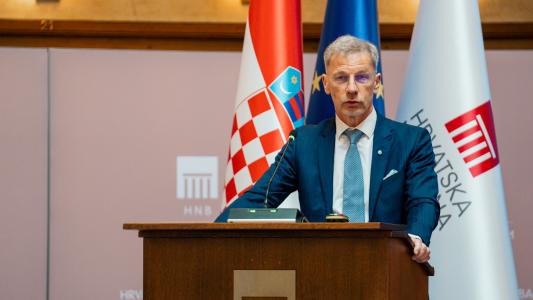
EIB and Croatian National Bank highlight artificial intelligence role in strengthening Croatia’s economy
©EIB
Download original
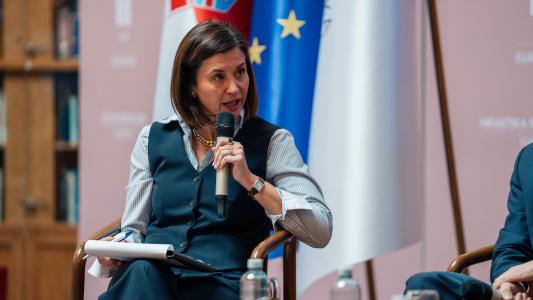
EIB and Croatian National Bank highlight artificial intelligence role in strengthening Croatia’s economy
©EIB
Download original