Search EN menu en EIB GROUP CLIENT PORTAL
Search
Results
Top 5 search results See all results Advanced search
Top searches
Most visited pages

    Climate solutions: Your stomach can save humanity

    To fight climate change food has to be produced more efficiently. Here’s how data and technology can make our food choices environmentally friendly The findings, interpretations and conclusions do not necessarily reflect the views of the European Investment Bank.

    Part of the series "Climate Solutions (Essays)" 8 October 2019
     

    Listen


    >> “Climate Solutions” is also available as a podcast and an e-book.


    By Janel Siemplenski Lefort, Arnold Verbeek, Surya Fackelmann and Brendan McDonagh

    Our quest for food has historically come at the planet’s expense. For millennia, nature was pushed aside to make room for growing crops and raising animals.

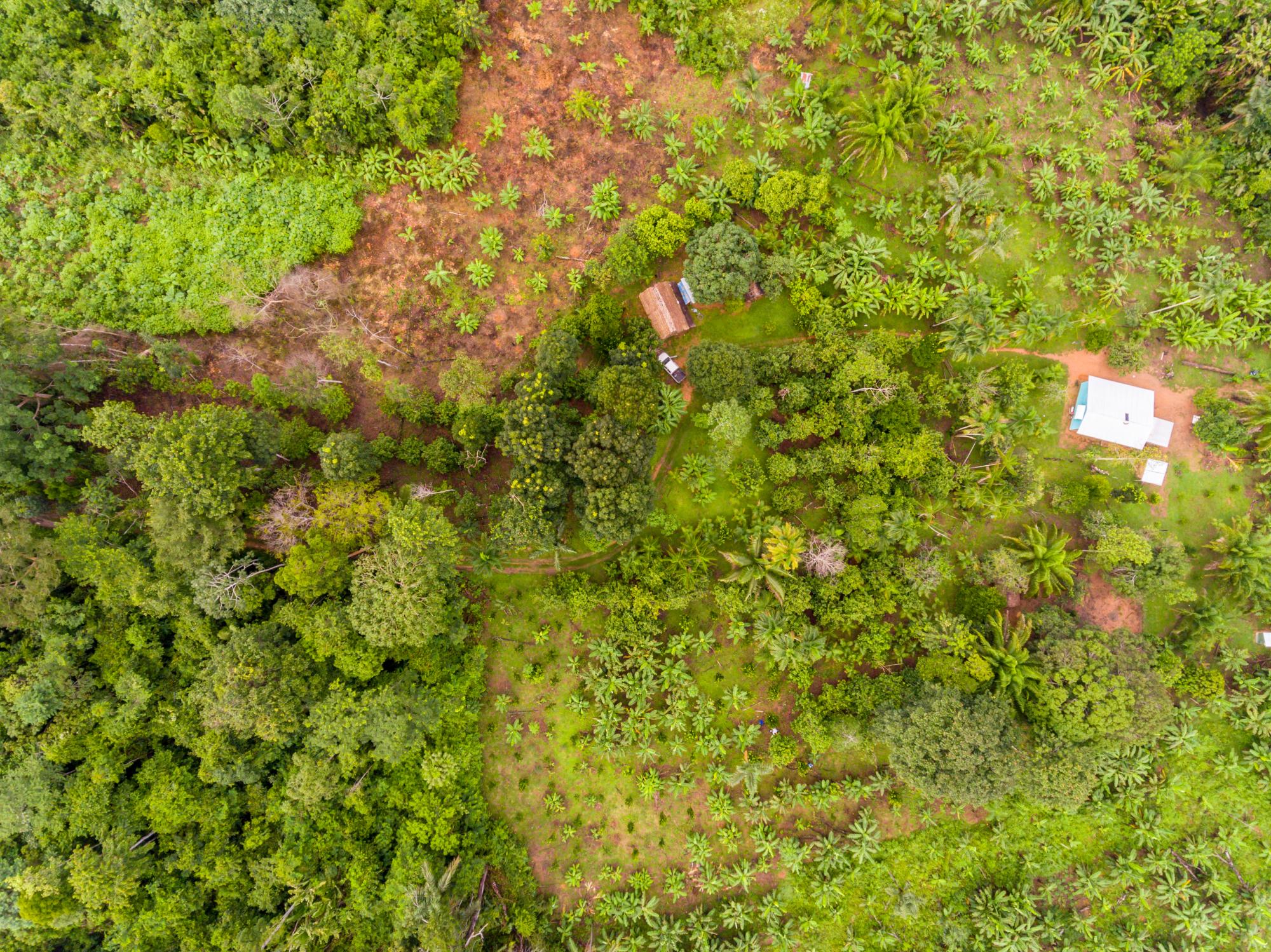
    As much as half of the Earth’s forests were felled over the last 5 000 years. In the first decade of this century, tropical countries lost seven million hectares of forests each year, mainly for agriculture.

    Nourishing the world’s 7.6 billion people is degrading ecosystems, depleting water resources and driving climate change. Agriculture for food and for non-food products like leather accounts for over one-third of global greenhouse gas emissions and roughly one-third of global energy demand, much of which comes from non-renewable sources. Part of the carbon emissions come from food production, but another big part comes from the clearing of forests, which eliminates important carbon sinks.  

    The world’s population is expected to hit 11 billion by 2100. If we are to feed everybody without destroying the last of our natural resources, agriculture needs to find a way to coexist with Mother Nature. We have to make agriculture more efficient through innovation, reduce the roughly 30% of food that is currently lost or wasted and rethink what and how we eat.


    What is agriculture’s carbon footprint?

    Agriculture for food and other products like leather account for over 30% of global greenhouse gas emissions and roughly 30% of global energy demand, much of which comes from non-renewable sources. Part of the carbon emissions come from food production, but another big part comes from the clearing of forests, which eliminates important carbon sinks.

    Innovation: Growing more, better

    Before the industrial revolution, a farmer was lucky if he was able to feed his family. After the industrial revolution, advances in machinery and technology enabled that one farmer to feed several hundred people. While the industrial production of food is often criticised, it enables us to feed large populations with relatively small human resources.

    We may have overdone it.

    The ability to produce more food, more cheaply has led to overdoses of chemical fertilisers, pesticides and industrial animal production. The price of food became the main driver, and for a long time the environmental impact was largely ignored. We’re reaching the limits of that approach. While global demand for food is expected to grow 98% by 2050, the available land suitable for agriculture will remain unchanged, according to a recent EIB report, Feeding future generations: How finance can boost innovation in agrifood. We have to make agriculture less resource-intensive, more productive and more sustainable.   

    How technology can help

    Big data is already helping farmers track and better target their production. GPS soil sampling, for example, allows farmers to create soil fertility maps with information about a field’s nutrients, pH level and other data. That enables farmers to make better decisions about which seeds to plant where and what kinds of fertiliser to use. Farmers can also integrate data from other areas of the farm: information on crops or animal growth, financial figures, inventory levels or upcoming weather patterns, to name but a few. That information helps farmers to make quick and rational decisions in otherwise complex surroundings.

    It’s not just about tracking life on the farm. Farmers can analyse the costs and benefits of certain kinds of production and better track supplies to reduce unnecessary inventory. Those efforts can in turn increase profitability and output.

    For most businesses, big data analytics can increase productivity by 5-10%. For agrifood companies to benefit from those gains, however, the exchange of data and the compatibility of different agriculture data tools need to improve.

    Some of the agricultural areas that could most benefit from better access to data are:

    • horticulture (tomatoes in glass houses)
    • poultry production
    • the dairy sector
    • precision farming, which relies on technology for better and more precise crop management.

    In dairy farming, for example, the adoption of automated milking systems will lead to an explosion of data that can be analysed. An automated milking system can store about 200 000 data points per year for a single cow.

    We have to make agriculture less resource-intensive, more productive and more sustainable.

    Digitalisation along the supply chain

    The integration of real-time data across farms and their networks of suppliers could eventually cut out the middleman, enabling farmers to order new supplies directly from wholesalers. That direct link to wholesalers would also help suppliers plan their own production better and let farmers  maintain lower levels of inventory, reducing their overheads.

    Linking agrifood companies directly with retailers could result in similar efficiencies. When retailers share upcoming demand with a farmer, it reduces the farmer’s uncertainty over their choices of crops or livestock, quantities and prices. At the same time, farmers could transmit the quantity and quality of their production to help retailers stock their stores. Real-time data integration could effectively cut the fat out of the agrifood supply chain.

    Another way to make farms more efficient is to link them directly to the consumer through agri-food platforms, which enables retailers to drive the entire supply chain with forecasts of consumer demand. Big data algorithms could then help connect retailers back to the farms to order more products.

    Tracing products with blockchain

    Technologies like blockchain-based smart monitoring systems aim to increase the transparency of supply chains by allowing a product to be traced back to a specific farm 1Blockchain basically stores all transactions in “blocks” of code that are combined to form a single blockchain. The technology is able to track products according to certain parameters, such as temperature, time to market and origin 2.

    Being able to track a product in such detail helps build consumer trust and improve food safety. For example, frozen food can be monitored to determine whether the food remained at freezing temperature during transportation. Blockchain can also replace costly paper or computer reporting, while reducing the risk of fraud, corruption and data tampering. 

    Blockchain technology has limits though. Storing a large number of transactions provides an incredible amount of information about a product, but the accumulation of information will increase the size of the blockchain over time. For blockchain to work in the agrifood industry, the technology needs to be able to manage greater amounts of data than is currently possible. For example, the current size of the blockchain for the cryptocurrency Bitcoin is over 165 gigabytes 3. Because every user has a complete copy of the blockchain, keeping the size manageable for the many participants in an agrifood supply chain will be a challenge.

    Barriers to technology adoption

    Trying to get farmers to take advantage of technology is tough for several reasons:

    • farmers are naturally risk-averse
    • technology requires money to invest that they may not have or be able to get
    • many farmers fear losing control of their own data
    • most of Europe’s farmers are no longer spring chickens.

    While the average age of farmers differs widely between countries, 56% of farmers in the European Union are 55 or older, and 31% are 65 or older. Most of these farmers were trained and educated before digital tools became widespread. However, the higher average age means that European farming is due for a change of guard, with a younger generation taking over. Younger generations grew up in a digital environment and tend to have a basic understanding of digital tools.

    Addressing agrifood companies’ fear of losing control of their data is harder. Farmers and other producers worry that opening up access to their data will take away their ability to negotiate prices and turn them into mere field hands. One solution is to create data cooperatives run by farmers, like the Grower Information Service Cooperative. This cooperative enables farmers to securely store their data and also provides anonymous data from a network of farms that members can use as a benchmark. The Farmers Business Network and Farmobile provide similar services. The network allows farmers to anonymously share data about everything from seed performance to chemical pricing. It then aggregates the anonymous data and makes it available to all members.

    Limits of harvest cycles  

    Farms aren’t like manufacturing plants. A farmer can’t build a prototype in two weeks and then perfect it over the next few months. To see if a new digital application actually results in a higher yield of corn, a farmer has to wait for the corn to grow – and corn can only be grown once a year.

    Also, land is finite. If a farmer dedicates part of her fields to a new, innovative way of growing corn, then she may have to take those fields out of production while she tests the new approach. That means lower output and lower revenue.

    Animal production has similar limits. A piglet takes 170 days on average to reach its slaughter weight. While the farmer can control the breeding conditions, such as pig selection, feed, temperature and other variables, he only has a couple of chances during the year to get it right.

    Real-time data integration could effectively cut the fat out of the agrifood supply chain.

    Europe’s role

    The European Union is the largest trader of agricultural goods in the world. As such, it has an important role to play in reshaping agriculture.

    Along with being an important source of exports, agriculture is also a major employer in Europe. The food and beverage industry accounts for 9% of the European Union’s gross domestic product and employs about 15.4 million people. It is often the biggest employer in disadvantaged regions.

    Despite its huge size, European agriculture isn’t as productive as it could be. Small-scale farms dominate – 73% of all farms are family businesses. The owners of those small farms often have difficulty getting financing for innovative projects. New innovative machinery, for example, is expensive and the investment is hard to recoup on a small farm. Farmers are also naturally cautious and reluctant to take risks with new ways of working. That lack of innovation weighs on agriculture’s productivity. Labour productivity in European agrifoods is equal to about 67% of the automotive industry and 71% of the engineering sector.

    One reason for that lower productivity is a lack of investment. Agrifood companies in the European Union invest only 0.2% of their annual revenue in innovation, according to research by the European Investment Bank, compared with 0.44% for American firms or 0.65% for Japanese companies.

    Those low investment levels are partly due to a dearth of financing in Europe, particularly venture capital funds for start-ups and innovative projects. Total annual venture capital investment in the United States is four times the level of the European Union.

    That gap needs to close if Europe is going to produce more food, more sustainably.

    Changing what we eat

    While some people still go hungry, most of us eat more food than ever – and we definitely eat more meat.

    Since the 1960s, the amount of food produced globally has exploded. Meat and vegetable oil production has doubled since 1961, according to the Intergovernmental Panel on Climate Change, and the supply of food calories per capita has grown by about one-third.

    Changes in eating habits have resulted in about 2 billion adults being overweight or obese, the Intergovernmental Panel says, while an estimated 821 million are still undernourished.

    The problem with meat and dairy products, particularly cattle ranching, is that they produce more carbon emissions and require more land than vegetable sources of protein. By simply changing what we eat to focus our diets more on whole grains, legumes, fruits and vegetables, nuts and seeds, and meat and dairy produced in a sustainable way, we could significantly reduce the environmental impact. By 2050, dietary changes alone could return several million square kilometres of land to nature and radically reduce carbon emissions.

    Beef’s big carbon footprint

    Meat, fish and seafood, eggs and dairy use about 83% of the world’s available farmland and account for 56-58% of agriculture’s emissions (carbon, methane and others), but we only get 37% of our protein and 18% of our total calories from those foods, according to a study published in Science Magazine. Emissions from animal products are typically higher because it requires twice as much vegetable protein to feed an animal as the protein gained from the animal’s meat.

    That’s not the only problem. Carbon is released when forests are destroyed. In Brazil the Amazon rainforest has often been burned or chopped down to make room for cattle ranching and crops used to feed livestock. In addition, livestock feed is usually produced in one place (soybean crops in the Amazon) and then transported to ranches in other areas (European cattle). Those factors increase meat’s overall carbon footprint.

    The amount of greenhouse gas emissions generated by beef production[i] per 100 grams of protein are 12 times greater than those created by dairy farming, and the land used is 50 times greater, the study found. Dairy cows, in turn, produce 36 times more carbon emissions and use six times more land than peas, a good source of vegetable protein.

    We could just all become vegans.  Excluding animal products from our diet could reduce the amount of land used in agriculture by about 76% and lower carbon emissions by 49%, according to the study. Rewilding land no longer needed for food production could remove about 8 billion metric tonnes of carbon emissions from the atmosphere each year over the next 100 years.

    While veganism may be unpalatable for many people, simply cutting the amount of animal products we eat can make an impact on carbon emissions. By halving the amount of animal products consumed globally, the study found that emissions could be cut by about 10 billion metric tonnes, or about 71% of the total reduction achievable by eliminating meat, while land use could be reduced by 67% of the total if we all went without meat.

    We could also track where our food comes from to support low-impact producers. The study found that a few high-impact producers were responsible for the majority of emissions. For beef, the highest-impact 25% of producers accounted for 56% of greenhouse gas emissions and 61% of land use. Avoiding beef from those producers could already go a long way towards reducing the environmental impact. 

    Cutting food waste

    The numbers are stunning. About 25-30% of the food produced globally is wasted, according to the Intergovernmental Panel on Climate Change. Wasted food accounted for 8-10% of greenhouse gas emissions (carbon, methane, nitrous oxide and fluorinated gases) from 2010-2016.

    Ending food waste would go a long way towards feeding 11 billion people by 2100. To do so, every step of food production needs to be improved, from harvesting techniques, to on-site storage at the farm, to infrastructure, to transport, packaging, retailing and education.

    In recent years, several European governments have turned their attention to the problem. France throws away an estimated 10 million tonnes, or 10 billion kilos, of food each year. So France passed a law in 2016 that requires supermarkets of over 400 m² to stop throwing out or destroying unsold but still consumable produce. Instead they have to give it to foodbanks or other charities. A number of countries have followed France’s lead in passing similar laws, including Italy, Finland, the Czech Republic and Peru. In 2018, France went a step further and passed a law requiring the agrifood and industrial catering industry to do the same.

    The average German throws away 55 kilograms of food a year. While Germany doesn’t yet have any laws dealing directly with food waste, the government has started a push to cut food waste by half by 2030 through an initiative involving consumers, agrifood companies, non-profit organisations, politicians and scientists.

    By simply changing what we eat to focus our diets more on whole grains, legumes, fruits and vegetables, nuts and seeds, and meat and dairy produced in a sustainable way, we could significantly reduce the environmental impact.

    What is the amount of food waste globally?

    About 25-30% of the food produced globally is wasted. Wasted food accounted for 8-10% of greenhouse gas emissions (carbon, methane, nitrous oxide and fluorinated gases) from 2010-2016.

    Food waste apps

    A host of apps have sprung up in recent years to help combat food waste. Some of them, like FoodCloud, put restaurants and other businesses with surplus food in touch with local charities. Others, like Karma and OptiMiam, help restaurants, cafes and grocery stores sell their leftover food to individuals.

    Other apps, like Too Good To Go, are veritable “waste warriors.” Too Good to Go has a four-pillar approach to cutting waste – households, businesses, education and politics – with specific outreach goals assigned to each pillar. Originally inspired by a Dutch food app, Too Good to Go has lists of food offerings from local stores and restaurants that individuals can order and then pick up at a specified time. The rapidly expanding company has 350 employees and a long list of job openings in Europe. Too Good To Go currently operates in 12 European countries.

    Apps to cut food waste

    A number of apps have sprung up in recent years to help individuals and businesses tackle food waste. Some of them sell restaurants’ leftover food at discounted prices, while others help people better organise their kitchens to prevent food from being forgotten at the back of the pantry.

    Below are just some of the food waste apps available.

    1. FoodCloud puts restaurants and other businesses with surplus food in touch with local charities.
    2. OptiMiam helps restaurants, cafes and grocery stores sell their leftover food to individuals.
    3. Too Good to Go has lists of food offerings from local stores and restaurants that individuals can order and then pick up at a specified time.
    4. Olio connects neighbours and local businesses with each other to avoid good food being thrown away, be it vegetables from your garden or food in your fridge before you leave on vacation.
    5. Magic Fridge helps cut down on food waste at home by offering recipes that use food you already have in your kitchen.
    6. Karma connects consumers with low-price surplus food from restaurants, cafes and grocery stores. Founded in Stockholm in 2016, the company is now active in 150 Swedish cities along with London and Paris.
    7. Zéro Gachis (No Waste – not to be confused with the No Waste food inventory app) is another app that links soon-to-expire products from supermarkets with local consumers.
    8. A Consommer(To Consume) allows you to register the food in your cupboard and be alerted when it is about to expire. You simply enter the details of the food, where it is stored in your kitchen and the expiry date (or an estimation for fresh fruits and vegetables).
    9. Save Eat stores an inventory of your fridge and kitchen pantry, and can alert you when items are about to expire. In addition, the app proposes recipes using the food you already have at hand.

    Where do we go from here?

    The future isn’t just about having more food to feed more people. It’s about coming to terms with our unsustainable approach to food production and adjusting our public policies, lifestyles and taste buds to support a form of agriculture that isn’t at war with nature.

    The United Nation’s Sustainable Development Goals provide a framework to do that. How we produce food is a key component of many of the 17 goals, from Zero Hunger to Good Health to protecting ecosystems in Life on Land and Life Below Water. The goals provide a framework for international organisations and multilateral lenders like the European Investment Bank to direct their resources towards protecting the planet.

    But feeding future generations requires more than just big words. We need to use the enormous technological tools we have at our disposal to make agriculture less invasive and more productive, and we must help the countries that are behind in innovation to catch up. That requires money, and new ways of funding agrifood innovators—things like crowdlending platforms, mini-bonds and risk-sharing financial instruments.

    None of this matters, though, unless societies start to see the real impact of our daily food choices and adjust accordingly, whether it be to cut waste or to eat differently. For their part, governments need to look at agriculture not just as an industry, but through the prism of the environment. Then they can put the necessary policies and incentives in place.

    As the saying goes, “You are what you eat.” Feeding future generations very much depends on what we choose to eat, and how we choose to produce it, today.

    Climate solutions: How to contribute to climate-friendly agriculture if you’re a…

    Policymaker: Policymakers should come up with a list of environmental indicators to complement existing food labelling and encourage agrifood companies to adopt and publicly disclose those indicators. Products that are difficult to trace, like commodity crops, would have to rely on self-reporting by producers. For animal products, strict rules already exist that allow them to be traced back to their source. The next step is to communicate the environmental footprint of animal products to consumers.

    Citizen: Use any one of the myriad apps available to cut your own food waste and help prevent other sources of waste. Pay attention to where your food is coming from and its environmental impact. Make sure that crops that damage the environment, like palm oil, come from sustainable sources. Reduce the amount of meat and dairy products you eat or at least try to consume meat and dairy from producers with good environmental practices.

    Financial institution: Recognize the importance of the sector in achieving the Sustainable Development Goals. Reach out to the European Investment Bank for technical and financial advice on how to jointly support innovation in the agrifood sector. Build up your knowledge on the specificities of risks and rewards of investing in the sector, and provide patient capital. Innovate in your financial engineering and closely engage with the sector.

    The future isn’t just about having more food to feed more people. It’s about coming to terms with our unsustainable approach to food production and adjusting our public policies, lifestyles and taste buds to support a form of agriculture that isn’t at war with nature.

    Arnold Verbeek is a senior adviser and Surya Fackelmann is an analyst in Innovation Finance Advisory at the European Investment Bank. Brendan McDonagh is an advisor at the European Investment Advisory Hub, but contributed through his previous work at Innovation Finance.


    >> “Climate Solutions” is also available as a podcast and an e-book.


    1. Kritikos, 2017

    2. Blockchain: A blockchain records data across a peer-to-peer network. Every participant can see the data and verify or reject it using consensus algorithms. Approved data is entered into the ledger as a collection of “blocks” and stored in a chronological "chain" that cannot be altered (SAP, 2018).

    3. Blockchain, 2018