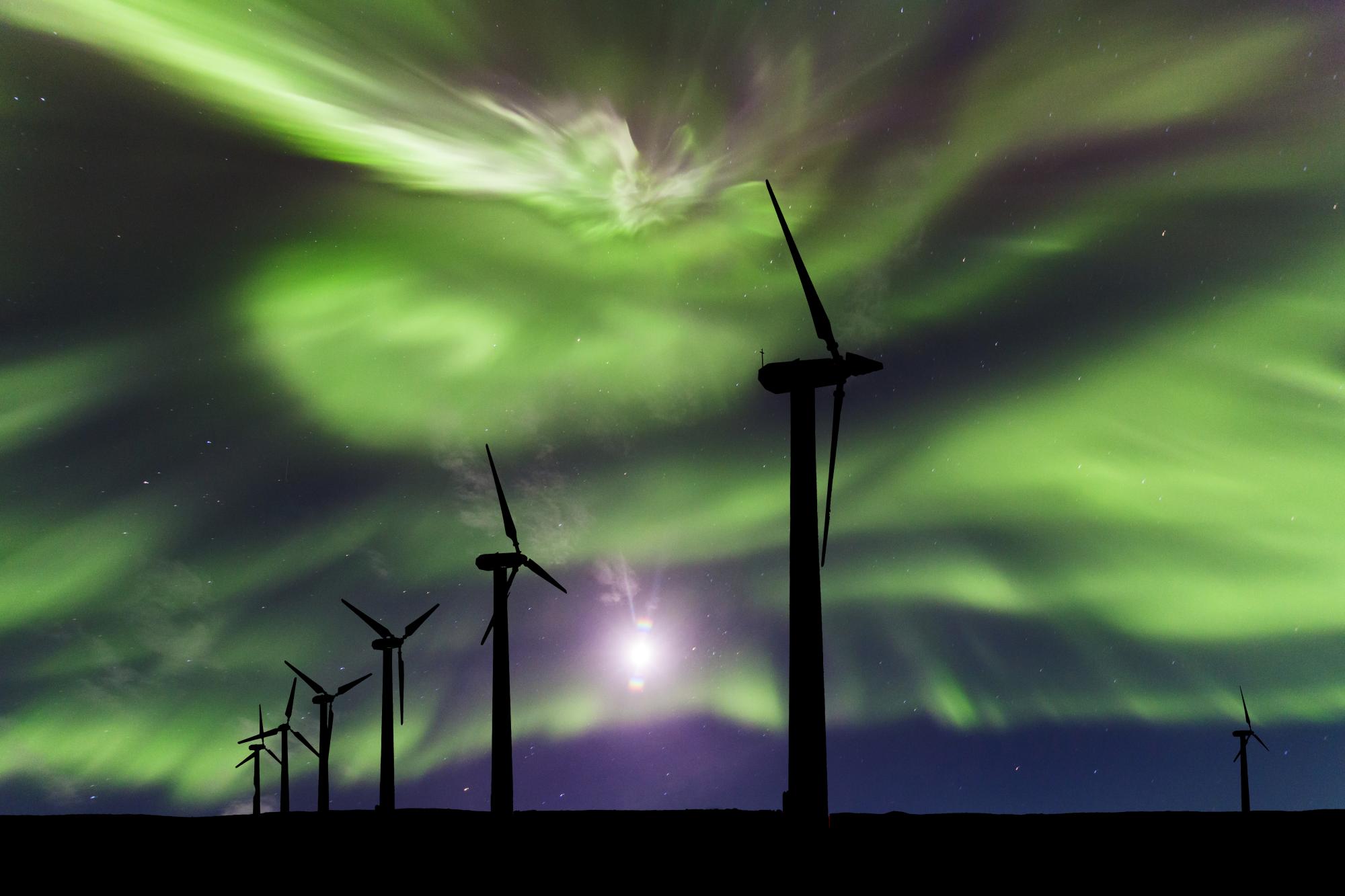
The global renewable energy industry has experienced extraordinary growth over the past few years. Renewable power capacity has grown by 4% per year since 2000, twice the rate of energy demand.
>> You can download the essay here
There are two ways to look at renewable energy today.
On the one hand, falling costs and strong policies are promoting the rapid spread of solar energy and wind power all across the world. Solar power is one of the few bright spots among clean energy technologies as the world transitions away from fossil fuels.
On the other hand, renewables make up only a fraction of global energy consumption. In the power sector, they still compete with fossil-fuel power plants; in the heat and transport sectors, which account for 80% of energy consumption, renewables still play a relatively marginal role.
The potential for increasing the role of renewables is massive: biofuels can be scaled up in transport, while bioenergy, solar thermal and geothermal energy can produce a larger share of heat for buildings and industry. Greater electrification, coupled with the increase in renewable electricity generation, is a key route to decarbonisation.
However, to realise this potential, strong policies, research, innovation and investment are needed. Only in this way will renewables be able to contribute to the emission reductions demanded by the Paris Climate Agreement and help us meet the Sustainable Development Goals, meant
to provide access to affordable and reliable energy for all.

Renewables: extraordinary growth
First, the good news. The global renewable energy industry has experienced extraordinary growth over the past few years. Renewable power capacity [1] has grown by 4% per year since 2000, twice the rate of energy demand.

Offshore wind [2] also showed strong signs of progress, with 23% generation growth in 2017. Offshore wind capacity was led by China, Germany and the United Kingdom. The European Union added a record 11.5 gigawatts of onshore wind [3] capacity. And global onshore wind power generation has continued to increase, especially with 2017 being a very windy year.
Hydropower remains the largest renewable power source and generation increased by an estimated 2% in 2017, even though growth in capacity was lower than in previous years. Growth in bioenergy and geothermal energy has also been sluggish as investors focused on more reliable and profitable sources of energy.
One reason for the rapid growth of wind and solar is the impressive fall in costs. For example, solar power prices for large utility-scale systems have fallen by 70% since 2010. These have been achieved through technological advances (e.g. higher photovoltaics efficiencies and larger wind turbines) but also through the emergence of competitive auctions.
Auctions with private companies, which combine better pricing with volume control, have been adopted by an increasing number of governments. In 2017, almost 24 gigawatts of new renewable capacity was awarded in auctions in 20 countries, with solar and wind technologies representing over 95% of that capacity.
With most renewables investment going into solar and wind, the contribution of these technologies to total power output will increase (we must remember that wind and solar energy is variable depending on the time of day and the weather, unlike the output from fossil-fuel power plants).

Upcoming challenges
By 2022, Denmark is expected to be the world leader, with almost 70% of its electricity generation coming from variable renewables [4] – that is, solar and wind. In some European countries (Ireland, Germany and the United Kingdom), the share of wind and solar in total energy generation will exceed 25%. In China, India and Brazil, the share of variable generation is expected to double to over 10% in just five years.

Still a long way to go
Now the bad news: some renewable sectors are still lagging behind and are often ignored in public discussions. The role of renewables in heat and transport is far less developed, with renewables supplying only 10% of heat demand in buildings and industry (excluding the traditional use of biomass), and 3% of transport energy in 2017. The International Energy Agency’s Tracking Clean Energy Progress (TCEP), the most comprehensive and up-to-date analysis of the clean-energy transition (2018), shows that the transport, cooling and heating sectors are not on track to meet long-term climate, energy access and air pollution goals.

More action needed
Despite some good progress, to achieve universal energy access, limit climate change, reduce air pollution and enhance energy security, we need more action. The pathway to achieving these interlinked goals is described in the International Energy Agency’s Sustainable Development Scenario.

The findings, interpretations and conclusions are those of the authors and do not necessarily reflect the views of the European Investment Bank.
Download the essay
© European Investment Bank 2018
Photos: © Getty Images, © Vestas Wind Systems A.S., © Peter OTTO - CG Eyedream. All rights reserved
Notes
[1] Power capacity refers to the quantity of energy that can be stored in a battery.
[2] Offshore wind power or offshore wind energy is the use of windfarms constructed usually in the ocean on the continental shelf, to harvest wind energy to generate electricity (Wikipedia).
[3] Onshore wind power plants are installed on land.
[4] Variable renewable energy is a renewable energy source that is non-dispatchable due to its fluctuating nature, like wind power and solar power, as opposed to a controllable renewable energy source such as hydroelectricity, or biomass, or a relatively constant source such as geothermal power or run-of-the-river hydroelectricity (Wikipedia).
[5] An electrical grid is an interconnected network for delivering electricity from producers to consumers. It consists of:
- generating stations that produce electrical power
- high-voltage transmission lines that carry power from distant sources to demand centres
- distribution lines that connect individual customers (Wikipedia).