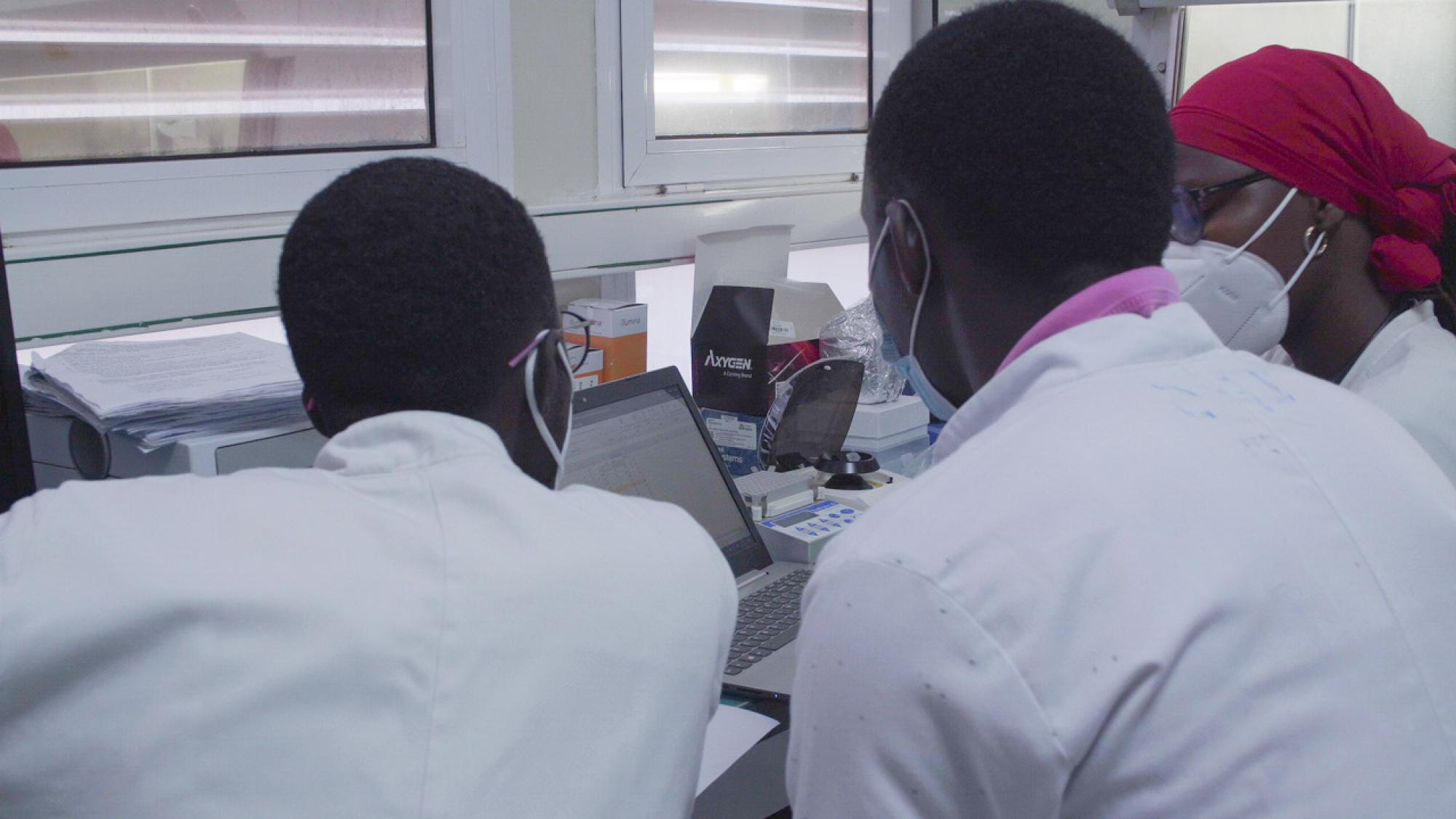
"The COVID pandemic has highlighted the need to increase vaccination in Africa"
Signature(s)
Amount (.*)
€ 4,750,000
Sector(s)
Industry
: € 4,750,000
Signature date(s)
8/07/2021 : € 4,750,000
Other links
News & Stories
Link to source
Other links
Inside the project
How and Why
Accessible health products and vaccines produced in Africa
Why
- Fewer than 2% of the three billion vaccine doses administered globally have been in Africa
- New manufacturing facilities on the continent are essential, as Africa currently imports 99% of its vaccines
- The COVID-19 pandemic highlighted the need to increase vaccination in Africa
How
- The vaccine production facility at the Institut Pasteur de Dakar plans to produce as many as 25 million doses of an approved COVID-19 vaccine a month by the end of 2022
- Improve investment in Africa’s health sector and boost the production and accessibility of heath products and technologies
- Support technology transfer and the creation of regional vaccine manufacturing hubs in other regions of Africa
Sectors & Countries

Story
A COVID-19 vaccine of its own for Africa
To increase vaccination rates, Africa needs to secure more doses. New manufacturing facilities on the continent are essential, as Africa currently imports 99% of its vaccines. The new vaccine production facility at the Institut Pasteur de Dakar is a key link in a vaccine strategy developed by the African Union and the Africa Centres for Disease Control and Prevention.
“Not only does this reinforce the health system, but also through this particular project it will create jobs, develop capacities in terms of knowhow and workforce, while bringing in new technology,” says Sall.

"It’s very important that we have this solidarity between African countries and European countries because it helps to build up a global ecosystem for global health security."
Related media
Health Solutions: Searching for the magic pills
Vaccines get all the attention, but COVID treatments for people who get sick are just as important to end this pandemic
Health Solutions: Why risky ideas are good in a crisis
To end the pandemic and avoid future problems, we must stop being afraid of risk and start innovating in COVID vaccines and all types of other research
A COVID-19 vaccine of its own for Africa
Europe backs COVID-19 vaccine production in Africa with an investment in Senegal’s Institut Pasteur de Dakar.
What’s the impact of an impact investment?
A study supported by the EU bank examines how an impact investment is contributing to improved maternal health services for Senegalese women
Links
Related projects and stories
How sustainable liquid fuels will decarbonise aviation and shipping
What sustainable liquid fuels are, why aviation and shipping rely on them, and how Europe could strengthen energy security by producing them at scale.
Why cleantech is central to Europe’s energy transition
Why cleantech is no longer a niche sector, how it supports decarbonisation and competitiveness, and why access to capital is critical
Joint Statement by Seven Multilateral Development Banks Pledging Support to Address Impacts of the Middle East Conflict
Paris, May 18, 2026. The signatory Multilateral Development Banks (MDBs) are responding to requests for support from countries and clients to help address the heterogeneous and compound impacts from the conflict in the Middle East, including disruptions to energy and fertilizer markets and trade routes, with spillover effects on inflation, food security, jobs, fiscal and external balances, and financing conditions.