What you need to know
Montenegro is building new schools and refurbishing old ones. Better schools will help drive the country’s economic future in the European Union.
Why this matters
As a country on the path to EU membership, Montenegro wants to align standards with EU best practice and provide students with modern, well‑equipped schools. The goal is to address a growing skills mismatch, support long‑term productivity, and build a more competitive economy within the EU Single Market.
Numbers that tell the story
The project builds on the European Investment Bank’s long-standing support for education reform in Montenegro, with €62 million mobilised to date through loans and EU grants under the Western Balkans Investment Framework. The funds will be used to reconstruct, digitalise and equip 13 education facilities and create up to 1 700 new places for students and 530 full-time jobs for teachers.
State‑of‑the‑art Montenegro school is also a social centre

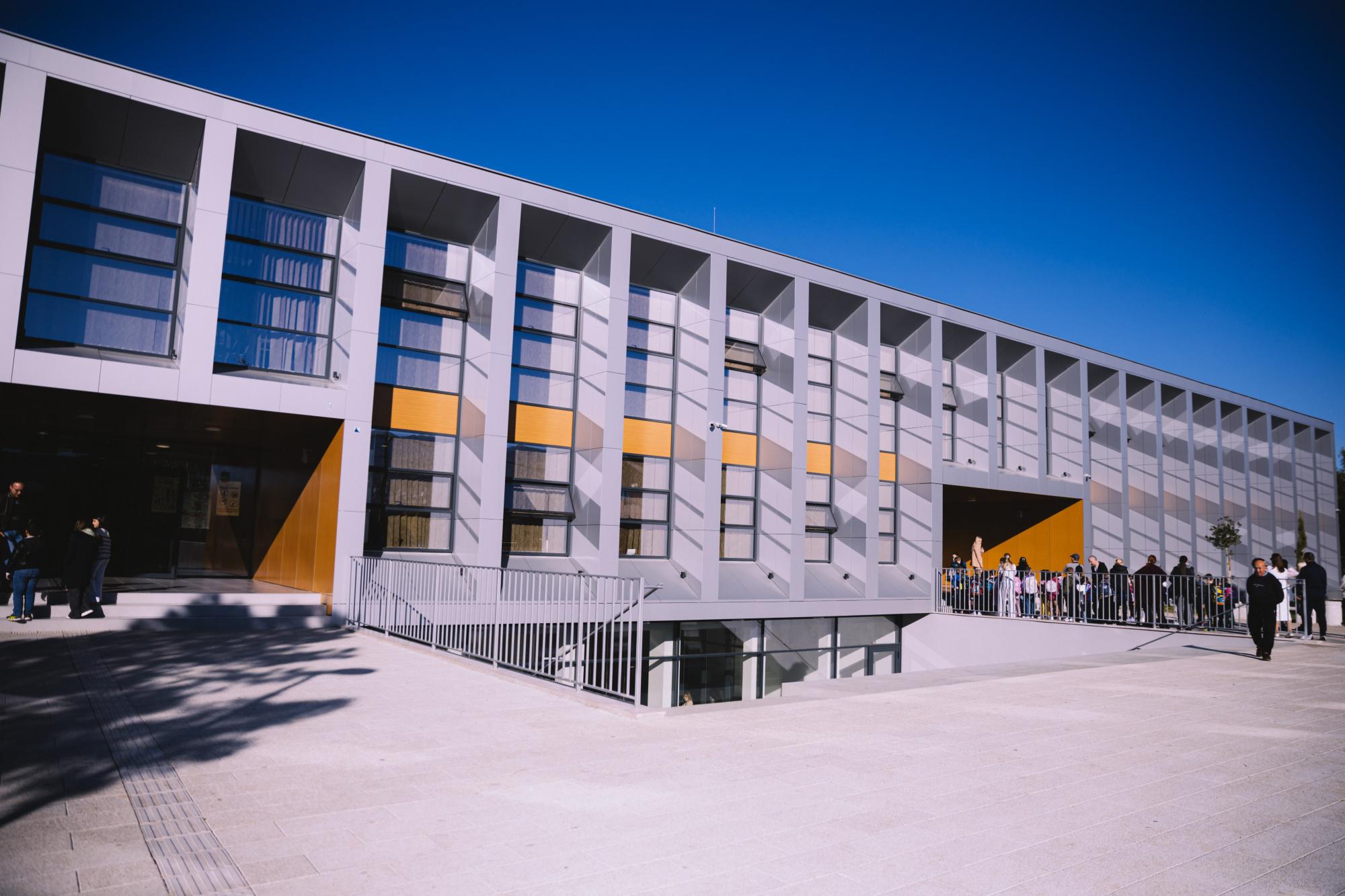
Ikonija Potpara, an English teacher at Vladimir Nazor Primary School, has 27 years of experience teaching generations of students about language and culture. She’s now deputy principal and curriculum coordinator in this new school in Podgorica, which welcomed more than 1 000 children last year. (The old school, built in 1958, had become outdated and unsafe.) Working with children inspires her, as each child brings their own energy, curiosity, and eagerness to learn.
“As an English teacher, I’m especially proud when children begin using the language with confidence and when I see their progress,” says Ikonija. “My goal is to help them develop a genuine love for English because it opens up new opportunities and perspectives. I believe education has enormous power to shape the future.”
The reaction of parents, students and staff to the new building, which was inaugurated in April 2025, has been overwhelmingly positive.
- Students were excited about the larger classrooms and renovated gymnasium. Many said classes have become more enjoyable and engaging.
- Parents praised improved safety, better learning conditions, and the relief of having their children back in a school located in their own neighbourhood after several years at alternative sites.
- Teachers welcomed the modern classrooms, equipment that supports more effective lessons, additional spaces, and the ability to apply modern teaching methods.
“Vladimir Nazor Primary School represents an important educational and social centre for many families in Podgorica,” says Ikonija.
EIB support in the sector
Beyond the €62 million mobilised through loans and EU grants under the Western Balkans Investment Framework, the European Investment Bank launched a “Better Schools for All” initiative in February with the United Nations Office for Project Services, starting a nationwide assessment of 813 schools that will improve safety, quality, and inclusion in education. Backed by €2.3 million grant under the Economic Resilience Initiative, the project marks a new chapter for the country’s education sector, aiming to align school conditions with EU standards and to strengthen national capacity for data-driven planning and investment in education infrastructure.
Expert insight
Giovanni Camisa is a European Investment Bank loan officer who works closely with the EU Delegation in Montenegro and the Ministry of Education, Science and Innovation.
Expert insight: Why education is now critical for technological and economic growth
A: Better schools and modern learning programmes ensure that graduates have the skills employers need. But this starts in early education, where children must develop the competencies that prepare them for the future labour market.
Q: How does the EIB support this?
A: EIB Global provides financing for modern education infrastructure and expert assistance on the reforms needed to achieve these goals. This is done under Team Europe approach combining EIB loans, EU grants and technical assistance.
Key trends
- Strengthening digital skills and integrating modern technology into teaching and learning
- Ensuring equal and inclusive access to quality, up‑to‑date education for all children, including those in remote areas
- Aligning academic qualifications with industry needs to reduce the skills mismatch and youth unemployment rate
What’s next
Preparing a clear strategy and technical designs for priority school investments to assess infrastructure needs nationwide.

EU Delegation to Montenegro
“The most exciting feature of the new school is the IT lab equipped with computers and the robotics room with a 3D printer, where students can learn the basics of programming and technology, while creating different models and projects on the printer,” Ikonija highlights.
The improved facilities allow for better organisation of classes, as well as additional and extracurricular activities, thanks to increased space for a wide range of educational content. The larger number of classrooms reduces overlap and scheduling conflicts.
Why digitalisation in Montenegro education matters
As part of the Montenegro education programme, supported by the European Investment Bank, more than 500 primary and secondary schools will be equipped with new computers, projectors, printers and other digital tools for modern classroom learning.
- Digitalisation enhances the quality of teaching and boosts digital literacy by making lessons more efficient, engaging, and relevant.
- Through computers, the internet, and educational platforms, students learn how to search for and evaluate information, use different digital tools and programmes, and apply technology safely and responsibly.
- Digital skills are essential for further education and careers, so digitalising schools helps students better prepare for life and work in a modern, technologically advanced world.
What people get wrong: Common myths
The quality of education depends solely on teachers
Teachers deliver lessons and pass on knowledge and a love of learning to children. But they must be supported by strong policies, meaningful education reforms, and the broader community. Well‑equipped classrooms and modern digital tools are important to ensuring quality and relevance in a rapidly changing labour market and industrial landscape.
Aligning with EU standards is just an administrative exercise
Actually, aligning with EU education standards fuels economic growth. Harmonising education standards with the European Union:
- guarantees the recognition and validity of Montenegrin school qualifications throughout the EU, improves teaching quality, and expands opportunities for students.
- facilitates international cooperation, allowing young people to more easily pursue employment across Europe.
- ensures that education curriculum is regularly updated to keep up with the latest developments.
“For a small economy like Montenegro’s, quality education is crucial because it creates a skilled workforce capable of contributing to the development of various economic sectors. Educated people increase productivity, encourage innovation, and help attract foreign investment. This is why a high‑quality, EU‑aligned education system is a fundamental pillar of the country’s long‑term economic development and progress,” says Ikonija.

Ministry of Education, Science and Innovation of Montenegro
Key facts: The new school at a glance
- Accommodates 1 030 students
- 29 classrooms, a modern library, labs for science, IT and robotics, as well as gym and sports courts
- Improved organisation of classes, plus additional and extracurricular activities
Read more
La transition numérique au Monténégro commence à l’école
Avec le soutien de l’Équipe Europe, le Monténégro investit dans ses écoles afin que les élèves acquièrent les compétences nécessaires à l’économie
L’enseignement numérique en Serbie
Grâce au projet « Connected Schools », la Serbie a opéré la transition numérique de plus de 3 000 établissements scolaires dans les zones rurales et urbaines.
Un modèle d’IA pour une petite langue
Belgrade : les outils de traitement du langage basés sur l’intelligence artificielle élaborés par l’université rendent les entreprises plus rapides et plus efficaces.
MONTENEGRO EDUCATION PROGRAMME
Construction and/or renovation of public education infrastructure including kindergartens, elementary (primary) schools, gymnasium (secondary) schools and vocational education schools. The project also includes provision of new ICT equipment and furniture for schools and specific equipment for vocational schools.