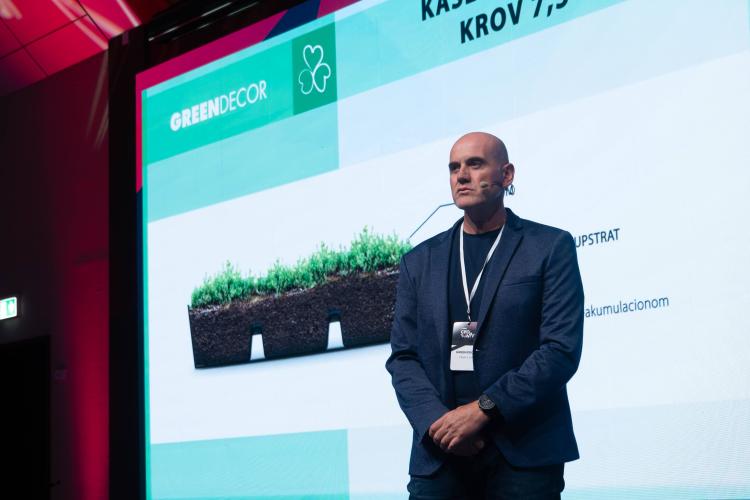
“This creates a complete, ready to install product that is easy to maintain and built to last.”
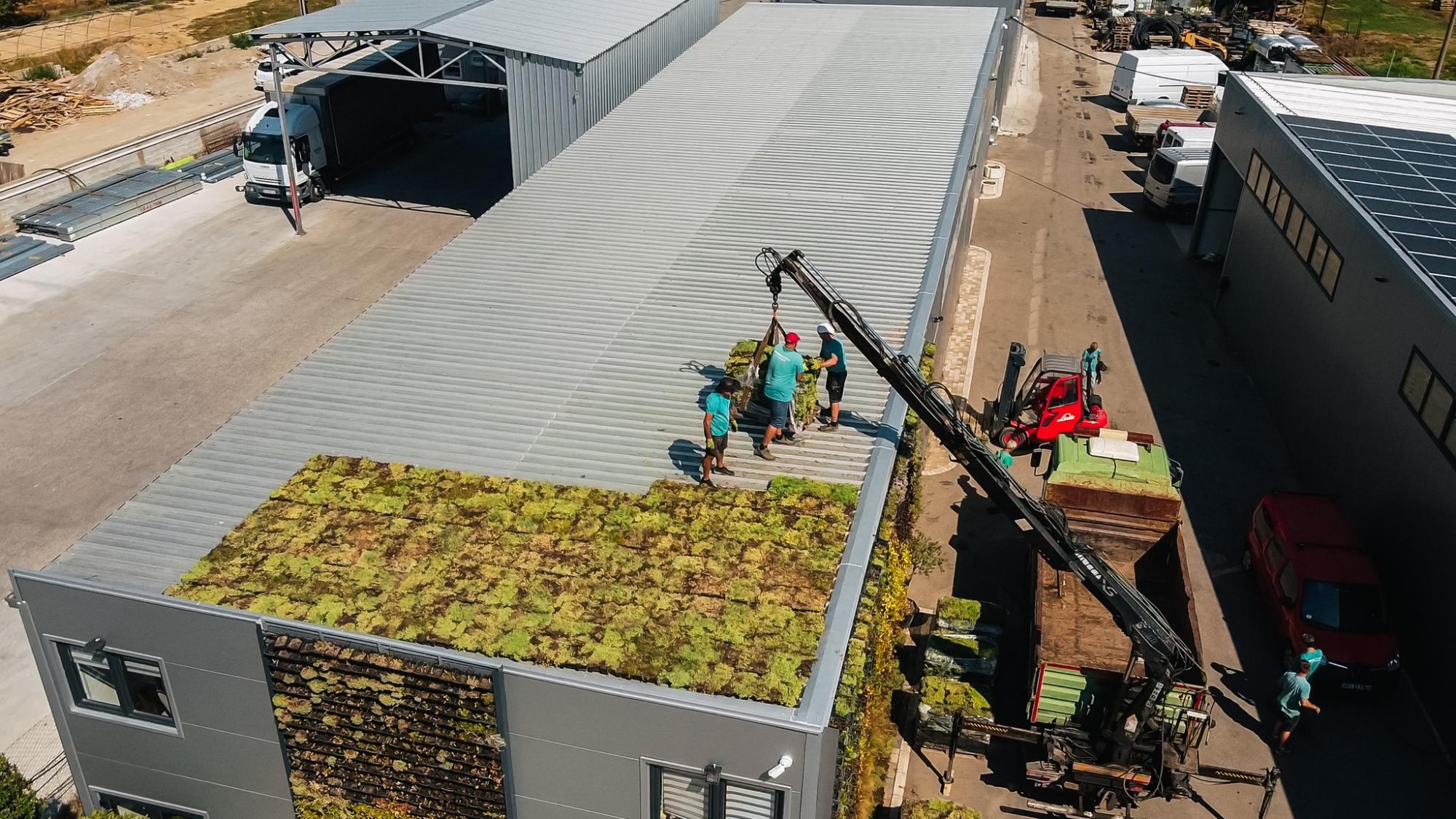
With backing from the EU for Green Agenda in Serbia initiative, a Serbian company is bringing nature back to cities — one rooftop at a time
Cities across Europe face rising temperatures, pollution and energy costs. So green infrastructure is becoming essential. Rooftop gardens and green façades reduce heat, cut electricity use, and make dense urban areas healthier and more liveable.
A single 200 square metre green roof can produce up to 260 kg of oxygen per year.
After struggling to find work as a young landscape architect, Dejan Lazić set out to combine nature, technology and sustainability into practical solutions for cities. In 2001, he founded Green Decor, a Serbian company specialising in green roofs and walls.
Starting a business was risky. Lazić invested his entire savings — €8 000 — without a single guaranteed contract. What set his company apart was speed, technical reliability and an early focus on modular solutions that could be installed quickly on public and private buildings.
“Our goal was to bring nature back into cities through technically reliable, energy‑efficient and long‑lasting solutions,” says Lazić.
Green Decor was the first company in Serbia to introduce hydroseeding on hard‑to‑reach terrain, such as steep roadside slopes. Building on that experience, it developed modular green roof and wall systems tailored to local climate conditions.
What makes the system work
“This creates a complete, ready to install product that is easy to maintain and built to last.”
Green Decor’s solution was developed in collaboration with the Institute for Biological Research "Siniša Stanković". It received financial support from the Government of Switzerland under the EU for Green Agenda in Serbia initiative, which helps businesses turn climate‑friendly ideas into bankable projects. The initiative, with the technical and financial support of the European Union and in partnership with the Ministry of Environmental Protection, is implemented by UNDP in cooperation with Sweden and the European Investment Bank (EIB), with additional funding provided by the governments of Sweden, Switzerland and Serbia. The technical assistance is being managed by EIB Advisory.
Public finance plays a key role because many green innovations face high upfront costs and long repayment periods — barriers that can discourage private investment without targeted support. Since 2022, the initiative has backed projects worth €52 million.

Kristina Kanapinskaite is a head of division at EIB Global, covering the Western Balkans and Türkiye.
Q: How can we finance this new trend?
A: We bring commercial banks and companies together to shape green ideas, and to turn them into bankable projects. That makes a meaningful contribution to Serbia’s green transition.
Key trends
What’s next
Green infrastructure standards are likely to become mandatory in many cities.

Today, Green Decor employs 15 people, including engineers, technicians and retrained gardeners. Its solutions range from a 15-square metre private terrace in central Belgrade to a 6 500 square metre green roof in Košutnjak Park — the largest of its kind in the region.
The company’s modular green roof system is registered as an original Serbian product with the Intellectual Property Office and is designed to reduce the urban heat‑island effect, to slow rainwater runoff, and to improve air quality.
In partnership with Serbia’s Ministry of Environmental Protection and the European Investment Bank’s EIB Global arm, the United Nations Development Programme (UNDP) has launched a new green financing model under the EU for Green Agenda in Serbia initiative.
The European Investment Bank (EIB Global) is launching the Innovation and Green Transformation Facility (IGTF), a new initiative aiming to accelerate sustainable private sector growth across the Western Balkans. The facility supports the EU Economic and Investment Plan and the New Growth Plan for the Western Balkans, reinforcing the region’s integration into the EU Green and Digital Agendas.
We need to renovate buildings faster to cut energy demand, support renewables and deliver lower, predictable costs for Europeans. Here’s how to do it.