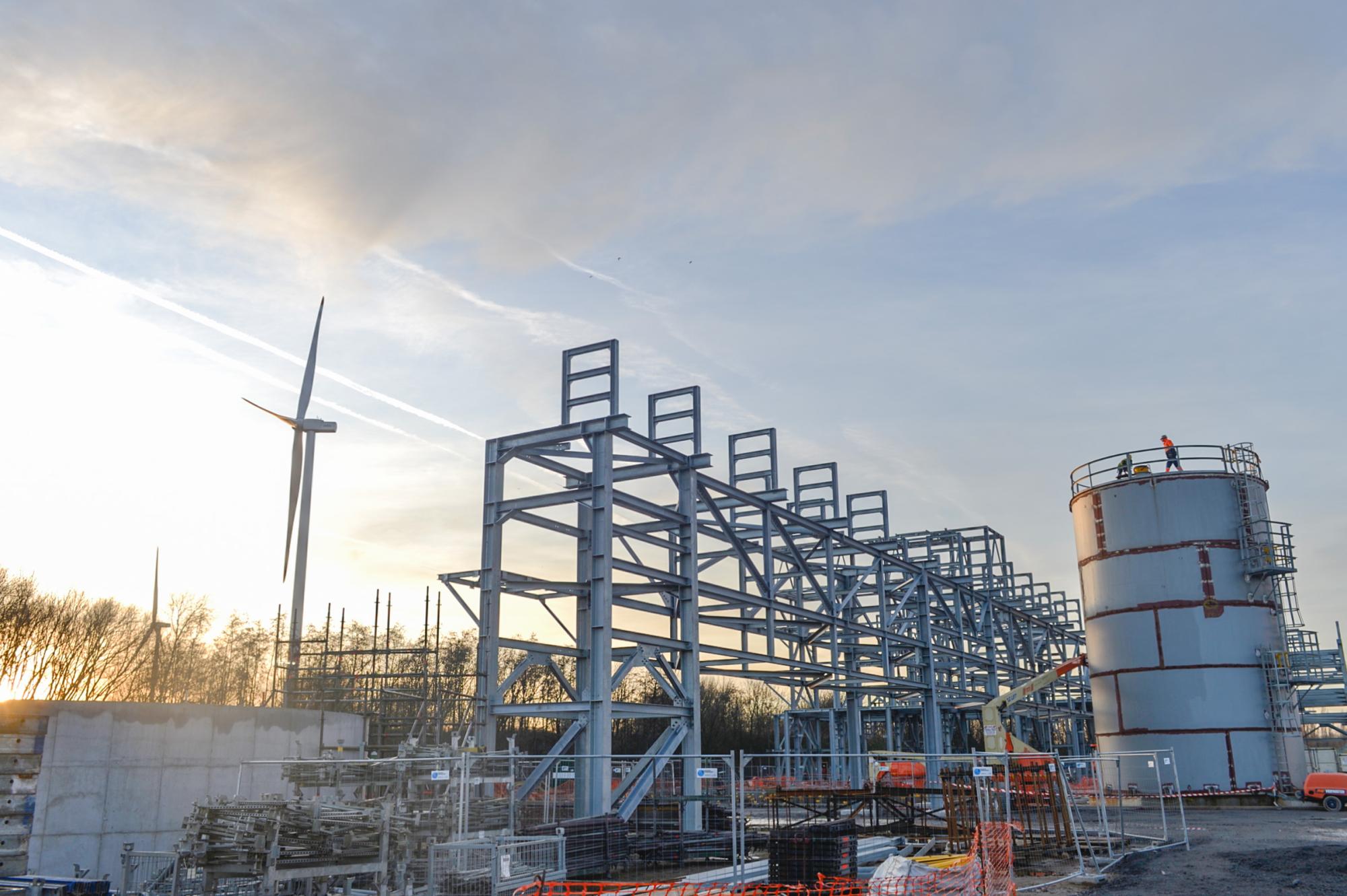
"Il contribue à l’économie circulaire et produit un éthanol écologique, qui peut servir de carburant ou de matière première dans de multiples processus chimiques."
Autres liens
Fiche récapitulative
Date de publication
11 janvier 2018
Statut
Référence
Signé | 15/05/2020
20170622
Nom du projet
Promoteur – Intermédiaire financier
STEELANOL (EDP)
ARCELORMITTAL
Montant BEI envisagé (montant approximatif)
Coût total (montant approximatif)
EUR 75 million
EUR 154 million
Description
Objectifs
First of its kind demonstration plant for the production of advanced bio-ethanol through an innovative gas-fermentation process using exhaust gases emitted by a steel mill.
The project aims to demonstrate the commercial viability of such bio-ethanol production to improve the sustainability of the European steel manufacturing industry and its profitability, by valorising steel process off-gases.
Aspects environnementaux
Passation des marchés
The project will be implemented within the perimeter of fully authorised existing facilities. According to the competent authority, an Environmental Impact Assessment (EIA) is not required. The project has been screened out according to Annex II of the EIA Directive 2014/52/EU amending the Directive 2011/92/EU. The Bank's services will assess the environmental and climate relevant details during project appraisal.
The Bank will require the promoter to ensure that implementation of the project will be done in accordance with the Bank's Guide to Procurement.
Documents liés
Documents
Fiche technique sur les aspects sociaux et environnementaux - STEELANOL (EDP)
Date de publication
18 May 2019
Langue
Sujet général
Prêts
Numéro du document
79474008
Thématique du document
Information Environnementale
Type de document
Numéro du projet
20170622
Secteur(s)
Régions
Pays
Disponible au public
Télécharger maintenant
Lien vers la source
Autres liens
À la une
Lien vers la source
Autres liens
Au cœur du projet
Comment et pourquoi
Réduire les émissions de CO2 et promouvoir une économie circulaire
Pourquoi
- La sidérurgie est une industrie à forte intensité énergétique. Nous avons besoin d’acier, mais pas d’émissions. Nous devons rendre l’acier durable.
- L’efficacité énergétique des procédés industriels peut freiner considérablement les émissions mondiales.
- Une innovation aux retombées mondiales mise au point en Europe. Nous soutenons les innovateurs européens.
Comment
- Il s’agit d’une première démonstration à l’échelle industrielle d’une nouvelle technologie de rupture qui contribuera à réduire les émissions de CO2 des aciéries et à promouvoir une économie circulaire.
- La technologie soutenue par l’opération fera baisser les émissions de CO2 de l’aciériste en Belgique, puis sur d’autres sites en Europe et dans le monde.
- Le projet consiste à convertir les déchets de bois en un substitut du charbon qui sera associé, dans l’aciérie, au CO2 résiduel pour produire du bioéthanol.
Secteurs et pays

"En tant que producteur de matériaux, nous pensons que nous devons mettre l’accent sur l’économie circulaire et mettre en place des procédés de recyclage permanent (« du berceau au berceau »), qui consomment moins de ressources primaires et nous permettent de réduire les émissions de carbone."
Sur le même sujet
Acier écologique, acier circulaire
Le grand sidérurgiste ArcelorMittal utilise une technologie novatrice pour réduire ses émissions et transformer le CO2 en un biocarburant exploitable
Un plan pour l’avenir de la planète
Nous publions notre Feuille de route de la banque du climat, qui énonce de grandes ambitions en matière de financement climatique en vue de soutenir le pacte vert pour l’Europe et de lutter contre le réchauffement de la planète.
Liens
Projets et articles associés
Why Europe is the best place to live
Life in Europe is better. Social investment in health, education and jobs reduces inequality, helping Europeans live longer and earn more.
Celebrating diversity, equity and inclusion at Luxembourg Pride Week
The European Investment Bank (EIB) Group is taking part in Luxembourg Pride Week from 2 to 12 July, celebrating the LGBTIQ+ community and reaffirming its strong commitment to diversity, equity and inclusion.
Local leaders and EIB join forces to pool public and private funds for affordable houses
Intensifying their cooperation with the European Investment Bank, regions and cities on 2 July discussed the EU’s housing policy with President Calvino, Members of the European Parliament and associations. During their debate in a plenary session of the European Committee of the Regions, they also voiced concerns that the next EU budget will weaken EU support for social, energy and climate projects