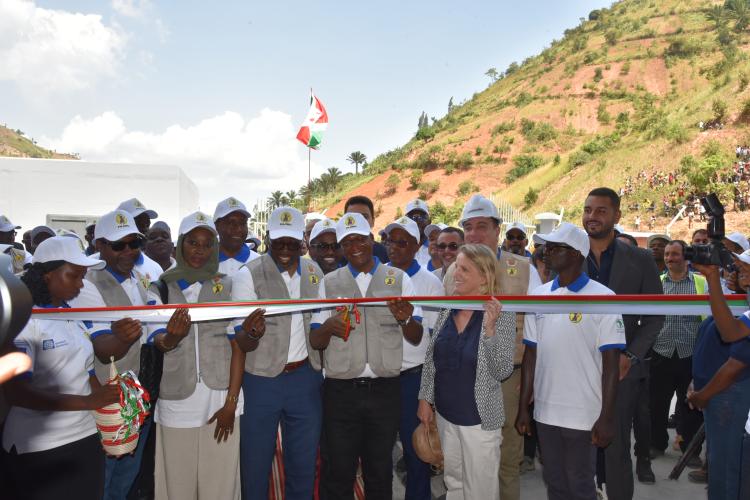
- Mulembwe is a 17MW hydro-power plant
- Project is a collaboration between the Government of Burundi and its development partners, notably African Development Bank Group, European Investment Bank (EIB Global), European Commission and World Bank Group.
The Mulembwe hydroelectric power plant in Burundi was officially inaugurated by the country’s Prime Minister of Burundi, Nestot Ntahontuye, marking a new milestone in national efforts to strengthen electricity production in Burundi.
The inauguration of the Mulembwe hydroelectric power plant (17 MW), following that of the Jiji power plant (32.5 MW) in June 2025, marks the completion of a major program aimed at achieving energy self-sufficiency and promoting economic development in Burundi. These facilities were designed to meet the country’s growing energy needs while promoting sustainable economic growth.
Located in Burunga Province, in the southwest of the country, both power plants mark a significant milestone in the country’s energy development, with a combined generating capacity of 49.5 megawatts. Together, these power plants will have an annual output of 239 gigawatt-hours and will supply power to 7,000 businesses and 1,700 industrial facilities across the country, as well as 15,000 households in the project area.
The additional energy produced will promote the development of small and medium-sized enterprises and will also support investment, job creation, and economic growth.
The Prime Minister expressed his gratitude to all partners who contributed to the project’s completion and reaffirmed his commitment to pursuing similar initiatives to ensure a sustainable energy future.
“The Jiji and Mulembwe dams represent a major milestone in Burundi’s journey toward emergence. Electricity is a key driver of our country’s industrial development, mining sector, and future railway infrastructure,” said Prime Minister Nestor Ntahontuye.
The construction of the Jiji and Mulembwe power plants is the result of close collaboration between the Government of Burundi and its development partners, notably the African Development Bank Group, the European Investment Bank (EIB Global), the European Commission and the World Bank Group.
The sites have already created hundreds of local jobs and will continue to generate employment opportunities in the energy sector. The availability of clean energy will certainly open the door to potential private investment opportunities.
“The inauguration of Jiji and Mulembwe marks a transformative moment for Burundi’s energy future,” said African Development Bank Group’s Country Manager for Burundi, Mouna Diawara. “This project is one of the country’s most important energy investments, one that will help nearly double national generation capacity, expand access to affordable renewable power, and create the foundation for private-sector growth, jobs and economic diversification. Today’s achievement reflects the power of partnership, bringing together the Government of Burundi and development partners to deliver a transformative infrastructure that will power opportunity for generations to come.”
“Clean energy is among EIB Global’s top investment priorities, reflecting Europe’s commitment to delivering cleaner, more affordable, and more reliable energy to hundreds of millions of people in Africa,” said European Investment Bank Vice President, Marko Primorac. “The commissioning of the Mulembwe hydropower plant, following that of Jiji, illustrates the tangible impact of these investments on the ground.”
“Under the EU’s Global Gateway strategy, the EIB has committed to invest €2 billion over the next two years to support the development of renewable energy in Africa. Half of this amount is expected to contribute to the M300 initiative for sub-Saharan Africa, which aims to bring electricity to 300 million people. Our objective is to support Burundi’s energy sector, create sustainable jobs, and stimulate economic growth,” added Primorac.
“Jiji-Mulembwe is a model project that almost fully aligns with the priorities we have set under the EU’s Global Gateway strategy, by facilitating access to clean, renewable, and affordable energy,” reiterated the European Union Ambassador to Burundi, Elisabetta Pietrobon. “We are particularly pleased with the significant role played by European companies and expertise, from the initial feasibility studies through to the commissioning of the infrastructure.”
“The commissioning of the Mulembwe hydroelectric power plant marks a major step forward in providing households, businesses, and public services with access to reliable electricity, which is essential for creating jobs and stimulating economic activity,” said World Bank Group Vice President for Eastern and Southern Africa, Ndiamé Diop. “The World Bank Group is proud to support this effort alongside the Government of Burundi, REGIDESO, and all partners. This project is fully aligned with Mission 300, an ambitious regional initiative aimed at connecting 300 million Africans to electricity by 2030, whose priorities Burundi has adopted through its National Energy Compact.”
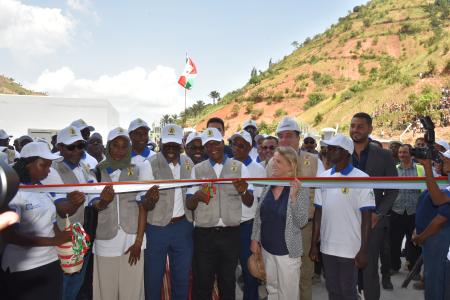
Burundi and development partners inaugurate the Mulembwe Hydro- Dam to power homes, businesses and industries
©EIB
Download original
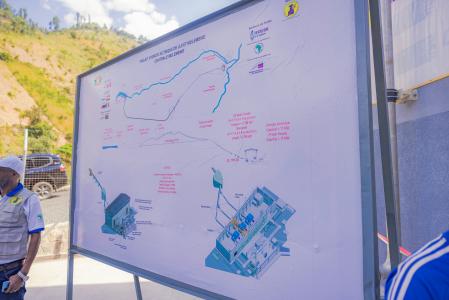
Burundi and development partners inaugurate the Mulembwe Hydro- Dam to power homes, businesses and industries
©EIB
Download original
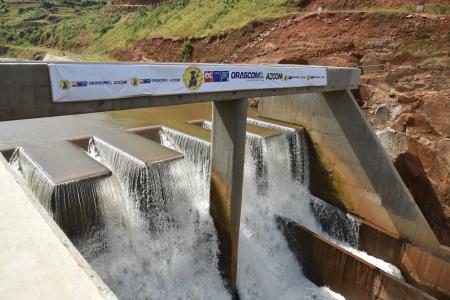
Burundi and development partners inaugurate the Mulembwe Hydro- Dam to power homes, businesses and industries
©EIB
Download original
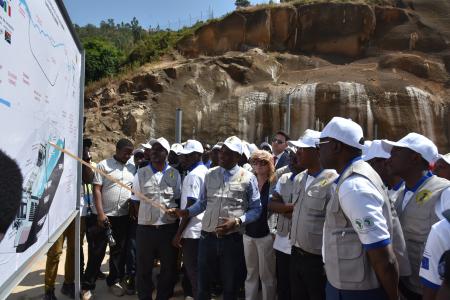
Burundi and development partners inaugurate the Mulembwe Hydro- Dam to power homes, businesses and industries
©EIB
Download original
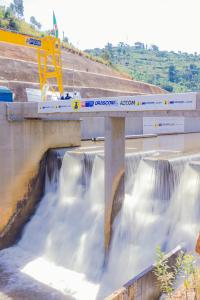
Burundi and development partners inaugurate the Mulembwe Hydro- Dam to power homes, businesses and industries
©EIB
Download original

Burundi and development partners inaugurate the Mulembwe Hydro- Dam to power homes, businesses and industries
©EIB
Download original