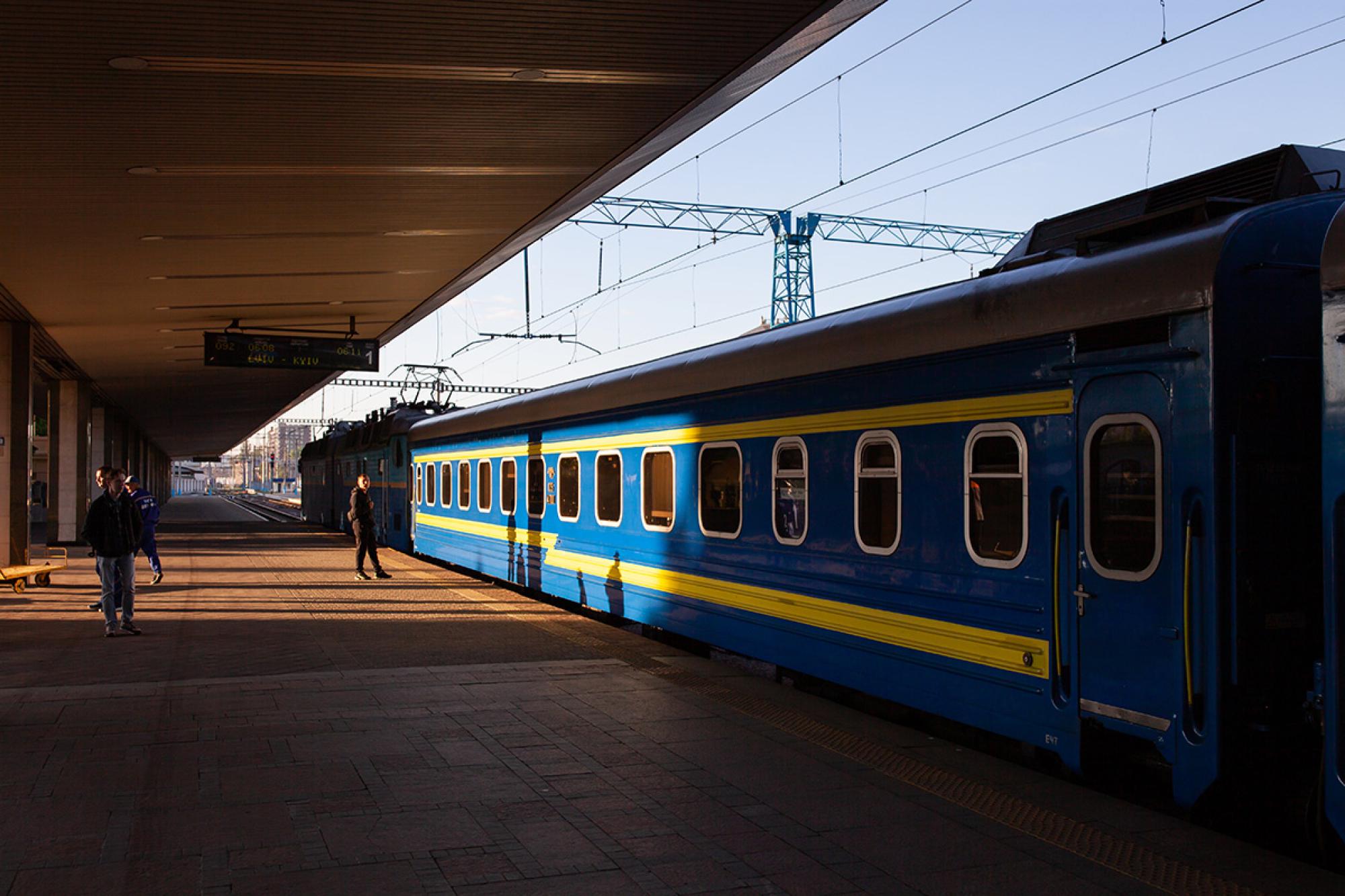
Entrer en Ukraine et en sortir est devenu un défi aujourd’hui. En raison de la guerre, le train reste l’un des seuls moyens fiables pour entrer ou se déplacer dans le pays, alors que son réseau ferroviaire est souvent endommagé.
« Nous réparons, nous reconstruisons et nous veillons à ce que les trains continuent de circuler », déclare Oleg Yakovenko, directeur de la stratégie pour Ukrainian Railways, la compagnie ferroviaire nationale. « Cette résilience est devenue notre marque de fabrique, y compris lorsque le froid ou les dégâts rendent notre tâche presque impossible. »
Avec la fermeture des ports maritimes et des aéroports en Ukraine, le rail est devenu essentiel pour les échanges commerciaux et les déplacements en Europe. Les équipes de conseillers spécialisés et de chargés de prêt de la Banque européenne d’investissement contribuent au lancement de grands projets visant à maintenir les trains en service et à relier les chemins de fer ukrainiens au réseau de l’Union européenne.
« La guerre a hissé notre relation avec la Banque à un niveau supérieur », affirme Oleg Yakovenko. « Elle a montré sur qui l’on pouvait compter. »
La dernière avancée en date est l’ouverture, en septembre 2025, de la ligne ferroviaire Tchop-Oujhorod, construite en respectant l’écartement standard européen. Contrairement aux voies traditionnelles ukrainiennes, dont l’écartement est de 1 520 millimètres, le réseau ferroviaire européen utilise un écartement de 1 435 millimètres qui permet aux trains de franchir les frontières sans devoir s’arrêter pour un changement d’essieux ou de wagons.
Avec l’appui des spécialistes des services de conseil de la BEI, la ligne ferroviaire de 22 kilomètres reliant Tchop et Oujhorod a été achevée en moins d’un an.
Les trains peuvent désormais circuler directement depuis l’Ukraine vers des pays comme la Hongrie et la Slovaquie, ce qui réduit les temps de trajet et facilite les échanges commerciaux. Cette ligne de chemin de fer est la première étape d’un plan visant à construire des voies à écartement standard européen vers des villes ukrainiennes telles que Lviv et Tchernivtsi.
Le projet de transformation ferroviaire, dont le coût s’élève à 24 millions d’euros, est financé à parts égales par une subvention de l’Union européenne et un prêt de la BEI.
Des écartements de voie différents

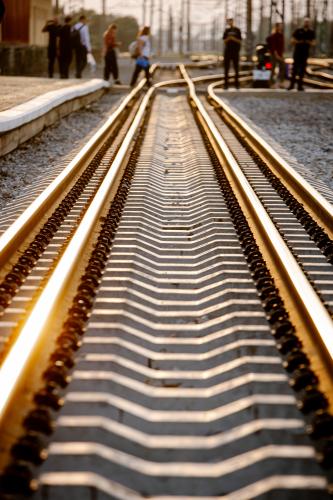
« Il existe deux approches très différentes en matière de voies ferrées », explique Rafael Alcayde, conseiller de la BEI travaillant dans le cadre du dispositif Jaspers, un programme d’assistance conjointe à la préparation de projets dans les régions européennes. « Les trains européens sont construits pour être plus rapides et plus courts, ce qui offre une capacité bien plus élevée à l’échelle du système, tandis que les trains circulant sur des voies plus larges, à écartement de 1 520 millimètres, sont plus lourds et plus lents, mais offrent plus de capacité de transport par train. »
« Les passagers ont immédiatement remarqué les avantages », déclare Oleg Yakovenko. « Des passages de frontière plus rapides et la possibilité de rester dans le même train ont transformé un trajet éprouvant en un voyage fluide – et la demande a grimpé presque du jour au lendemain. »
Cette nouvelle ligne allégera également la pression démographique à Oujhorod, qui a accueilli de nombreuses Ukrainiennes et de nombreux Ukrainiens ayant quitté leur domicile dans l’est du pays à cause de la guerre.
La ligne Tchop-Oujhorod s’inscrit dans le cadre d’un plan plus large visant à intégrer les chemins de fer ukrainiens et moldaves au réseau de l’UE.
Les premières prestations de conseil ont permis de préparer plusieurs projets dans des zones routières et ferroviaires frontalières clés avec l’Europe. Ces travaux ont permis d’obtenir un financement de l’UE par l’intermédiaire du Mécanisme pour l’interconnexion en Europe et ont soutenu un prêt de 50 millions d’euros de la BEI approuvé en 2024 en faveur des chemins de fer ukrainiens.
À la demande de la direction générale de la mobilité et des transports au sein de la Commission européenne, les services de conseil de la BEI ont élaboré un plan d’intégration des réseaux ferroviaires ukrainien et moldave dans l’Union européenne. La stratégie proposait de commencer par ajouter des voies à écartement standard européen entre Lviv et la Pologne, la Hongrie et la Slovaquie, et entre Chiṣinău, la capitale de la Moldavie, et la Roumanie.
Une nouvelle plateforme de transport à Lviv
D’autres projets sont en cours. À Lviv, près de la frontière polonaise, des installations frontalières modernisées accélèrent le passage des voyageurs et des marchandises. Comme Oujhorod, Lviv a accueilli de nombreux nouveaux habitants depuis le début de la guerre. Aujourd’hui, plus de 70 % des Ukrainiennes et des Ukrainiens voyagent vers l’Europe au départ de Lviv.
Les services de conseil de la BEI appuient notamment les investissements ferroviaires suivants :
- une ligne de 81 kilomètres entre Mostyska et Sknyliv, qui sera la première à écartement de voie standard européen reliant une grande ville ukrainienne. Elle sera suivie de la liaison à écartement standard entre Sknyliv et la gare principale de Lviv ;
- des terminaux modernes, combinant plusieurs modes de transport, qui accueilleront des trains de marchandises et les relieront mieux au réseau routier ;
- des installations frontalières et douanières modernisées qui rendront les déplacements plus rapides et plus efficaces.
La Banque européenne d’investissement a fourni des études de faisabilité et un soutien consultatif pour façonner ces projets dès le départ. Les services de conseil de la BEI ont contribué à mettre en place une approche qui a accéléré la planification, tout en maîtrisant les coûts de développement. Les conseillers ont également aidé à concevoir de nouvelles méthodes et procédures qui ont accéléré l’octroi des prêts de la Banque européenne d’investissement et des subventions de l’Union européenne.
L’un des principaux défis consiste à convertir rapidement et à un coût raisonnable l’infrastructure ferroviaire à l’écartement standard européen, tout en assurant le bon fonctionnement des services. Les spécialistes des services de conseil de la BEI ont contribué à trouver des solutions permettant aux écartements européens et ukrainiens de coexister au sein d’une même infrastructure, ce qui a permis une transition progressive avec un minimum de perturbations du trafic ferroviaire.
« Au moment où la vie en Ukraine semble imprévisible, le rail nous apporte de la prévisibilité », poursuit Oleg Yakovenko, le directeur de la stratégie pour les chemins de fer ukrainiens. « Vous pouvez toujours planifier votre départ et votre arrivée et, même en ces temps de guerre, les trains continuent de circuler. »