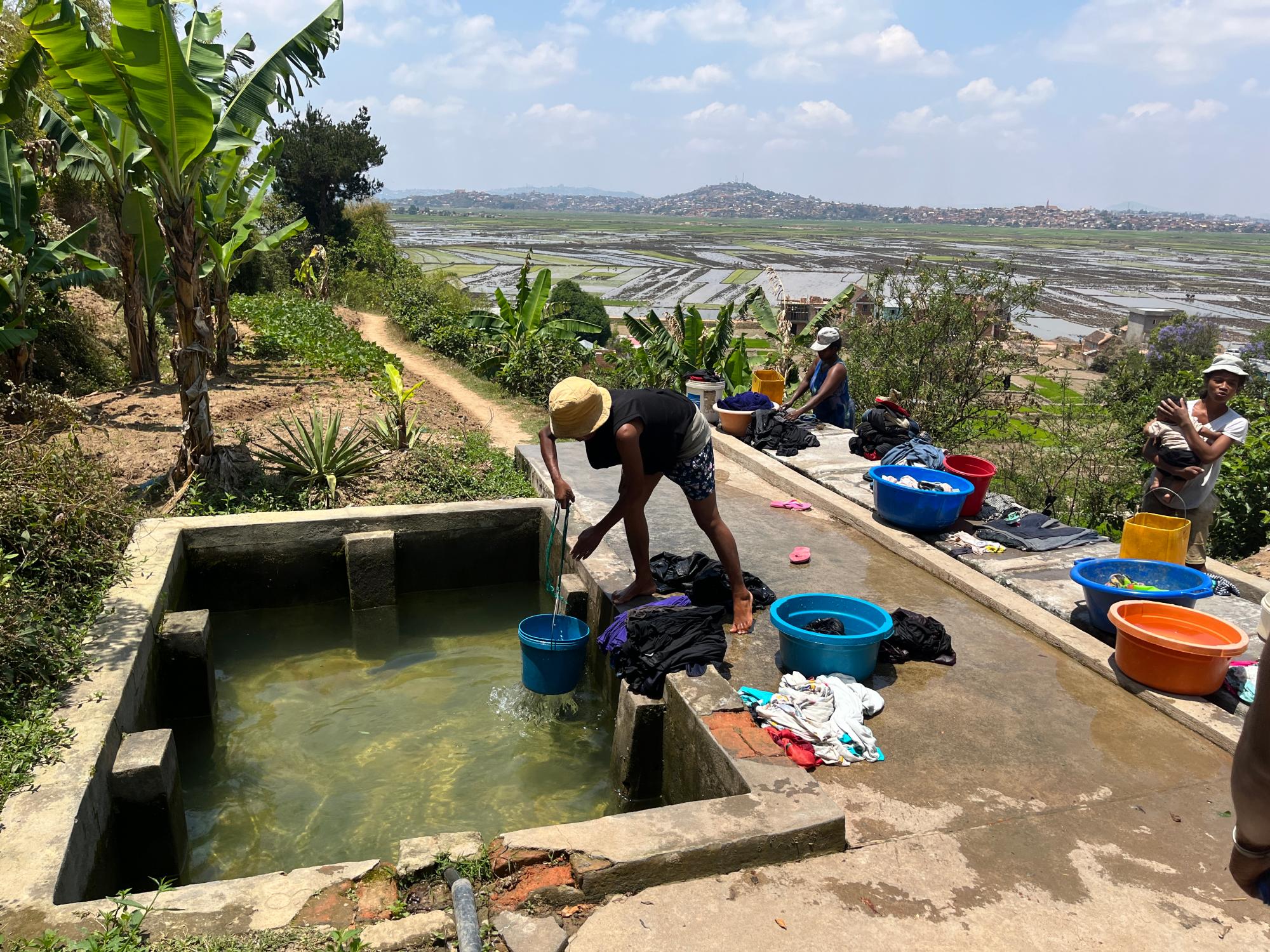
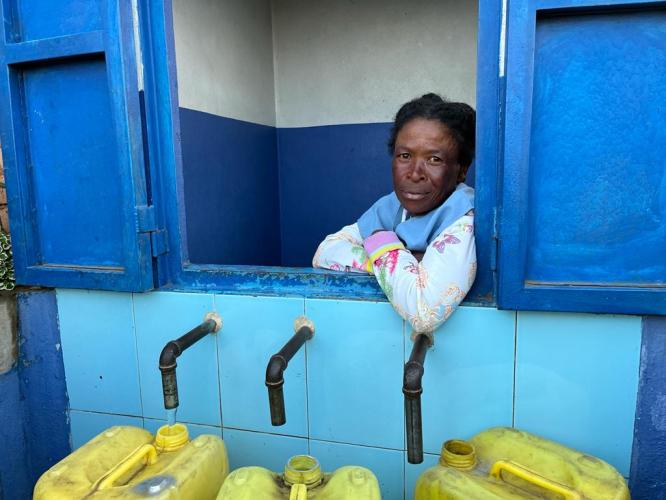
In November 2023, I went on a field mission to Antananarivo, Madagascar, to collect data on access to water. This mission took place during a particularly challenging time of the year – the end of the dry season, just before the rainy season arrived.
Water was scarce, and people from local communities told me vivid stories of the daily struggles they faced because of an unreliable supply.
Most households fetch drinking water from public kiosks or protected wells. Roughly one-fifth of households rely on unprotected wells, surface water or rice fields for their needs. Long lines are common at public kiosks, and water can sometimes run out, particularly during peak hours or in high-altitude areas. A minority of people (8%) can access piped water, but the supply is often cut during droughts.
People cope with the scarcity in diverse ways. Some residents relied on the expensive services of water fetchers, who transported water from public water kiosks at a high cost. Others had to wait patiently for the water in public kiosks or in their homes to be turned back on, which disrupted their daily routines.
Many individuals, especially women, were forced to walk early in the morning to the nearest water fountain to fetch water, carrying heavy canisters back to their homes. Some households resorted to storing water whenever it was available. Scarce water was a significant challenge for laundry women. Without a reliable supply, they had to turn some clients away, which dented their income.
A large water infrastructure project, Jirama Water III-Prioritaire (JWIII-P), co-financed by the European Investment Bank (EIB), the European Commission and other partners, aims to increase the water supply. The EIB is financing €61 million of the €74 million project, which will increase the supply of clean water to cover 87% of the city’s population.
Establishing a baseline for the evaluation
The Jirama project will expand coverage through major infrastructure improvements, such as a new water treatment plant, an extended pipeline network, new water tanks, booster pumps and the establishment of approximately 400 water kiosks and 5 000 private water connections.
To understand how much difference the JWIII-P project will make – and for whom – the EIB Group’s Evaluation Division, in collaboration with a research team and the EIB Social Policy Unit, is carrying out an impact evaluation.
The baseline stage has just been concluded. We aim to measure not just whether the project delivers water infrastructure, but how it improves people’s lives. To establish a baseline, we surveyed over 2 500 households to assess several things:
- Where and how people obtained water;
- The availability and quality of that water;
- The time and financial resources households dedicated to collecting water;
- Hygiene practices;
- The physical burden of water-related chores;
- The impact water collection had on women.
Once the project is completed, the same households will be re-surveyed using the same indicators to assess changes over time. That will enable us to compare how people who benefit from the improved water infrastructure fared compare with those who did not. Please read our Knowledge Piece, which talks about the value of the baseline phase and demonstrates the findings.
The video below explains the impact evaluation and the importance of establishing a reliable baseline.

The benefits of better water access
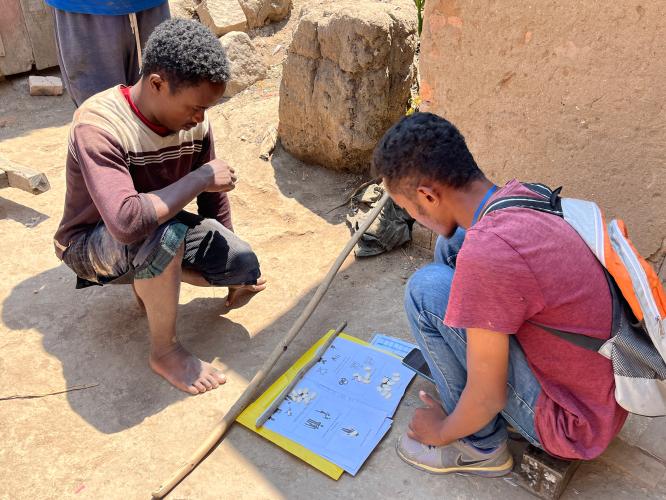
For instance, baseline data confirm that expanding private connections and improving water pressure in the Jirama network could greatly enhance access to water, increasing daily consumption, reducing time spent fetching water and ensuring a more reliable supply.
Baseline data also indicate that expanded access to water is expected to improve hygiene, particularly for households that will be connected to the water network.
While the academic literature anticipated potential benefits for education and mental health, our baseline findings indicate a limited impact on education. Fewer than 2.5% of water fetchers we surveyed were under 17, and water collection does not appear to affect school attendance in Antananarivo. Similarly, surveyed households already scored relatively high on mental health and general well-being indicators.
The project, however, is likely to benefit the 10% of respondents who report household tensions linked to water access. Time savings are expected to benefit women most, as they bear the brunt of water collection. Some women say that they feel unsafe when fetching water at night.
Of course, these expected findings are not set in stone. The actual impact of the project will only become clear once the project is finished and a post-completion survey conducted. Nevertheless, our experience with the JWIII-P project reminds us of the value of a baseline study in an impact evaluation. By informing us about the present situation, these findings clarify what we can expect in the future. This, in turn, can guide us in the next stages of the evaluation and potentially even inform the project set up.
What to expect next
Once the project is completed, we will return to the field to compare the before-and-after conditions of people who benefitted from the projects and those who did not.
Baseline data is not just a technical requirement – it is a powerful tool to better understand the local situation and gather more information about the potential impact of an investment. And it sets the stage for meaningful change.


JIRAMA WATER III - PRIORITAIRE
Le projet consiste en la réalisation des investissements prioritaires pour le système d'adduction d'eau potable à Antananarivo, visant à renforcer et étendre l'approvisionnement en eau pour environ 2,2 millions de personnes.