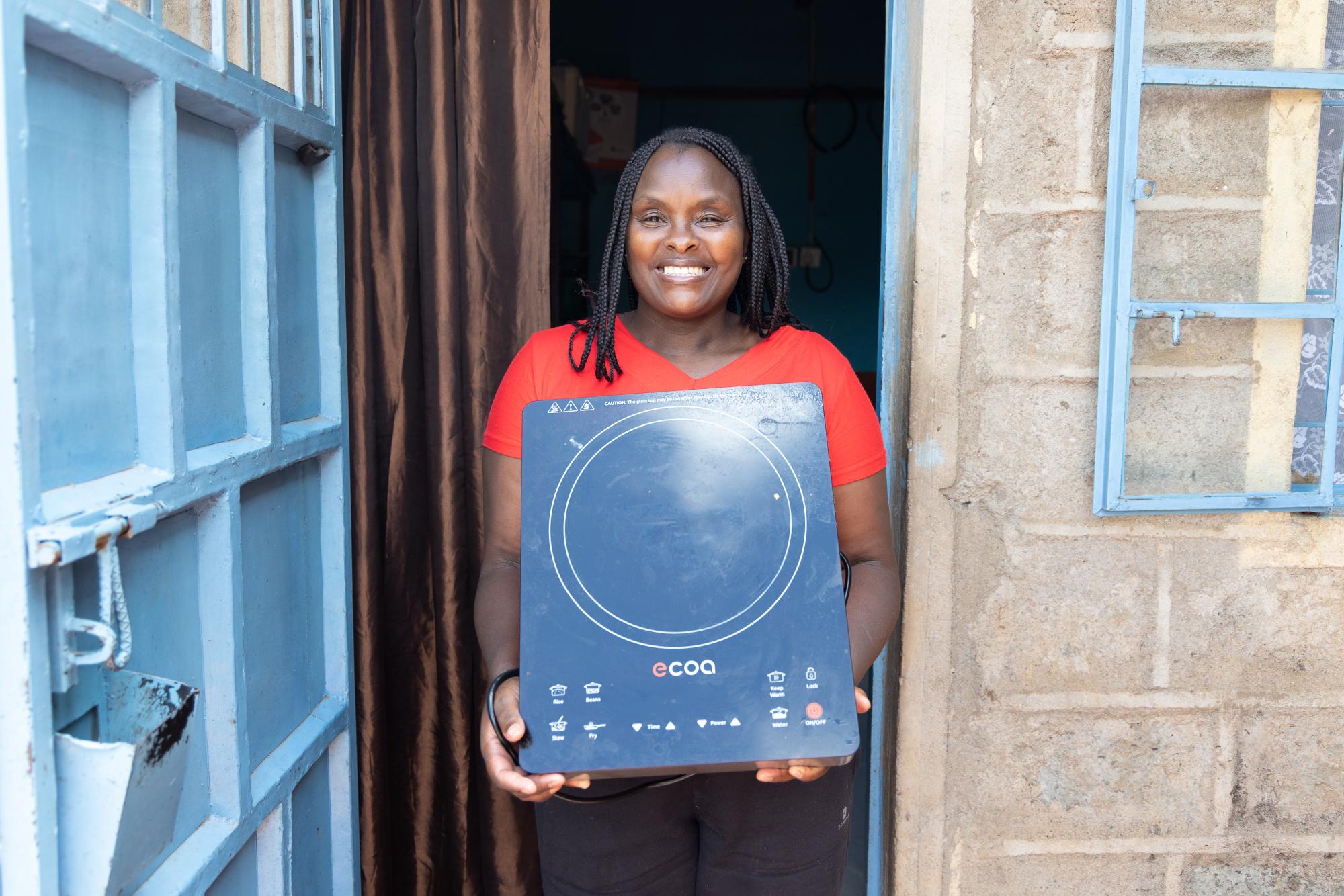
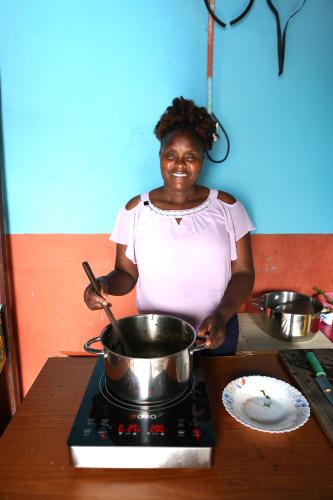
Auparavant, Mercy Njoki, qui habite à Ruiri, près de Nairobi, comptait parmi le milliard de personnes en Afrique subsaharienne qui préparent les repas sur des appareils de cuisson classiques à feu ouvert, à l’intérieur de leur domicile. C’était avant qu’elle ne découvre ECOA, un appareil de cuisson électrique fabriqué par BURN.
Elle a acheté cet appareil, qui lui permet aujourd’hui de gagner du temps et d’économiser de l’argent, auprès d’une entreprise qui fabrique des appareils de cuisson électriques, au bois et au gaz très performants, plus propres, qui consomment moins de combustible et préservent la santé des familles.
« Avant, j’utilisais un appareil de cuisson classique qui rejetait beaucoup de fumée », explique-t-elle. « Les membres de ma famille, en particulier mes enfants, tombaient souvent malades. Ils ont développé des allergies en raison de leur exposition constante à la fumée. J’allais souvent à l’hôpital à cause d’une toux persistante. Il nous arrivait d’avoir mal à la tête à cause du monoxyde de carbone émis par l’appareil de cuisson. »
La pollution de l’air intérieur provoque plus de 3 millions de décès prématurés par an dans le monde. Elle touche tout particulièrement les enfants et les femmes dans les pays à revenu faible ou intermédiaire.
« Mon nouvel appareil de cuisson ne produit plus de fumée et il est plus sûr. Il est même muni d’un verrou que les enfants ne peuvent pas ouvrir, contrairement aux appareils de cuisson classiques », souligne Mercy Njoki.
De la fumée à la durabilité
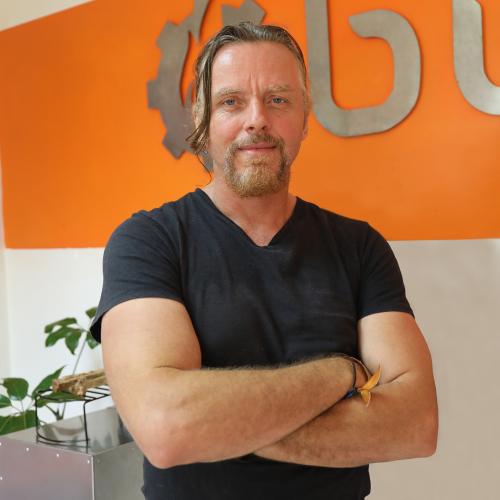
L’appareil de cuisson de Mercy Njoki a été conçu par BURN, une entreprise fondée par Peter Scott, un entrepreneur canadien. En 1990, lors d’un voyage dans ce qui est aujourd’hui la République démocratique du Congo, il a été frappé par la déforestation entraînée par la production de charbon de bois destiné à la cuisson domestique. Il a décidé de se consacrer à la fabrication d’appareils de cuisson qui seraient meilleurs, car ils pourraient préserver les forêts et améliorer la santé des populations en Afrique subsaharienne.
En 2010, Peter Scott a créé BURN Manufacturing près de Seattle, dans l’État de Washington, pour produire des appareils de cuisson propres destinés à l’Afrique. Quatre ans plus tard, il a ouvert une usine de production au Kenya. Depuis, BURN s’est implantée en Afrique de l’Est, de l’Ouest et centrale, et s’est dotée d’usines d’assemblage au Nigeria, au Mozambique, au Ghana, en Tanzanie et au Malawi.
« Lors du lancement de BURN, peu de gens croyaient que le secteur de la cuisson propre pouvait produire des résultats concrets », explique Ted Miller, responsable financier de l’entreprise. « Mais depuis, l’entreprise a vendu plus de 6 millions d’appareils de cuisson propres dans plus de 30 pays en Afrique et en Asie du Sud-Est, aidant plus de 32 millions de personnes. »
La première fois qu’Hendrik Engelmann‑Pilger, spécialiste de l’énergie à la Banque européenne d’investissement, a entendu parler du projet de BURN, il doutait que ce soit le genre d’opération que la Banque financerait.
« Il est très difficile de financer le secteur de la cuisson propre », explique-t-il. « Le marché est fragmenté et il existe peu d’entreprises d’une taille et d’un niveau de professionnalisme suffisants pour recevoir le soutien de banques de développement ou d’investisseurs à impact social. BURN fait partie des rares exceptions. »
Pour Charlotte Rault, chargée de prêts à la Banque européenne d’investissement, la décision s’est imposée d’elle-même. « J’étais très motivée à l’idée de travailler sur ce projet », dit-elle, « parce qu’il coche toutes les cases de ce que nous voulons financer à la BEI : il appuie à 100 % l’action en faveur du climat et le soutien aux femmes. »
En 2024, la Banque européenne d’investissement a signé un prêt de 15 millions de dollars pour aider à commercialiser les appareils de cuisson à induction de BURN auprès des ménages d’Afrique de l’Est. Ces appareils seront alimentés par une électricité de 80 % à 95 % renouvelable.
Paiement en fonction de l’utilisation
Pour parvenir à la neutralité carbone d’ici à 2050, il faut que chaque année, près de 300 millions de personnes adoptent des méthodes de cuisson propres. Mais le caractère abordable de ces solutions reste un défi majeur. « Les méthodes classiques, comme l’utilisation du bois ou du charbon de bois, sont peu coûteuses ou gratuites, tandis que les appareils de cuisson électriques peuvent être chers », souligne Ted Miller.
Pour faciliter l’achat de ces appareils, BURN permet de les acquérir au moyen de versements réguliers sur une année. L’entreprise a en outre recours au financement carbone pour faire baisser les prix. BURN attire ainsi des investissements d’autres entreprises ou institutions qui sont prêtes à subventionner le coût des appareils de cuisson en échange de crédits carbone. Ces subventions permettent de réduire le prix des appareils de cuisson de 80 % au maximum.
Pour de nombreuses familles kényanes, le combustible représente une dépense de 50 dollars par mois en moyenne. Ces appareils de cuisson leur permettent d’amortir le coût d’achat en deux à trois mois, puis de réaliser des économies importantes.
« Je verse tout ce que je peux pour payer l’appareil de cuisson », explique Mercy Njoki, « et avec l’argent qui reste, je cuisine pour ma famille : le petit-déjeuner, le déjeuner et même le dîner. Avant, je perdais vraiment beaucoup de temps à cuisiner. Maintenant, je peux passer plus de temps avec mes enfants et faire autre chose. »

BURN Manufacturing USA
Ouvrir de nouvelles perspectives aux femmes
Dans de nombreux ménages africains, ce sont les femmes qui préparent et cuisent les repas. Pour ce faire, il leur faut souvent aller chercher du bois et gérer le feu, ce qui est chronophage et physiquement éprouvant. Les nouveaux appareils de cuisson facilitent la vie des femmes et favorisent l’égalité entre les femmes et les hommes.
Tania Colantone, spécialiste du développement social à la Banque européenne d’investissement, constate les avantages évidents qui découlent de ce projet.
« Son apport en matière d’égalité des genres est assez simple à comprendre », explique-t-elle. « En plus de protéger les femmes et les jeunes enfants de la fumée de cuisson, il permet de réduire le temps de cuisson de jusqu’à 70 %. Les femmes ont ainsi la possibilité de poursuivre des études ou des activités commerciales. »
Ce projet s’inscrit dans le cadre du Défi 2X, une initiative mondiale lancée lors du sommet 2018 du G7 pour promouvoir les investissements qui soutiennent les femmes. La Banque européenne d’investissement est un membre clé de cette initiative, qui accélère les investissements du secteur privé en faveur des femmes dans les pays à revenu faible ou intermédiaire.

BURN Manufacturing USA
Près de la moitié des 3 500 salariés de BURN sont des femmes et l’entreprise encourage activement le recrutement, la formation et la promotion de femmes à des fonctions allant de la fabrication à la distribution et au service à la clientèle. Cela renforce non seulement l’indépendance financière des femmes, mais aussi leurs compétences dans un secteur traditionnellement dominé par les hommes. Lors de la signature du prêt avec la Banque européenne d’investissement, BURN s’est engagée à augmenter la part de femmes au sein de ses effectifs à temps plein.
« Chez BURN, l’égalité des genres n’est pas qu’un principe, c’est une réalité », souligne Charlotte Rault, chargée de prêts à la BEI. « Obtenir la qualification 2X est une étape importante pour des projets qui font avancer l’égalité entre les femmes et les hommes. Tout le monde peut alors savoir qu’ils sont conformes, ce qui attirera de nouveaux investisseurs. »
Des crédits carbone transparents
Sur le continent africain, plus de 400 millions de personnes ont l’électricité chez elles, mais beaucoup ont encore recours au charbon de bois pour la cuisson. Ce sont ces ménages que BURN cible avec ses appareils de cuisson plus propres et plus performants. Ces appareils sont équipés de capteurs qui fournissent des données en temps réel sur la consommation d’électricité et les habitudes de cuisson, ce qui permet de calculer avec précision les réductions d’émissions et de garantir une vérification transparente des crédits carbone.

Selon BURN, des études ont démontré que ses appareils de cuisson réduisent la consommation de combustible de 39 %, permettent aux familles d’économiser 119 dollars par an et font baisser les émissions de CO2 de 3,5 tonnes par appareil de cuisson et par an.
« Ce projet change la donne pour l’Afrique de l’Est », affirme Hendrik Engelmann‑Pilger, spécialiste de l’énergie à la BEI. « Il met à disposition une technologie de pointe qui améliore la qualité de vie et mobilise un soutien mondial grâce aux crédits carbone. »
EAST AFRICA CLEAN COOKING EXPANSION
Financing the expansion of clean cooking activity of the company Burn Manufacturing in Kenya, Tanzania and potentially other African countries.