- River restoration, dykes and pumping stations will provide better protection for hundreds of thousands of people against heavy rainfall and flooding.
- Long-term EIB loans with favourable interest rates make investments in flood protection and climate adaptation affordable.
- The EIB, the Emschergenossenschaft and the Lippeverband are strengthening their partnership for clean water and climate‑resilient infrastructure in the Ruhr region.
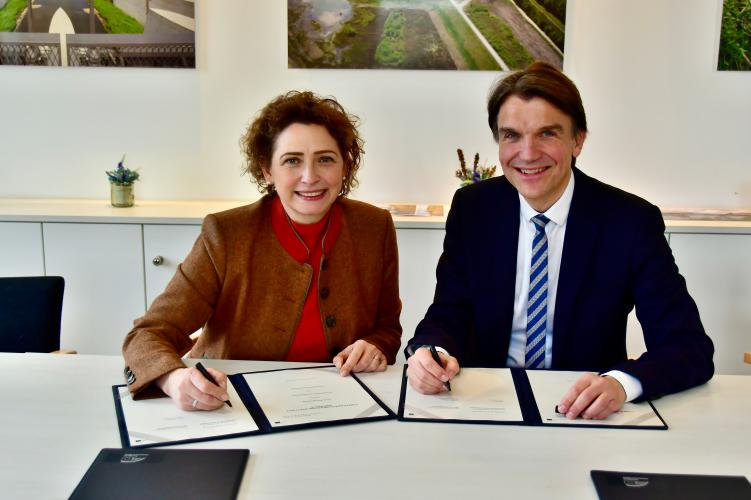
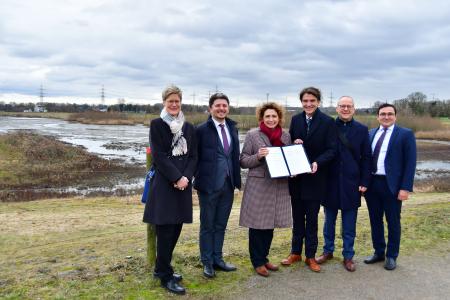
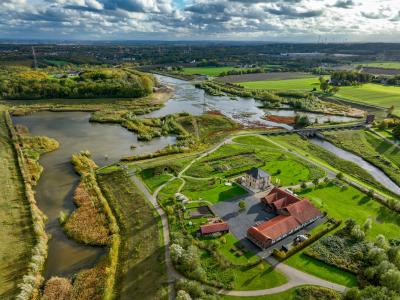
The European Investment Bank (EIB), headquartered in Luxembourg, is granting the two regional water management associations Emschergenossenschaft and Lippeverband (EGLV) a total of €500 million in promotional loans for climate adaptation and flood protection projects in the Emscher-Lippe region. The loan agreements were signed on Friday, 16 January by EIB Vice-President Nicola Beer and Chair of the Executive Board of EGLV Prof. Dr Uli Paetzel at the Hof Emscher-Auen former farmstead in Castrop‑Rauxel, near Dortmund. With a term of 30 years, the loans will help ensure that – despite the significant investments required for climate adaptation and flood protection – local charges remain affordable thanks to favourable interest rates.
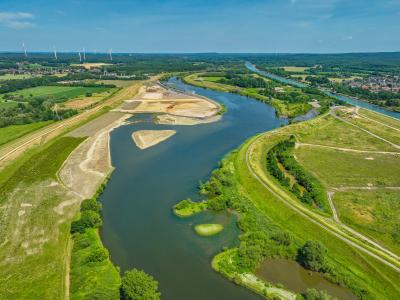
EGLV is undertaking numerous projects to adapt to the effects of climate change and to improve flood protection. These include river restoration measures, dyke rehabilitation and pumping station upgrades.
“For many years, our long-term financing has been invested in the water systems of the Emscher-Lippe region – first in modern wastewater treatment systems and environmental protection, and now in climate adaptation and flood protection. This will provide several hundred thousand people with better protection against heavy rainfall and flooding, help municipalities avoid high costs from future flood damage, and ensure that – thanks to the flexible, low‑interest loans from the European Investment Bank – investment costs remain manageable for locals,” said EIB Vice-President Nicola Beer.
“The loans from the European Investment Bank will enable EGLV to implement these high‑investment projects quickly for the benefit of the community, while spreading the financial contributions from our members over several decades. This will help shield residents, as the promotional loans will enable wastewater charges to be adjusted gradually over an extended period,” said Prof. Dr Uli Paetzel, chair of the Executive Board of the Emschergenossenschaft and the Lippeverband.
With these new investments, the EIB, the Emschergenossenschaft and the Lippeverband are continuing a decades‑long collaboration to ensure clean water and a healthy environment. After the successful ecological restoration of the Emscher River and the development of a modern wastewater treatment system, the focus now turns to protection against flooding and heavy rainfall.
The measures range from further river restoration activities to the rehabilitation and expansion of dykes, and upgrades to pumping stations and retention basins in order to prevent flooding in densely populated urban districts. As a result, hundreds of thousands of residents in the Emscher-Lippe region will be better protected against the consequences of the climate crisis. Preventive flood protection measures will also help avoid substantial damage to private property and public infrastructure.
The EIB’s flexible, long‑term loan structures will enable the Emschergenossenschaft and the Lippeverband to spread their investments over many years without placing undue financial pressure on contributors. Thanks to the favourable interest rates, the multibillion‑euro investments required for climate adaptation and flood protection will remain affordable for municipalities and residents alike, spreading costs evenly across generations and ensuring that prevention is more cost‑effective than future repair.
Since 2011, the European Investment Bank has helped to finance the Emscher restoration project, planned and implemented by the Emschergenossenschaft. With a total of €2.1 billion in promotional loans, this intergenerational project has contributed significantly to the ecological recovery of the Emscher – once known as “Germany’s dirtiest river.”
This long‑standing commitment to the Emscher’s restoration and improved quality of life in the Ruhr region will now continue through new investments in flood protection and climate adaptation.
Over the past decade, the European Investment Bank has provided more than €3.3 billion for long‑term water sector investments in Germany, including in Augsburg, Berlin, Halle, Hamburg and Cologne, as well as for projects in the German federal states of Saxony and Lower Saxony.
Background
European Investment Bank
The European Investment Bank (EIB) is the long-term lending institution of the European Union, owned by the Member States. Based on its eight core priorities, the Bank finances investments that pursue strategic EU objectives. It supports projects beneficial for climate and the environment, digitalisation and technological innovation, security and defence, cohesion, agriculture and bioeconomy, social infrastructure, the capital markets union, and a strong Europe in a more stable and peaceful world.
All projects financed by the EIB Group are aligned with the Paris Agreement, as pledged in its Climate Bank Roadmap. Almost 60% of annual EIB Group financing goes to projects that contribute directly to climate change mitigation and adaptation, and a healthier environment.
The EIB Group is committed to deeper market integration, and its activities help mobilise additional investment. In 2024, it triggered a record total of more than €100 billion in investments for EU energy security, and mobilised €110 billion in growth capital for startups, scaleups and pioneering European firms.
Around half of EIB financing within the European Union goes to cohesion regions, where per capita income is below the EU average.
High-quality, up-to-date photos of EIB headquarters are available on the EIB website.
Emschergenossenschaft and Lippeverband
The Emschergenossenschaft and the Lippeverband (EGLV) are public water management associations that operate as a cooperative.
Founded in 1899, the Emschergenossenschaft is responsible for managing the Emscher River, wastewater collection and treatment, and flood protection. The Lippeverband, established in 1926, manages the Lippe river basin in the northern Ruhr region. Its achievements include restoring the Seseke tributary to a more natural state. Together, they employ around 2 000 people and form Germany’s largest wastewater disposal entity and operator of wastewater treatment plants and pumping stations (around 782 kilometres of watercourses, approximately 1 533 kilometres of sewers, more than 500 pumping stations and 59 wastewater treatment plants).

500 Millionen Euro für Hochwasserschutz und Klimaanpassung
©EIB
Download original
500 Millionen Euro für Hochwasserschutz und Klimaanpassung
©EIB
Download original
500 Millionen Euro für Hochwasserschutz und Klimaanpassung
©EIB
Download original
500 Millionen Euro für Hochwasserschutz und Klimaanpassung
©EIB
Download original
500 Millionen Euro für Hochwasserschutz und Klimaanpassung
©EIB
Download original