Along one of Azerbaijan’s busiest railway lines, danger has long been part of daily life. Efforts are now under way to reduce it. Stretching over 500 kilometres, Azerbaijan’s main east–west railway line connects the capital and Caspian port of Baku to Boyuk Kesik on the Georgian border. It also forms part of the so-called Middle Corridor, linking Europe and China by rail.
Built in the 1970s, the line cuts through towns, villages and open land. Along its length, 76 level crossings and open pedestrian and animal passage points allow people, vehicles and animals to cross the tracks. These crossings are part of everyday life, but they also carry risk.
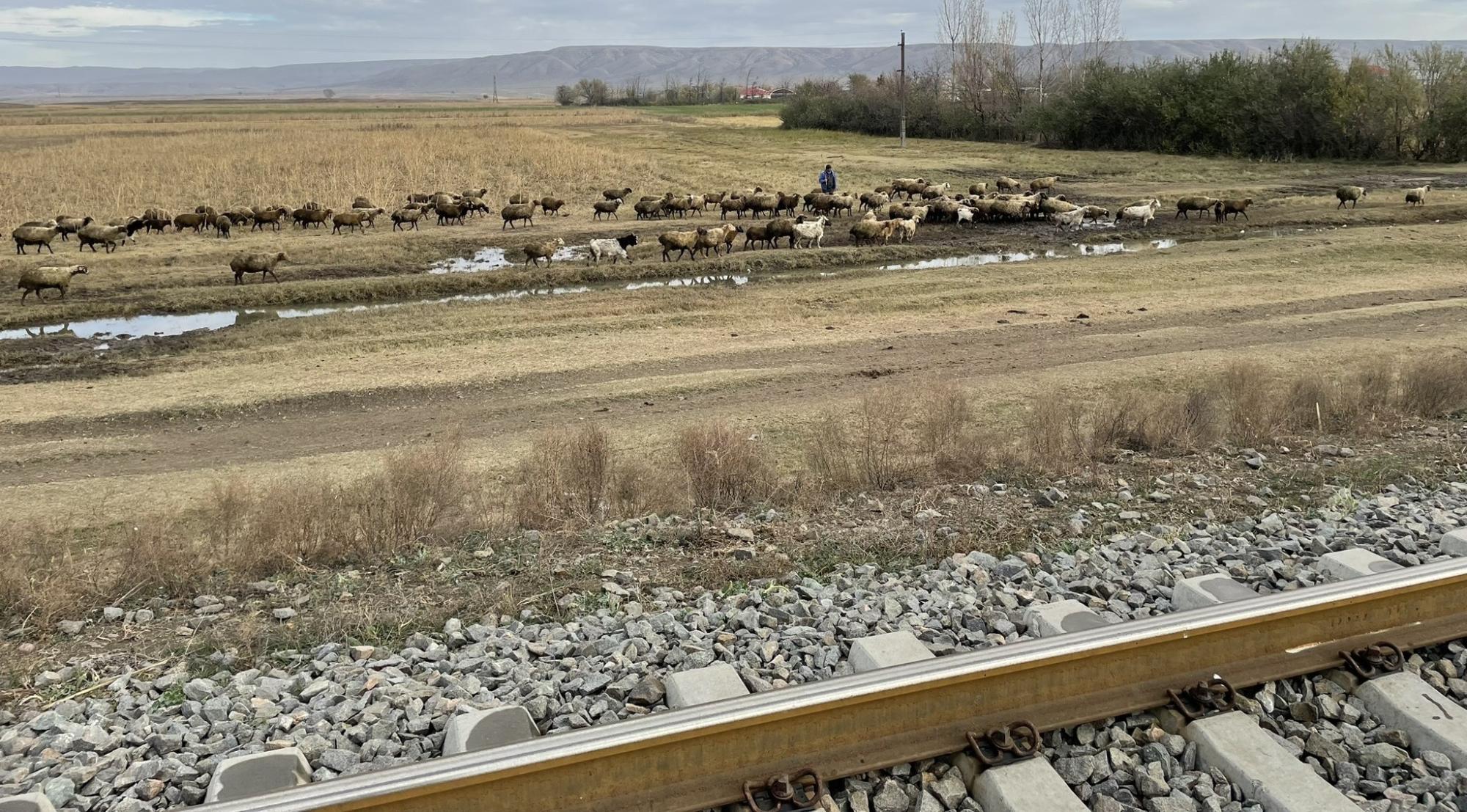
Children cross the line on their way to school. Livestock wander onto the tracks. Drivers take risks as trains approach. Emergency vehicles are delayed. Over just twenty months, there were 36 collisions involving livestock and 97 involving people, resulting in 15 fatalities.
Faced with this reality, Azerbaijan Railways turned to EIB Advisory to better understand how safety along the corridor could be improved. Under the Bank’s advisory, the Facility for Eastern Partnership Investment in Connectivity (EPIC) team focus on connectivity projects in Azerbaijan.

Assessing risks and options
Azerbaijan Railways and EPIC teams travelled the full length of the line, stopping at every critical crossing. The aim was to understand how each crossing is used and where the risks are greatest.
“What impressed me most was how committed our Azerbaijani colleagues were,’’ says Denis Jakubik leading the EPIC team, “and how eager they were to learn more about railway safety from European practice.”
A simple principle guided the work: if trains and people do not meet, accidents cannot happen. With this in mind, the Azerbaijan Railways and EPIC teams looked at ways to remove points of conflict, using bridges, underpasses and fencing so that roads and railway no longer meet.
Every level crossing was mapped and documented, with detailed information gathered on how and when how each one is used. This made it possible to compare crossings and identify those presenting the greatest safety risks.
Economic considerations helped clarify what could realistically be done and in what order. The EPIC team also prepared the terms of reference for further option analysis and detailed design work for the most critical crossings.
Based on this work, the EPIC experts outlined two options:
- 1. fencing and livestock underpasses, along with the removal of eight of the most dangerous crossings (estimated cost: €50 million).
- 2. the same measures, extended to seventeen crossings (estimated cost: €90 million).
Both focus on separating rail traffic from people and animals, differing mainly in scale and cost. There is now a shared understanding of where the risks lie, what measures are available, and what level of investment each would require.
