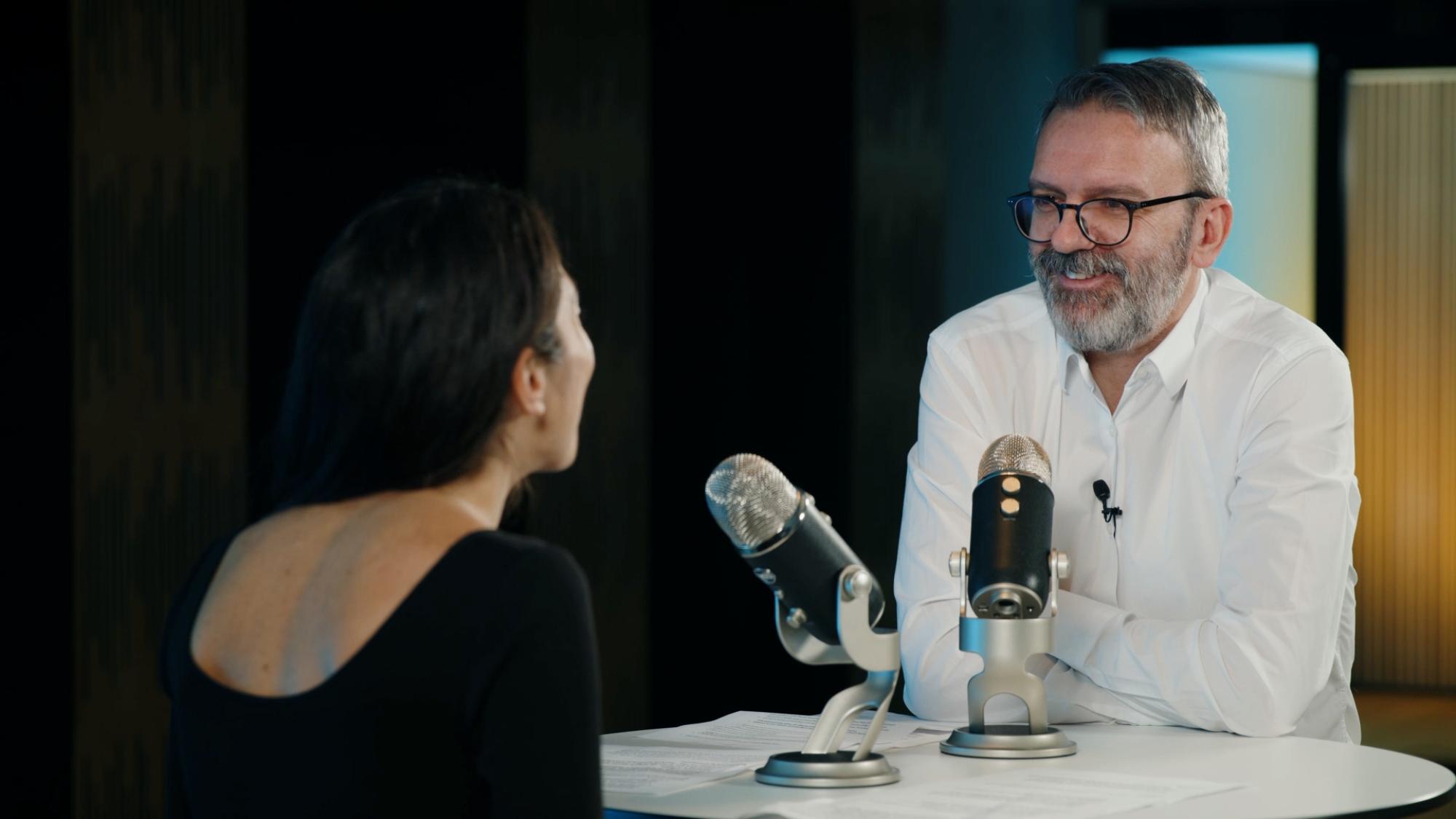
« La transition écologique n’est pas un risque, c’est une occasion à saisir. Si nous atteignons nos objectifs en matière de climat, nous aurons une Europe plus forte et plus sûre. »

La série Invested by Europe explore les forces à l’œuvre dans l’économie européenne. Dans chaque épisode, nous donnons la parole à des spécialistes qui abordent les défis les plus urgents, qu’il s’agisse du logement et de l’énergie, de l’innovation et des infrastructures, ou encore de la sécurité et de la défense. Nous analysons ce qui change, les solutions possibles et la manière dont l’Europe investit dans son avenir.

Quel est le thème de cet épisode ?
L’investissement climatique est souvent assimilé à un coût – quelque chose que les économies doivent absorber pour réduire les émissions. Mais l’action en faveur du climat est un puissant moteur de compétitivité, de résilience et de croissance à long terme.
Dans cet épisode d’Invested by Europe, Fotios Kalantzis, économiste principal à la Banque européenne d’investissement spécialisé dans les questions climatiques, explique pourquoi investir dans l’action pour le climat est essentiel non seulement pour concrétiser les objectifs de l’Europe en matière de climat, mais aussi pour renforcer l’économie, réduire la dépendance à l’égard des importations de combustibles fossiles et assurer à l’Europe un rôle de chef de file mondial dans le domaine des technologies propres.

Résumé de l’épisode
Pour l’Europe, investir dans l’action en faveur du climat est une question de sécurité économique, de compétitivité et de leadership. L’investissement climatique réduit la dépendance à l’égard des combustibles fossiles importés ainsi que l’exposition aux fluctuations des prix de l’énergie et contribue à la maîtrise des coûts par l’efficacité énergétique.
L’Europe a déjà réalisé des progrès significatifs. Depuis 2007, les émissions dans le secteur de l’électricité de l’UE ont été réduites d’environ 50 %. Dans le même temps, les importations de combustibles fossiles ont reculé, ce qui a entraîné une atténuation des risques de prix et une amélioration de la sécurité énergétique. L’investissement climatique soutient la création d’emplois, en particulier dans les industries vertes, et renforce la résilience de l’économie.
La transition écologique crée de nouveaux marchés et de nouvelles perspectives de croissance. Des investissements soutenus dans la recherche et l’innovation sont essentiels pour maintenir et améliorer la compétitivité des technologies vertes.
La réduction de la dépendance aux combustibles fossiles reste un objectif central. Si le déploiement des technologies propres existantes est important, l’Europe doit aussi investir dans le développement de nouvelles technologies, afin d’éviter l’apparition d’une nouvelle dépendance. La compétitivité dépend non seulement du déploiement, mais aussi du leadership technologique.
La croissance de l’économie verte est stimulée par les politiques de l’UE en matière de climat, les investissements publics et la forte demande de solutions énergétiques propres. Il est particulièrement important de soutenir les petites entreprises. Les investissements dans l’efficacité énergétique pour les petites et moyennes entreprises peuvent générer une valeur ajoutée importante et favoriser la création d’emplois, l’amélioration de la résilience et la réduction des coûts. Des outils tels que le Green Checker de la Banque européenne d’investissement aident les entreprises à recenser les projets admissibles et à déterminer s’ils peuvent bénéficier d'un financement.
Principaux points à retenir
- L’investissement climatique renforce la compétitivité et réduit les émissions.
- La réduction de la dépendance à l’égard des combustibles fossiles améliore la sécurité énergétique et contribue à la maîtrise des coûts.
- L’efficacité énergétique présente d’importants avantages économiques, en particulier pour les petites entreprises.
À propos de l’invité
Fotios Kalantzis est économiste principal à la Banque européenne d’investissement. Il est spécialisé dans les questions climatiques et son travail consiste principalement à analyser comment l’action en faveur du climat influence l’investissement et la compétitivité. Il possède une vaste expérience des institutions européennes, de la réglementation relative à l’énergie, des études économiques et des services consultatifs.
Il est titulaire d’un doctorat en économie de l’énergie et est l’auteur de nombreuses publications consacrées aux marchés de l’énergie ainsi qu’aux politiques, à la modélisation et l’économétrie dans le domaine du climat. Son travail consiste à analyser les interactions entre les objectifs climatiques, les résultats économiques et la conception des cadres réglementaires.
Écoutez et abonnez-vous à Invested by Europe
Vous pouvez regarder ou écouter Invested by Europe sur :
- notre site web, où l’intégralité de la série est disponible
- Apple Podcasts
- Spotify
- Deezer
- — ou nous retrouver sur votre plateforme de podcasts préférée.
Découvrez chaque semaine de nouveaux épisodes de notre podcast.
Pour en savoir plus
EIB Investment Report 2025/2026
Investment in the European Union has remained surprisingly resilient despite repeated global shocks in recent year – largely the result of consistently strong public investment.
Climat et environnement
Ouvrir la voie à un monde sans carbone
Pourquoi l’efficacité énergétique des bâtiments est-elle si importante ?
Nous devons accélérer la rénovation des bâtiments afin de réduire la consommation d’énergie, de soutenir les énergies renouvelables et de faire profiter les Européens de coûts plus bas et prévisibles. Voici comment y parvenir.