Europe’s energy transition has entered a decisive new phase -larger in scale, faster in deployment, and more resilient than ever. What once seemed improbable - an irreversible move away from Russian gas - now stands as one of Europe’s greatest strategic achievements.
In 2025 alone, investment in the European Union’s clean energy transformation reached record highs of nearly €400 billion. The market value of European renewable energy companies surged by over 50% in a single year, signalling strong investor confidence in technologies developed and deployed on European soil.
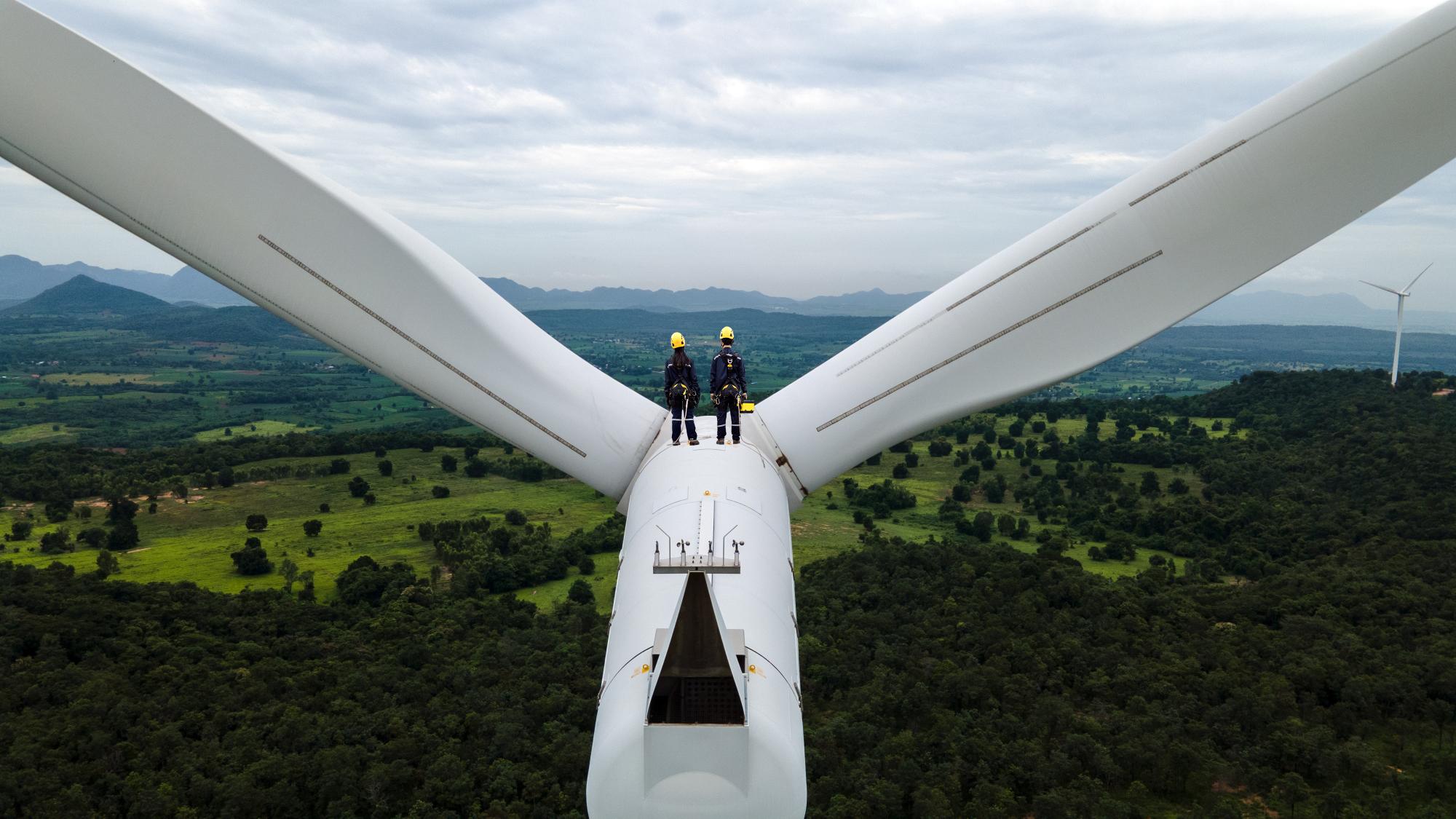
Yet Europe’s transformation is not built solely on mega‑projects or headline‑grabbing infrastructure. The wind turbines rising from the Baltic Sea and new interconnectors across the continent tell only part of the story.
Energy security
Addressing remaining bottlenecks in the energy sector is essential to unlock the benefits of a fully integrated system and reduce energy costs for EU businesses and individuals. But generation alone will not secure Europe’s competitiveness.
interconnections and enhance system flexibility, for example for generation paired with energy storage.
At the same time, supporting the green transition and affordable renewable energy for Europe’s companies involves strategic choices and trade-offs linked to economic security. European companies face extensive external strategic dependencies, ranging from critical raw materials to advanced technologies and components.
A case in point is Europe’s cleantech industry. Whereas it already accounts for nearly one third of EU GDP growth, it also carries dependencies, which vary across different sectors. While they are rather low for wind power, they remain very high for batteries or solar power generation, raising cybersecurity as well as strategic dependence concerns. In order to tackle this trade-off, urgent and well-coordinated action is needed at national and EU level to manage the transition towards increased diversification.
Energy efficiency is Europe’s strategic advantage
Energy efficiency remains one of Europe’s most powerful and still underestimated tools to make climate and competitiveness a winning tandem. It is not merely a technical fix; it is a strategic imperative with no trade-offs and Europe’s most immediate competitiveness lever.
Energy efficiency is lowering costs, reducing emissions and enhancing resilience. As the saying goes, the safest, cheapest, and cleanest energy is the energy we do not consume.
Europe is proving this with results, achieving more with less. Since 1990, the European Union has cut its greenhouse gas emissions by over 37% all while growing its economy by 71%. This is not coincidence but transformation: Europe is becoming more efficient by deploying advanced technologies and adopting smarter industrial processes.
At the same time Europe’s green transition will succeed only if small and medium‑sized enterprises (SMEs) remain at its core. Representing 99% of all European businesses and two‑thirds of private sector employment, SMEs are essential to competitiveness, innovation and social cohesion.
If Europe wants to preserve its leadership in clean technologies and reinforce economic resilience, SMEs must have access to the financing, tools and flexibility needed to modernise.
This is why the next chapter of Europe’s clean energy transformation is focused squarely on them.
Unlocking investment for the real economy
Last year, the EIB Group launched the Energy Efficiency for SMEs Initiative with support from the European Commission and in partnership with Bertrand Piccard’s Solar Impulse Foundation. The programme aims to deliver €17.5 billion in financing by 2027, reaching up to 350 000 SMEs.
The momentum is already strong. In 2025 alone, €6 billion reached as many as 150 000 SMEs - double the previous year’s volume. Across Europe, companies are installing modern heating systems, deploying smart manufacturing technologies, reducing energy waste, and strengthening competitiveness in an increasingly demanding global market.
A new partnership to accelerate impact
The EIB is now intensifying its support through a €100 million commitment to a new Eiffel Investment Group facility designed specifically for SME energy efficiency. This initiative will help businesses reduce energy costs, accelerate decarbonisation and reinforce industrial competitiveness.
Together, we will deploy financing to scale advanced energy saving technologies where they matter most: in the factories, warehouses, workshops, and offices that underpin Europe’s economic life.
With the EIB as anchor investor, the facility aims to mobilise €1.2 billion by 2030 including from private capital. The emphasis will be on SMEs in Austria, France, Germany, Italy, Portugal, and Spain.
This is not simply another investment vehicle. It is a demonstration that Europe can align public and private capital to strengthen sovereignty, competitiveness and climate leadership simultaneously.
The breakthrough: energy efficiency as a service
One of the partnership’s most transformative features is its support for energy efficiency as a service. Instead of purchasing equipment - a costly and sometimes risky decision - SMEs can buy guaranteed energy savings. They benefit immediately from lower bills and reduced emissions, without upfront investment or exposure to technological risk.
This model “servitisation” allows SMEs to adopt high‑performance heat pumps, advanced optimisation tools and other cutting‑edge solutions while keeping balance sheets strong. It removes long‑standing barriers that have prevented many companies from replacing outdated systems.
Europe is now innovating not only in technology, but in the business models needed to deploy it at scale. And it places SMEs exactly where they belong: at the heart of the green energy transition.
Let us seize that ambition and make energy efficiency the cornerstone of a sustainable and competitive future for all.
This article was originally published on Les Echos on 2 March 2026.