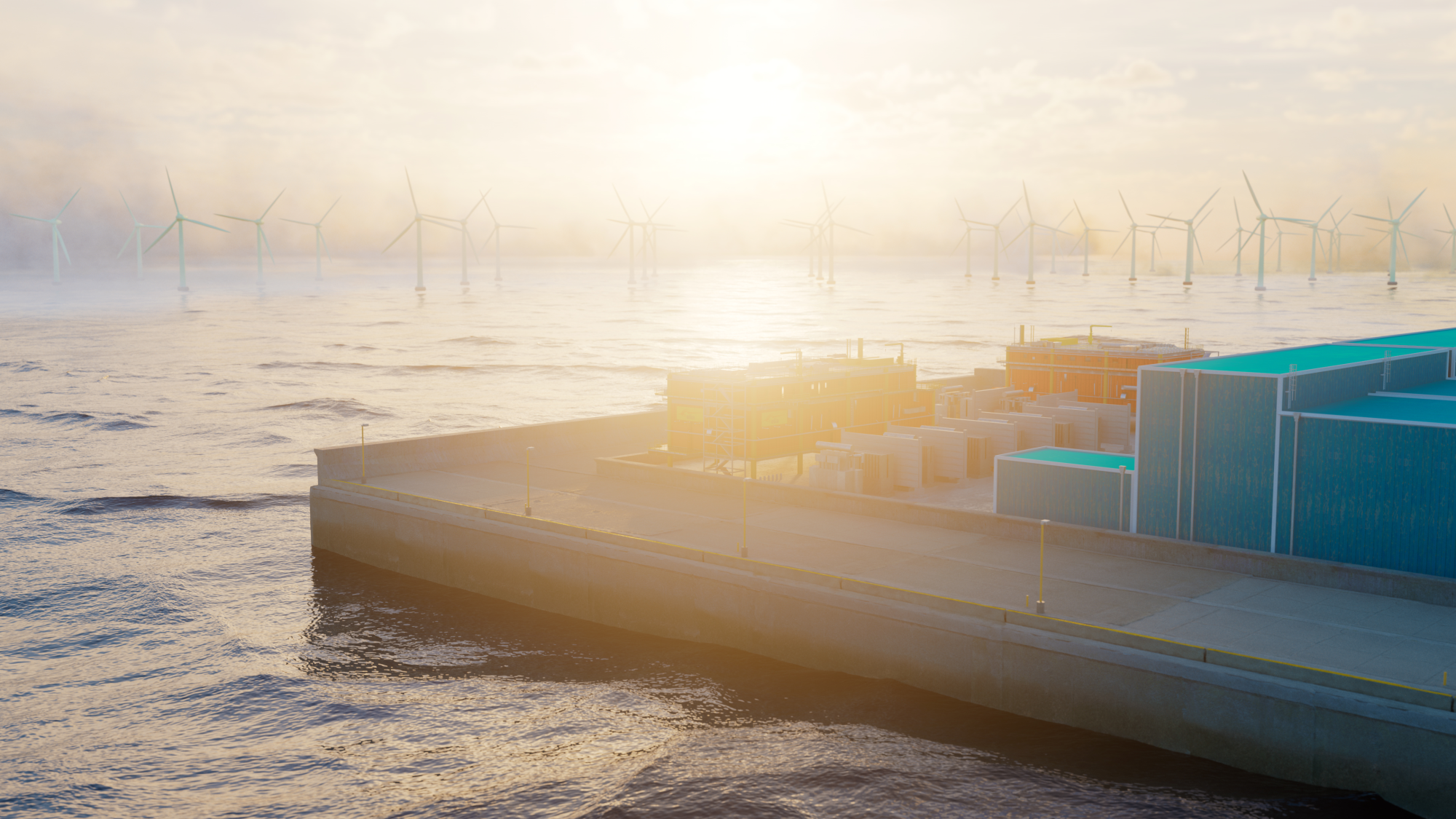
The European Investment Bank – through EIB Advisory – and the European Commission offer project development assistance (PDA) to facilitate access for innovative projects for funding from the Innovation Fund and other EU funding schemes, national grants and private financing. Eligible projects for receiving tailored support to increase their financial or technical maturity must demonstrate a high potential to reduce greenhouse gas emissions.
The Innovation Fund is one of the world’s largest funding programs for the demonstration of innovative low-carbon technologies. The fund aims to bring to market industrial solutions that decarbonise Europe and support the transition to climate neutrality while fostering its competitiveness. We will provide around €40 billion of support over 2020-2030 (at carbon price of €75/tCO2).
The European Commission implements the Fund with the assistance of the European Climate, Infrastructure and Environment Executive Agency (CINEA).

What we offer
The project development assistance (PDA) is designed to help promoters improve their investment readiness and prepare for Innovation Fund calls for proposals. With our tailored services, promoters can address specific gaps in the technical or financial maturity of their projects:
Due diligence assessment
- Project maturity assessment
- Technical due diligence
- Financial pre-due diligence
Financial services
- Business plan and market analysis
- Financial forecasts, planning and modelling
- Capital structuring, financing roadmap or bankability assessment
Technical services
- Technical studies to support an Innovation Fund application
- Economic analysis
- Concept development support, engineering, procurement and implementation support
How to apply
Sign up for a contact account to send all inquiries directly to our Innovation Fund team. Once signed up, your company can get in touch with us and apply for project development assistance.
When sending your request, you will need to fill the Innovation Fund PDA request form and provide, if available:
- a business plan and initial financial model,
- a feasibility study and related technical studies,
- a contracting strategy or related agreements,
- other supporting studies demonstrating project innovation, greenhouse gas emission savings potential and replicability.
Please note that due to the high volume of applications, we are only able to contact selected candidates. If you haven't received a response within 90 days of submitting your application, please consider that your proposal has not been selected for this round.
Eligibility
Before applying, please make sure your project falls under the scope of the Innovation Fund and fulfils the eligibility criteria:
- Located in the European Union, Iceland, Liechtenstein or Norway.
- Innovative with reasonable expectations for successful demonstration or pre-commercialisation.
- Have the potential to significantly reduce greenhouse gas emissions.
- Replicable and scalable.
- Able to show good prospects of achieving breakeven financial results within four years from grant preparation.
Sectors include renewable energy, carbon capture, utilisation, and storage (CCUS), innovative low-carbon technologies and processes in energy-intensive industries, energy storage plants, net-zero and low-carbon mobility (maritime, aviation, rail and road transport), and buildings, as defined in Annex I and Annex III to the EU ETS Directive 2003/87.
Project development assistance is given on a first-come, first served basis to selected eligible projects, regardless of whether they have previously applied in concluded calls or intend to apply for another form of Innovation Fund support.
Please note that projects that have applied to a recent Innovation Fund call and are currently being evaluated for or have received a grant support are not eligible. Projects can receive project development assistance from the Innovation Fund only once.
Project promoters have the option to consent for project development assistance consideration on their Innovation Fund application. In this case, the designated service will forward automatically their project documentation to the EIB, if they fulfil the required conditions, after the finalisation of the evaluation for each call for proposals.
Selection and application process
A dedicated EIB advisor will review your application to verify the project’s eligibility and fit with the PDA service offering. The assessment criteria also include indicators for reaching geographical balance to support EU Member States with low effective participation, sectoral balance, and high potential for maturity improvement.
Requests that meet the criteria for PDA are sent to the European Commission for final decision.
Once your project has been selected to receive PDA, we will jointly define the specific scope of services and timeline for delivery.
After finalising the scope of services and timelines, we formalize the engagement with a service agreement.
EIB experts work with you to deliver the agreed services with your full engagement essential for achieving the best results. Depending on the scope of work, we may engage external consultants to support the delivery of the PDA. The service will be provided free of charge to the promoters.
By the numbers
Projects benefitting from the Innovation Fund
Since 2021, we have been providing project development assistance across a wide range of sectors and countries throughout Europe.
Country: Latvia
Sector: Refineries
Project promoter: SIA BIOREFIC IRG
SPARK ΟΝΕ is a pioneering renewable methanol project developed by Biorefic IRG in partnership with the leading waste operator in the Baltics. Located at Ventspils Freeport, Latvia, the project will produce 65 000 tonnes of renewable methanol annually, targeting the chemical and maritime sectors.
It will leverage modular technologies in advanced gasification and green hydrogen production, using unrecyclable municipal waste and forestry residues as feedstock. Designed for high efficiency and operational resilience, SPARK ΟΝΕ aims to deliver industry-leading cost performance in renewable methanol production.
Country: Sweden
Sector: CO2 Transport and Storage
Project promoter: Växjö Energi AB (VEAS)
The objective of POSCLIMB is to capture, transport, and permanently store up to 200 kt per year of negative emissions by creating a first-of-a-kind bio energy carbon capture and storage (BECCS) inland value chain to contribute to the commitments of the Paris agreement.
POSCLIMB will combine existing and emerging technologies and collaborate with counterparties throughout the value and logistics chain. The logistics chain focuses on minimum emissions by combining train and ship transport from the point source to the storage site.
The negative emissions created will be turned into credits and sold to the open market strengthening the European bio economy.
Country: France
Sector: Refineries
Project promoter: Verso Energy
The OrCHyDé project developed by Verso Energy aims at the creation of a modular and flexible plant for the production of e-methanol in Origny-Sainte-Benoite (France), benefiting from the integrated model developed by Verso Energy from renewable energy to synthetic fuels production.
The project seeks to scale up e-methanol production to an industrial level by improving process efficiency and expanding the range of end products. As a sustainable, low-carbon fuel, e-methanol has the potential to support the maritime or chemical industry's transition toward the European Union’s carbon neutrality goals.
The fully integrated project is expected to produce around 50ktpa e-methanol per year, designed to process approximately 90ktpa of biogenic CO2. OrCHyDé, which stands for Origny Carburant et Hydrogène Décarboné (Origny Decarbonised Fuel and Hydrogen), aims to achieve net absolute GHG emission avoidance of approximately 770kt CO2 compared to regular maritime fuel over a 10-year period. This project has a strong potential of replicability in France and in the European Union.
Country: Norway
Sector: Refineries
Project promoter: Norsk e-Fuel AS
Synrise will be among the first industrial-scale Power-to-Liquid plants, producing sustainable aviation fuel (e-SAF) and e-Naphtha in Mosjøen, Norway.
Using renewable electricity, green hydrogen and captured CO₂, the project applies an optimised Fischer-Tropsch process with innovative technologies such as an electrically heated e-RWGS reactor and advanced carbon-recycling systems. Therefore, Synrise will significantly reduce lifecycle emissions by replacing fossil fuels with fully renewable alternatives.
This combination enables a high carbon-conversion efficiency and leading e-SAF yields, supporting aviation and chemical industries in meeting EU climate targets and RFNBO requirements. The project acts as a catalyst for Europe’s emerging e-Fuel industry, stimulating demand for green hydrogen and CO₂ capture, strengthening supply chains and supporting the EU’s strategic autonomy in innovative technologies and fossil-free liquid fuel access.
Developed by Norsk e-Fuel and supported by a strong consortium, Synrise will serve as a first-of-its-kind demonstration accelerating the scale-up of e-Fuels across Europe.
Country: Greece
Sector: Chemicals
Project promoter: ProEuropean Trading GmbH
The H2CRETE Valley Project is a large-scale green ammonia project located in Atherinolakos, Crete, Greece. It integrates 100 MW of PEM electrolysis and Haber-Bosch synthesis to produce approximately 77 770 tonnes/year of green ammonia, using renewable electricity and desalinated seawater.
The project aims to decarbonise hard-to-abate sectors. It targets domestic and international markets including ports, cement factories, and refuelling stations in Greece, and other EU countries. ProEuropean Trading GmbH, based in Germany, is the project promoter.
The company is developing expertise in green hydrogen infrastructure, turnkey energy solutions and project financing, with H2CRETE as its main project.
Country: Germany
Sector: Hydrogen
Project promoter: RWE GENERATION SE
HyVoerde is an integrated renewable hydrogen project, developed in the context of the transformation of a former coal-fired power plant in Voerde, North Rhine-Westphalia, Germany, into a green energy hub. The electrolyser plant with 10-100 MW initial capacity (depending on suitable funding programme) for start of operation in early 2030 shall be connected to a major on-site battery storage, and to a H2 salt cavern storage via the German core hydrogen network. The Voerde site allows for major potential future capacity expansions.
The project aims to avoid significant greenhouse gas emissions by producing green hydrogen for the hydrogen-powered transport sector as well as for industrial use. Adjacent to the electrolyser plant, an on-site H2 filling station for trailers and multi-element gas containers is foreseen.
HyVoerde comprises multiple technical, commercial and system innovations aiming mostly at efficiency and H2 supply chain improvements. This includes optimisation of electricity management and structured green hydrogen supply profiles via the "dual storage strategy," enabling the electrolyser to be operated predictively, flexibly and in an economically optimal way throughout its entire life cycle.
The approved land use plan and the good progress in electrical grid connection contribute to advanced maturity. Due to the mature project development, a so-called "EU step seal" was awarded to HyVoerde in 2024.
Country: Norway
Sector: Chemicals
Project promoter: CARBON RECYCLING INTERNATIONAL (CRI)
The Finnfjord e-methanol project (FINNEM) aims to develop a first-of-its-kind commercial scale e-methanol production facility at Finnfjord's ferrosilicon production site in northern Norway.
The production process is based on CRI's proprietary Emissions-to-Liquids (ETL) technology, in which inevitable CO2 industrial emissions are captured, purified and reacted with hydrogen produced through water electrolysis, to generate methanol.
Country: Greece
Sector: Iron and steel
Project promoter: HELLENIC HALΥVOURGIA SA
RETROFIT project aims to implement a low-carbon steel manufacturing route by optimising upstream and downstream steel processes in an integrated mini mill plant in Velestino, operated by Hellenic Halyvourgia.
Country: Italy
Sector: Non-ferrous metals
Project promoter: 9-Tech
The volume of end-of-life solar panels is rapidly increasing and will reach 78 M tonnes by 2050 with €15 billion in recoverable raw materials. Today, the only commercial recycling solution is shredding, which recovers less than 60% of the potential value contained in solar panels, fails to recover silicon and silver and cannot effectively treat bifacial modules.
9PV aims to scale up and bring to the market an advanced technology for recycling end-of-life silicon photovoltaic (PV) panels. The fully automated system combines AI-guided module recognition and dismantling, an energy efficient continuous furnace and sieving systems for thermo-mechanical processing, and an ultrasound-based silver and silicon recovery step that uses a mild acid wash instead of harsh chemicals.
This closed-loop process enables the recovery of glass, aluminium, copper, silicon, silver and residual energy, allowing these materials to be reused without new extraction and purification, thereby reducing CO₂ emissions and improving the overall sustainability of PV technology.
Country: France
Sector: Hydrogen
Project promoter: VERSO ENERGY
The CarlHYng project, developed by Verso Energy, aims at the creation of a large-scale renewable and low-carbon hydrogen project in Carling (France). The plant will connect to the mosaHYc hydrogen pipeline, linking France and Germany, and supplying industrial users such as a green steel manufacturer.
The project will install 70 MWe of electrolysis capacity by FOURTH QUARTER 2029 aiming at the production of up to 10 000 tonnes of clean hydrogen annually, with plans for an expansion to 140 MWe by 2032, and up to 300MWe ultimately. Verso Energy will also implement a flexible renewable electricity supply strategy using aggregated assets and short-term PPAs
Country: Germany
Sector: Cement & lime Project
Project promoter: Dyckerhoff GmbH
The DECCS project aims to implement carbon capture and storage (CCS) technology to decarbonise the Deuna cement plant. The project includes the capture of fuel and process-related CO2 emissions directly from the kiln, followed by temporary on-site storage.
DYCKERHOFF GmbH a company in the building materials industry, specialising in the production of cement and ready-mixed concrete. It operates as a subsidiary of Buzzi S.p.A., one of the largest cement groups worldwide based in Italy. DYCKERHOFF GmbH and its German subsidiaries employ approximately 1 800 individuals.
Country: Estonia
Sector: Chemicals
Project promoter: OÜ Derivaat NH3
OÜ Derivaat NH3 is developing an innovative green ammonia production project in Estonia, called project EAGLE. Central to the project is the groundbreaking implementation of a first-of-a-kind patented Solid Oxide Electrolyser Cell (SOEC) combined with the Haber-Bosch process.
This integration is a notable advancement in the field, with the SOEC electrolyser designed specifically by Derivaat NH3 to enhance green ammonia production. This choice of technology shows its suitability over other options due to its high energy-efficiency and GHG emissions avoidance. Developing the first large-scale green ammonia production in Estonia places Derivaat NH3 and Estonia at the forefront of innovation in renewable energy and the sustainable chemicals industry
Country: Sweden
Sector: Iron & steel
Project promoter: SSAB EMEA AB
The aim of the ELSSA Project is to develop and build a unique non-fossil electric steel slab heating and cutting line at SSAB's Oxelösund plant in Sweden. SSAB was founded in Sweden in 1978 and is the largest steel producer in Scandinavia.
The company pioneered the production of the world's first fossil-free steel and is working towards a completely fossil-free supply chain from mining to end user, with the aim of creating a stronger, lighter and more sustainable world.
Country: Romania
Sector: Manufacture of other non-metallic mineral products
Project promoter: CALAMEARIC SRL
TERRA-Q is a project developing an innovative, circular and energy efficient technology to manufacture high-performance tiles in Romania based on a first proof of concept.
The annual production capacity targeted is to achieve a total capacity of 600 000 m2 of tiles by 2029. Calamearic SRL is a startup employing four people, founded in 2024 in Romania.
Country: Spain
Sector: Hydrogen
Project promoter: Siroco Hydrogen 3, S.L.
The former ALGECIRAS GREEN BAY project, currently PBAC project, will consist of the construction of a green ammonia production plant using green hydrogen obtained through electrolysis.
The hydrogen supply for ammonia production will come from an onsite hydrogen production plant and also from dedicated hydrogen pipeline, which will be fed by various hydrogen production plants located within a radius of 20 to 80 km from the ammonia plant.
The goal of the project is to produce more than 800,000 tonnes per year of green ammonia, a key chemical compound due to its diverse industrial and agricultural applications, from synthetic fertilizers, refrigeration, mining, medicines, water treatment, to polymers and textiles.
This production will require the supply of 140,000 tonnes per year of green H2. The project is developed by Siroco Hydrogen 3, S.L., an SPV owned by Avalon Renovables, S.L..
Country: Poland
Sector: Refineries
Project promoter: ORLEN SPOLKA AKCYJNA
The "HyFly" project involves the construction of an installation for the large-scale production of synthetic fuels of non-biological origin (RFNBO) according to the Fischer-Tropsch (F-T) technology using RFNBO hydrogen and biogenic CO2.
Thanks to the "HyFly" project, it will be possible to achieve a production capacity of approximately 70 kt/year of synthetic hydrocarbons, including high-quality synthetic, sustainable e-Jet RFNBO aviation fuel and valuable raw materials for petrochemicals.
One of the main advantages of the "HyFly" project lies in its innovative use of digital solutions. In particular, it enables the real-time management of molecules, i.e. directing remaining products to appropriate refining and petrochemical installations in order to maximize the production of the highest-margin products.
The project will enable the implementation of CO2 emission reduction targets, as well as the objectives stemming from the ReFuelEU Aviation regulation implemented in October 2023 with respect to the share of RFNBO and e-SAF in produced aviation.
Country: France
Sector: CO2 Transport and Storage
Project promoter: Carbon Impact
BioCO2 Nancy project will permanently remove close to 120 000 tons of CO₂ over 10 years by capturing and sequestering biogenic CO₂ from three biomethane plants near Nancy, in north-east France.
These plants use anaerobic digestion to produce biogas from locally sourced agricultural waste, mainly provided by nearby farmers who own and operate the plants.
BioCO2 Nancy plans to capture this CO₂, purify and liquefy it for transport to a permanent geological storage in the North Sea, while reinjecting the methane slip into the biogas process to prevent greenhouse gas release.
Country: Czechia
Sector: Refineries
Project promoter: Sunrise GH2 Energy Holding s.r.o.
The Sunrise GH2 project, developed by Sunrise GH2 Energy Holding, aims to install a 1000 MW solar photovoltaic (PV) facility, a 100 MW wind facility and 320 MW/640 MWh battery storage for both grid balancing and to power a 100 MW PEM electrolyser to produce 8 Kt/year of RFNBO hydrogen to decarbonise downstream local industries and transportation networks.
The system will also supply renewable electricity and network services to the local public electricity grid in the Ústí and Labem region of Czechia.
This strategic location, adjacent to a coal mining area, which is also a transition region, is near the NET4GAS infrastructure – Czech Hydrogen Backbone WEST, connecting the Czech hydrogen transmission network with the German hydrogen core network – through which the produced hydrogen production will be directed.
Country: Spain
Sector: Refineries
Project promoter: TURN2X GmbH
The TURN2X project will deploy a commercial-scale industrial plant producing renewable natural gas (e-methane) by combining green hydrogen with biogenic CO₂. Leveraging TURN2X’s patented containerised methanation technology, the project enables modular, grid-compatible e-methane production that is RFNBO-compliant under the Renewable Energy Directive (RED III).
Building on the successful operation of TURN2X's first commercial pilot plant in Miajadas, in theExtremadura region in Spain, this next project represents a decisive step toward the industrialisation and commercial deployment of e-methane in Europe.
By demonstrating large‑scale, RFNBO‑compliant e‑methane injection into the existing gas grid, the project advances a scalable, cost‑effective pathway to decarbonise hard‑to‑abate sectors while leveraging existing infrastructure. Its modular design enables rapid replication across multiple sites, supporting the creation of a Spanish e-methane platform while strengthening Europe’s energy sovereignty and climate goals. The operational experience gained will be critical for accelerating the rollout of renewable gas projects across Europe and supporting the European Green Deal and net‑zero objectives.
Country: Sweden
Sector: Cement & lime, Carbon capture & storage
Project promoter: HEIDELBERG MATERIALS CEMENT SVERIGE AB
The Slite CCS project is an innovative flagship project, moving the cement industry to net-zero emissions at unprecedented scale, planned to be commissioned in the early 2030s. Through large-scale investments in carbon capture together with a gradual increase of biogenic fuels in one of the largest cement plants in Europe, the cement produced at the Slite cement plant will reach net near zero.
The introduction of energy efficiency solutions supported by non-fossil electricity production together with an optimised set-up for transportation and storage of captured CO2 will enable an overall energy and cost-efficient solution. Capturing up to 1.8 million tons of CO2, the project corresponds to cutting 4 percent of current CO2 emissions in Sweden.
The Slite plant has a unique location in the Baltic Sea with its own harbour, enabling cost and time-efficient distribution of evoZero® cement (the world’s first carbon-captured near-zero cement) to customers in Sweden as well as many European countries. The market model also allows for virtual allocation of CO2 attributes to a wider range of European customers.
Overall, the project will have a significant influence in shaping the European market and spurring demand for net-zero solutions in the construction industry.
Country: France
Sector: Biorefinery, Bio-based chemicals & Materials
Project promoter: FUTERRO S.A
The PLACICLE project is a first-of-its-kind circular biorefinery located in Port-Jérôme-sur-Seine in the Normandy region in France. Developed by Futerro S.A., the project will establish Europe’s first fully integrated industrial platform covering the entire value chain of lactic acid, lactide, poly-lactic acid (PLA) and recycled PLA within a single site. Using 150 000 tons per year of locally sourced, certified sustainable wheat dextrose supplied by TEREOS Lillebonne, in full alignment with cascading biomass use principles, the biorefinery will ultimately produce 75 000 tons of virgin PLA annually.
PLACICLE also integrates the world’s first PLA recycling hub, combining mechanical recycling and LOOPLA chemical depolymerisation, with an initial annual capacity of 7 000 tonnes. This enables a fully circular production loop, reducing dependence on virgin biomass and minimising waste. PLA produced at PLACICLE offers a minimum 75% reduction in greenhouse gas (GHG) emissions compared with conventional fossil-based plastics such as polystyrene.
Beyond its climate performance, PLA provides significant functional and environmental advantages: It is bio-based, mechanically and chemically recyclable, industrially compostable, and its micro and nano-residues are non-persistent in the environment, degrading naturally into lactic acid, a natural molecule.
Country: Latvia
Sector: Cement & lime, Carbon capture & storage
Project promoter: SCHWENK LATVIJA SIA
Broceni CC deploys a first-of-a-kind integrated cryogenic CO2 capture system, combining dedicated high-temperature flue gas pre-treatment and deep heat integration with cement operations.
The project will be located in Broceni, Latvia, as an annex to the existing cement production plant.
Country: Greece
Sector: Wind energy
Project promoter: ITSAS WIND S.L.
The GEROA project is an ambitious floating offshore wind energy initiative aimed at addressing the limitations of existing technologies, which are only effective and economically viable in shallow coastal waters. GEROA seeks to overcome these constraints by demonstrating a floating wind farm within the Greek maritime zone, in a location situated between the coast of Alexandroupolis and the island of Samothrace.
Building on the innovative SATH (Swinging Around Twin Hull) floating platform technology, GEROA will demonstrate a pre-commercial floating wind farm integrating three to five units, each with a rated capacity between 10 to 15 MW turbines (45 - 50 MW total capacity). The project aims to validate the technical, environmental and economic feasibility of deploying large-scale floating offshore wind farms in deep waters.
GERDA represents a key step towards the industrialisation and commercialisation of floating wind in Europe, advancing a scalable solution to access deeper offshore wind resources while minimizing environmental impact and lifecycle costs. By leveraging concrete-based floating structures with a Single Point Mooring (SPM) system, the project introduces a durable, cost-effective and easily replicable alternative. In addition to contributing to the EU's Green Deal and Net-Zero by 2050 objectives, GERDA supports regional development by fostering a robust European supply chain, promoting local industrial participation and generating high-quality employment. The knowledge gained through this project will be instrumental for future multi-GW deployments of floating wind farms across Europe and beyond.
Country: Germany
Sector: Geothermal energy
Project promoter: ZeroGeo Energy GmbH
Project SÜD aims to utilise electrical reservoir stimulation (ERS) technology in a sedimentary basin and produce electricity via organic ranking cycle (ORC) technology. ERS is applied by deploying downhole electrodes, anode and cathode, in separate wells.
This stimulation is used to enhance natural permeability and achieve higher flow rates. The pilot project will be the first implementation of ERS technology for geothermal projects in Europe and the first use of ERS outside of field tests in the USA and Oman.
Country: Spain
Sector: Use of renewable energy outside Annex I
Project promoter: ENSÖ ESC S.L.
The B1O4O02 project consists of a large-scale commercial BECCU (Bioenergy with Carbon Capture) plant based on the innovative integration of (1) a cogeneration sustainable biomass power plant and (2) an advanced amine solvent post-combustion technology with a new advanced solvent and lower energy consumption compared to first generation amines processes.
The project, which will be located in Torrelavega (Cantabria, Spain), aims to produce bioheat, bioelectricity, and 100% biogenic CO2 as a by-product. Bioenergy will be produced (112 MWt of bioheat and 15.84 MWe of bioelectricity power), which will be supplied to the internal process units of a chemical plant using process integration strategies, and for self-consumption within the BECCU plant. BIO4CO2 project will boost the development of new CO2 value chains via a circular economy, at the same time, it will facilitate new business models in which biogenic captured CO2 can be reused in the chemical (e-fuels manufacturing) or food industry.
Country: Spain
Sector: Wind energy
Project promoter: Marine Power Systems Ltd
PelaFlex is the only deep-water offshore wind platform that is optimised across the entire value chain: installed performance, manufacturing, assembly, transportation, installation, wind turbine generator (WTG) integration and maintenance resulting in the most optimal overall approach to deep-water wind.
PelaFlex is stable, lightweight and manufacturable. With minimal motions, it maximises energy capture and wind turbine compatibility.
- Structurally efficient by design – keeping the weight down without compromising strength, stability and performance.
- Designed for local manufacturing – and maximum use of the existing supply chain.
- Builds on proven offshore execution models – simplifying port-side operations and supporting rapid industrial scale deployment.
- High stability with negligible tilt in operation – boosting energy yield and reducing the need for turbine and tower adaptations.
- Minimal environmental footprint – reducing the impact on marine life and the seabed. This pilot project will deploy the PelaFlex GS deep-water platform with turbine in the offshore open sea environment, feed electricity into the grid and achieve project certification.
Country: France
Sector: Hydro/Ocean energy
Project promoter: HelioRec SAS
SunHarbor Brest is a first-of-its-kind floating solar project at the port of Brest, deploying HelioRec's patented W300Á system – a marine-engineered solution designed for nearshore environments.
Supported by the European Investment Bank, this demonstration project showcases advanced features like a hydro-lock ballast and shock-absorbing mechanism, ensuring resilience in waves up to 4 m and winds of 200 km/h.
Unlike conventional floating photoinitiators (PIs), the W300Á thrives in harsh maritime conditions, unlocking clean energy potential in ports and coastal zones. With its eco-design, multifunctionality and cost parity with rooftop solar, the system redefines renewable energy deployment on underutilised water surfaces.
Developed by French startup HelioRec in partnership with the port of Brest, SunHarbor Brest sets a new benchmark for scalable, sustainable power in Europe's coastal infrastructure.
Country: Norway
Sector: Wind energy
Project promoter: WIND CATCHING SYSTEMS AS
Wind Catching Systems (WCS) is a technology developer pioneering next generation floating offshore wind solutions that aims to deliver materially lower levelised cost of energy. Its patented multi-turbine architecture is designed to unlock industrial-scale floating wind at economics approaching today’s bottom-fixed benchmarks, supporting broader market adoption and accelerating the energy transition.
The Wind Catching Demo (WCD), located near the Vestavind D site on Norway’s west coast, will deliver the first full-scale validation of WCS’s technology. The project will design, install and operate a single 40 MW multi-turbine floating structure, testing core components including turbines, turbine handling system, fabrication and installation methodology and operations under real offshore conditions. This full-scale demonstration is a critical step toward commercialisation, enabling certification, cost verification and preparation for future deployments.
With a full commercial operational lifetime, WCD will showcase substantial gains in footprint efficiency, operations cost and lifetime performance, establishing the Windcatcher concept as a competitive solution for deep-water floating wind markets. By validating the technology at scale, the project positions WCS to accelerate the adoption of cost-efficient, high-yield floating wind and contribute to the global energy transition.
Country: Sweden (deployment in EU Waters)
Sector: Renewable Energy – Ocean / Tidal Stream Energy
Project promoter: Minesto
The Euro Dragon Farm project aims to deliver an innovative tidal energy pilot array in EU waters, designed to accelerate the scaleup and evidence the commercial readiness of tidal stream energy in the EU.
The pilot will consist of a multi-turbine array deployed at a tidal site in the EU, as the first stage of a larger build-out. The project will demonstrate innovative tidal turbines developed by Swedish tidal technology leader Minesto, building on proven operational experience while introducing innovations aimed at further improving performance, reliability and cost efficiency. The multimegawatt pilot targets a 100% predictable and dispatchable renewable resource, reinforcing tidal energy's role as a valuable complement to intermittent renewables such as wind and solar.
The Euro Dragon Farm project is designed to pilot and demonstrate the first cost-efficient, lightweight and predictable tidal energy array in an identified tidal site in the EU, marking a significant milestone in ocean energy innovation. By deploying this groundbreaking technology, the project aims to provide reliable baseload tidal energy, serving as a global reference for both isolated and interconnected regions transitioning toward carbon-neutral energy systems. The demonstration aims to validate the commercial viability of tidal energy in environments where conventional solutions are not feasible.
The Euro Dragon Farm represents Minesto's first multimegawatt-deployment in the EU, reinforcing the company's role as a pioneer in marine energy.
Founded in 2007 in Gothenburg, Sweden, as a spin-off from Saab, Minesto specialises in innovative solutions for harnessing renewable electricity from tidal streams and ocean currents. Its patented "Dragon" kite system enables efficient energy capture in low-flow and deep-water conditions, opening new markets for tidal power.
Country: Czechia
Sector: Renewable Energy
Project promoter: ComPon Praha a.s
ComPon project aims to deploy a first-of-a-kind floating heat pump system utilising the energy potential of a river water flow. The system will produce heating and cooling, and it will be connected to a 4-pipe district heating and cooling network in the city of Prague. The system uses six heat pumps, from five different suppliers in a floating pontoon (ComPon).
The innovation consists in a new combination of heating and cooling technologies utilising energy from the river's water. As opposed to energy centres on land utilising industrial heat pump technology, the ComPon solution does not require river water to leave the waterbody, it is located close to customers (shorter, less costly and more efficient distribution), is built in a shipyard as a plug and play solution (no excessive land purchase and construction costs, shorter construction time in controlled environment).
Country: Spain
Sector: Wind energ
Project promoter: EnerOcean S.L.
The Primavera-PP project proposed for EU Innovation Fund is a ground-breaking landmark offshore wind Pilot Project led by EnerOcean, Spain’s oldest dedicated marine renewable engineering company and today a member of the Eni group. Using Enerocean's multiple-award-winning W2Power floating solution, the project will surpass today’s single-turbine floaters, which become progressively heavier, costly, and difficult to scale as offshore turbines become more powerful and expensive to install and maintain with existing port and shipyard infrastructure.
Installed within Port waters of Granadilla commercial Port in Tenerife, Canary Islands, the project will demonstrate a pre-commercial solution optimal for offshore sites with strong wind resources in harsh, deepwater seas across the world. Building on EnerOcean’s sea-proven prototype, qualified by open-sea testing since 2019 and the world's first certified engineering design in the >15MW power class, the Pilot features W2Power's IP-protected pair of wind turbines on a compact semi-submersible structure with platform-level yaw via a Single Point Mooring system. This innovative configuration significantly reduces heeling loads, material requirements and mechanical complexity above all other contenders in floating wind.
The Pilot uses a pair of 5.5-MW turbines for 11 MW total power, whereas W2Power's commercial pipeline is designed for and being certified for 20 MW per platform. The use of two 10MW turbines, fully commercial and available from multiple OEM's, will enable both cost-efficiency and reliability superior to any single 20 MW turbine, still not commercialised. When built, Primavera-PP will be the first full-size W2Power unit and more powerful than any floating wind platform in European waters today.
Primavera-PP will showcase the technical, environmental and economic feasibility of this architecture through advanced control strategies, digital-twin-based monitoring and modular construction. As a first-of-a-kind project delivering renewable power to in-port industrial off-takers under long-term PPAs, Primavera-PP represents a critical step toward the industrialization and commercial rollout of scalable and cost-competitive floating wind power across Europe, strengthening regional supply chains and contributing to EU decarbonization objectives.
Country: Croatia
Sector: Geothermal Energy
Project promoter: Factor2Energy GmbH
The Genesis Project is an innovative initiative focused on deploying the first full-scale demonstration of a CO₂-based geothermal power plant using the proprietary Factor2Energy-NGP technology.
Situated in Kopčevec, near Zagreb, Croatia, this project revolutionizes renewable energy by leveraging superficial CO2 as the working fluid, replacing traditional water or steam, to enhance energy efficiency and reduce operational costs. This approach can also make use of captured carbon and transform CO₂ from a waste product into a high-efficiency medium for geothermal power generation - achieving up to 50% higher power output and 40% lower OPEX than conventional geothermal technologies.
The project's core objectives include validating the techno-economic viability of CO₂-based geothermal energy and demonstrating a net negative, emissions-free baseload power solution. It also aims to support Croatia's national energy security by reducing electricity imports and enabling knowledge transfer and standardization for broader EU adoption of CCUS-based power systems. GENESIS is not only a technological endeavour but also a strategic investment in Europe's energy future. It aligns with EU objectives for climate neutrality and energy security, positioning the European Union at the forefront of a new generation of dispatchable renewable power.
By transforming traditional CCS infrastructure into a revenue-generating asset, the project paves the way for scalable deployment across Europe and beyond, offering a sustainable, cost-effective, and emissions-free energy solution. Led by a multidisciplinary team from Factor2Energy the project combines expertise in geothermal energy, power generation, and infrastructure development to deliver a first-of-its-kind demonstration. The Genesis Project is poised to set new benchmarks in geothermal scalability and CO₂ utilization, contributing significantly to the global transition towards sustainable energy.
Country: Spain
Sector: Geothermal energy
Project promoter: Melilla Geothermal Energy S.L.
The GEOMEL project represents a pioneering initiative to deploy Spain’s first high-enthalpy deep geothermal power plant, strategically located in the autonomous city of Melilla – an energy-isolated territory reliant on imported fossil fuels. Designed to harness the geothermal potential of the Melilla-Fès-Smaala-Oulmès fault system, the project integrates four production-reinjection doublets and state-of-the-art Organic Rankine Cycle (ORC) technology to deliver 21 MW of net electricity and 8 MW of thermal energy.
This dual-output configuration enables efficient cogeneration, supplying both the regional power grid and a district heating network that serves municipal and industrial users, such as REMESA’s wastewater treatment and waste-to-energy facilities. GEOMEL’s closed-loop system ensures zero emissions, full brine reinjection and long-term resource sustainability, while minimising land use and environmental impact. The project is supported by advanced drilling techniques, predictive SCADA-based operation and integration with urban water infrastructure, establishing a replicable model for geothermal deployment in densely populated, spatially constrained environments.
Beyond its technological innovation, GEOMEL contributes to climate neutrality, energy sovereignty and regional development, aligning with EU initiatives such as the Green Deal, REPowerEU and the Just Transition Mechanism. By creating high-quality jobs and enabling industrial growth in a structurally disadvantaged outermost region, GEOMEL stands as a cornerstone project for a resilient, decarbonised European energy future.
Country: Denmark
Sector: Solar energy
Project promoter: EUROPEAN ENERGY A/S
The SUNFUEL project, developed by European Energy, aims to demonstrate an innovative large-scale agri-photovoltaic (PV) solution that integrates renewable electricity generation with ongoing agricultural production. Located at the 65-hectare Barmosen Energy Park in Denmark, the project represents the world's largest crop-integrated PV installation to date, with a capacity of 44.5 MWp.
The system utilises a proprietary horizontal single-axis solar tracking technology (ΗSAT-2P), optimised for dual land-use by ensuring efficient solar exposure while enabling seamless crop cultivation beneath the solar panels. Innovations include specialised tracker control units, retractable mounting structures for simplified installation and maintenance, optimised cable management and custom-designed bearings enhancing resilience and reducing costs.
Country: France
Sector: Manufacturing of components for renewable energy
Project promoter: Liebherr-Components Colmar SAS
The ADAPT project will establish a new manufacturing line at Liebherr Components Colmar SAS in Colmar, France, to produce and test a high-power (> 2 MW), dual-fuel power generator for off-grid applications. Designed to operate on renewable ammonia and Hydrotreated Vegetable Oil (HVO), the generator offers a cleaner, dispatchable alternative to diesel-based systems. It targets sectors such as mining, where energy demand is high and grid access is limited, and aims to significantly reduce greenhouse gas emissions. Liebherr Components Colmar SAS is a subsidiary of the Liebherr Group, specialising in large combustion generators for mining and industrial use.
Country: Spain
Sector: Manufacturing of components for energy storage
Project promoter: Micro Electrochemical Technologies S.L.
Micro Electrochemical Technologies S.L. (B5tec) is a small-sized company focused on energy storage solutions leveraging microtechnology and organic chemistry for improved performance, cost and reliability. Its portfolio includes a microflow battery with associated components, a microfuel cell for photovoltaics, and REDCAP (Redox Capacitor), the closest product to market. Following the REDCAP laboratory scale proof of concept in 2021, B5tec acquired a pilot plant in late 2022 to begin industrialisation and validation under real conditions. REDCAP is a novel approach consisting of a metal-free hybrid supercapacitor, able to bring high power and energy density, together and with a long-life cycle.
Country: Poland
Sector: Manufacturing of components for energy storage
Project promoter: ADM 14 Sp. z o. O.
The GigaWatt Cells project aims to establish industrial-scale production of advanced TNMC811 lithium-ion battery cells designed for heavy-duty and selected dual-use applications. The project is developed through research and development (R&D) by Tangram Battery sp. z o.o. and Coracina Enterprises Ltd, with Tangram responsible for engineering, factory integration and technology deployment, and Coracina contributing the intellectual property and scale-up expertise required for industrialisation of the TNMC811 technology.
The technology offers high energy density, long cycle life, stable internal resistance and fast-charging capability. The project will be implemented by ADM14 sp. z o.o., a special-purpose vehicle wholly owned by DC24 ASI sp. z o.o., which will develop a dedicated production facility in south-eastern Poland with an initial capacity of approximately 0.5 GWh per year. Together, ADM14, Tangram and Coracina provide complementary expertise across technology development, engineering, scale-up and financing.
Country: France
Sector: Manufacturing of components for energy storage
Project promoter: SAS CARBON
CARBON, via the development of its vertically integrated 5 GW Gigafactory for ingots, wafers, cells and modules, has the ambition to:
- participate to the decarbonisation goals, reducing drastically the CO2 emissions of photovoltaic (PV) modules production,
- improve the sustainability of PV modules production through local, responsible and innovative manufacturing,
- contribute to reshore the PV industry in Europe, building a resilient solar PV value chain and bringing net-zero emission industry to Europe,
- increase the energy sovereignty of Europe.
The factory is expected to be operational at the end of 2028 and reach its full capacity of 5.1 GW in 2029, with a cumulative emissions avoidance of around 22 million tonnes of CO2 equivalent during its ten years of operation.
The project will integrate innovative technologies at all stages of the value chain, combined with sustainability and circular economy measures. The high-efficiency cell production process which lies at the core of the project is based on the latest TOPCon (Tunnel Oxide Passivated Contact) and BC (Back-Contact) cell technologies and is the result of decades of research and development efforts at SC Konstanz, CEA Liten at INES and CARBON's shareholders ECM Greentech and Semco Smartech.
The gigafactory will be located in Fos-sur-Mer, in the French region of Provence-Alpes-Côte d’Azur on a surface of over 45 hectares. The selected area is in immediate proximity to the port of Marseille Fos, the largest industrial port in France, and occupies a privileged geostrategic location at the crossroads of the sea routes, with very good connection to all major harbours in the world and with excellent infrastructures to handle all types of traffic, through road, rail, river and sea. High industrialised area, with a skilled workforce available.
The CARBON gigafactory, unique in Europe, was granted the construction permit and the environmental authorisation encompassing the three main factories (production of ingot and wafer; transformation of cells into wafer in clean rooms; highly automatic module assembly). The supply of water and renewable electricity in the required volumes is also ensured.
Finally, CARBON benefits from the strong commitment of the local and national key stakeholders with the mobilisation of an employment task force, to provide the required talents and workforce. CARBON is integrated in an exceptional industrial environment, an ecosystem turned towards innovation, and participates to the strategic development activities in the region.
Country: Germany
Sector: Manufacturing of components for renewable energy
Project promoter: VACUUMSCHMELZE GmbH & CO KG (VAC)
EUROMAG aims to develop a 439 tonnes per year manufacturing process for Neodymium Iron Boron (NdFeB) magnet assemblies, specifically designed for wind turbine applications, achieving unparalleled magnetic performance without the use of heavy rare earth metals (Dysprosium (Dy) and Terbium (Tb).
The manufacturing process is split between two sites, one in Germany for the initial powder processing and sintering, and one in Slovakia for the final grinding, coating and assembly.
Country: Italy
Sector: Manufacturing of components for energy storage
Project promoter: GVP ITALIA S.R.L.
The HIGH-CYDE project consists of manufacturing 40-foot (12-metre) compressed hydrogen storage cylinders by upgrading and expanding the capacity of an existing plant that currently produces smaller cylinders. This development will enable the storage and transport of large volumes of high-pressure hydrogen, supporting industrial-scale applications.
The cylinders to be produced will be the largest high-pressure (300 bar) composite cylinders worldwide, designed to be fitted with ISO frames for safe and efficient transport. The core innovation lies in the use of a hydroformed steel liner, developed through a patented process unique to GVP.
Further advances include a reduced thickness of the carbon fibre reinforcement, which lowers the overall weight of the cylinder while increasing its storage capacity.
Country: Hungary
Sector: Manufacturing of components for renewable energy
Project promoter: CAADEX KFT
The PUMPEDGE project, led by CAADEX Ltd., aims to revolutionise industrial heating through the development and production of an innovative heat pump family. This groundbreaking technology addresses the critical need for efficient, scalable heating solutions in the underserved 20-100 kW range, targeting industrial applications.
At the heart of the innovation is a novel thermally conductive contact material that prevents performance degradation, leading to a 30% increase in energy efficiency by the end of the product's 10-year lifecycle.
The project objectives include:
- Developing five heat pump models (20, 30, 50, 65, and 94 kW)
- Enhancing the application process of the innovative contact material
- Expanding a production facility in Komló, Hungary
- Demonstrating the solution under industrial conditions.
These objectives will be achieved through a comprehensive approach involving advanced manufacturing techniques, and partnerships with key industry stakeholders. The project leverages existing facilities and expertise while incorporating innovative elements to create a state-of-the-art production environment.
PUMPEDGE aligns closely with the Work Programme's goals by addressing industrial decarbonisation, enhancing EU technological leadership, and contributing to energy security.
The project aims to avoid approximately 115,801.98 tons of CO2 emissions over 10 years, demonstrating significant environmental impact. Furthermore, it strengthens Europe's industrial competitiveness in clean energy technologies and supports the transition to a low-carbon economy.
By combining technological innovation with a market-driven approach, PUMPEDGE has the potential to set new benchmarks in industrial heating efficiency and sustainability, contributing to the EU's climate neutrality objectives.
Country: Finland
Sector: Manufacturing of components for energy storage
Project promoter: Epsilon Advanced Materials Oy
The project aims to construct a plant with a production capacity of 30 000 MTPA of high-performance, sustainable graphite-based anode materials such as active anode material (AAM), for lithium-ion batteries, supporting electric vehicles and energy storage systems. The planned project location is GigaVaasa in Vaasa, Finland, within a designated manufacturing hub.
Country: Italy
Sector: Manufacturing of components for energy storage
Project promoter: FIB S.p.A.
FIB S.p.A., acting as project promoter, represents the first industrial plant in Italy and Southern Europe dedicated to the mass production of lithium-ion cells, modules and battery packs. As a European battery cell manufacturer, FIB S.p.A. has a strong interest in adopting cutting-edge battery technologies, with a particular focus on the development and adoption of greener materials. Aligned with this vision, the FENICE project – of which ENI is a beneficiary – aims to accelerate the energy transition towards sustainability and decarbonisation by promoting a new economic paradigm based on virtuous, innovative and low-impact products and production processes, supporting the transition from a linear to a circular model.
In this context, the project supports the development of a vertically integrated Lithium Iron Phosphate (LFP) battery industrial platform in Southern Italy, covering LFP cathode active material (CAM) production, cell and module manufacturing, and recycling, supported by a digital-twin-enabled approach to enhance efficiency, traceability and process optimisation. The project contributes to EU climate objectives while strengthening Europe’s clean-tech manufacturing capacity and strategic autonomy.
Country: Finland
Sector: Manufacturing of components for energy storage
Project promoter: BROADBIT BATTERIES ΟΥ
The project aims to develop a pilot-scale production line for sodium-salt (Na-salt) batteries designed for long-duration energy storage (LDES) applications. This technology aims to offer efficiency, safety, and environmental sustainability.
The targeted markets include renewable energy producers, public charging infrastructure and data centres, by addressing grid and renewable energy flexibility. The pilot plant will serve as a demonstration platform for sodium-salt-based LDES solutions.
Country: Austria
Sector: Energy Storag
Project promoter: Wärmespeicher Weitendorf Gmb
The project consists of a large-scale high-temperature solar thermo-energy storage (TES) system integrated in a repurposed basalt quarry. The system combines mature technologies such as heat pumps, photovoltaic panels, solar thermal collectors and Biomass Condensing Boilers as well as a novel TES with an innovative floating insulating lid.
Country: Italy
Sector: Other energy storage
Project promoter: CFFT S.p.A.
Project IGL (for Intermodal Green Logistics) is a strategic initiative of CCFT to transform the port of Civitavecchia (north of Rome) into one of the first near net zero intermodal logistics hubs globally.
The project integrates an Anion Exchange Membrane electrolyser with a photovoltaic system and a fuel cell. Its purpose is to use solar energy to produce green hydrogen, creating a scalable model for renewable energy storage and use. The project is connected to the Hydrogen Valley infrastructure and aims to contribute to the broader ecosystem, promoting sustainable practices and green energy adoption. Its modular design allows future expansion and adaptation.
The expected result is a reduction in carbon emissions, supporting global sustainability goals and demonstrating green hydrogen’s role in industrial and port operations.
By combining solar generation with hydrogen technology and embedding it within a broader decarbonisation strategy, the IGL project sets a benchmark for renewable energy innovation in logistics. It underscores hydrogen’s role in the clean energy transition and positions Civitavecchia as a model for sustainable port operations, aligning with global climate objectives and paving the way for near net zero logistics hubs.
Country: Ireland
Sector: Electricity storage
Project promoter: Redoxblox
The project will demonstrate the utilisation of surplus renewable electricity for steam generation via Redoxblox thermochemical energy storage technology at ArraTipp Dairy Co-op in Ireland. Redoxblox will deploy its first product in Ireland, utilising surplus renewable electricity to charge and store energy as heat and chemical energy.
Heat will be delivered to a heat recovery steam generator (HRSG) to offset natural-gas-generated steam at the facility. The system uses a state-of-the-art energy storage medium (high-temperature thermochemical) to store renewable electricity in a compact and cost-effective unit. Energy is recovered as superheated air that is used to generate steam with a HRSG.
Country: Cyprus
Sector: Intra-day electricity storage
Project promoter: ALTUM MARE LTD
The UW-CAES1 project is a first-of-a-kind pilot that aims to establish Europe’s first grid-connected, underwater, isobaric–adiabatic compressed air energy storage (CAES) facility off the southern coast of Cyprus, integrated with the PROTEAS (Platform for Research, Observation, and Technological Applications in Solar Energy) research infrastructure. The project will deploy a 3 MWh storage system delivering 300 kW of power for up to 10 hours, using submerged compressed air tanks installed at 100 metres water depth and connected to an onshore compression, expansion and thermal storage plant.
By exploiting natural hydrostatic pressure and adiabatic heat recovery, the system aims to enable zero-emission, long-duration energy storage without critical raw materials, fossil fuels or geological caverns. The technology relies on commercially proven compressors, turbo expanders and thermal energy storage, combined with modular underwater storage tanks. Operating under real grid conditions, UW-CAES1 will validate the technical performance, efficiency, reliability and environmental compatibility of underwater CAES, while generating robust operational data to support replication and commercial scale-up.
The project is led by Altum Mare, a Cypriot Special Purpose Vehicle (SPV) established to commercialise the patented technology developed by its parent company, BaroMar.
Country: Hungary
Sector: Intra-day electricity storage
Project promoter: Green Industry Kft
The GEMIS project, developed by Green Industry Kft, aims to develop, construct and operate a long-duration energy storage system with a capacity of 120 MWh based on graphene/tantalum hybrid electrostatic ultracapacitors near Neszmély, Hungary, integrated with a 82.8 MW solar photovoltaic park.
The project will repurpose a 172-hectare landfill site for the deployment of 20 modular Graphene Energy Module Innovation Systems. The project will be fully integrated into the public electricity grid and will enable trading of surplus energy on the intraday market as well as participation in frequency regulation, black start capability, and peak load management.
Country: Ireland
Sector: Intra-day electricity storage
Project promoter: ENERGY DOME SPA
The Rhode CO₂ Battery Project involves installing two standard‑frame CO₂ battery units providing about 45 MW of discharge power and approximately 363 MWh of storage. Located in Rhode, County Offaly, Ireland, the project targets the Irish electricity market for arbitrage, ancillary services, capacity provision and data‑centre applications (with a long-term tolling agreement).
The project falls within the long‑duration energy storage sector, using a closed‑loop CO₂‑based thermodynamic process. The main innovation proposed is the integration at a system‑level of two standard storage units, enabling demonstration of system integration of multiple units and increasing the system readiness level by scaling‑up innovative technologies.
The promoter, Energy Dome S.p.A. (Italy), develops, owns and operates CO₂‑based long‑duration energy storage systems, including design, engineering, construction and deployment of CO₂ battery projects internationally.
Country: Germany
Sector: Low-emissions aviation
Project promoter: Vaeridion GmbH
Vaeridion is a German startup developing innovative electric aircraft technology. Vaeridion also aims to build their own battery factory for high-end aviation batteries.
Vaeridion's Microliner project aims to deliver the first certified, all-electric, nine-passenger regional aircraft for commercial use in Europe, enabling zero-emission aviation and transforming regional connectivity.
The project is structured as a medium-scale demonstration and first-of-a-kind initiative, with the goal of establishing a dedicated manufacturing site for ramp-up and serial production of the Microliner.
IN FOCUS
TechEU: Accelerating Europe’s innovation
