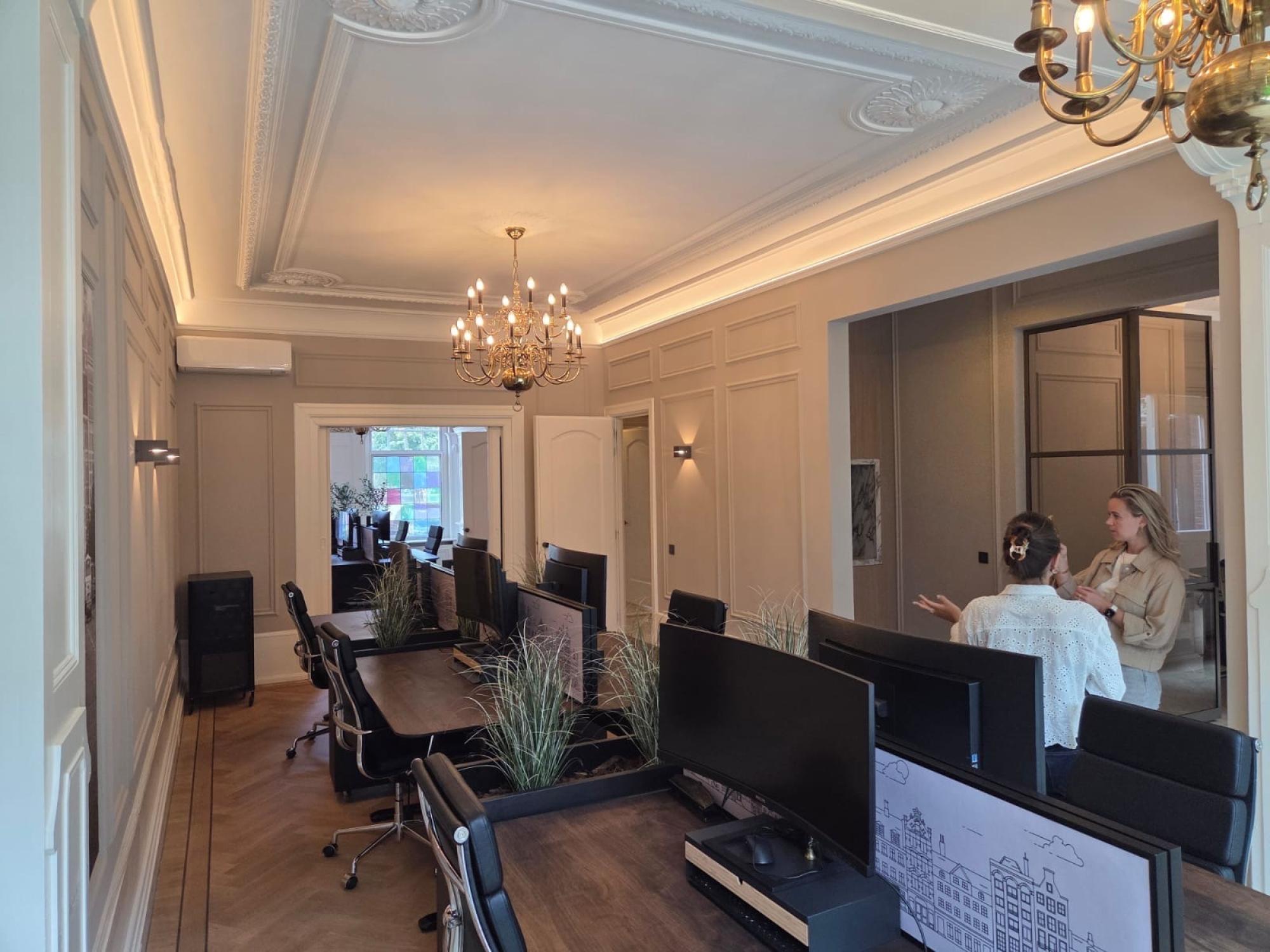
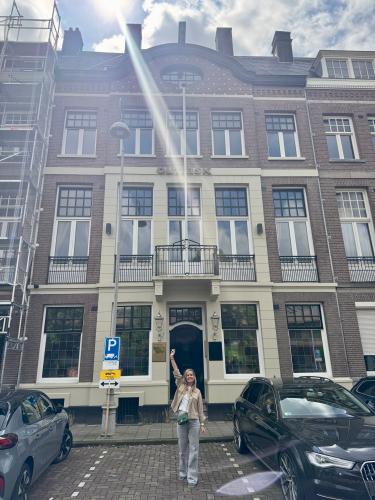
Angefangen hat Loes Daniels mit einem Laptop an ihrem Küchentisch. Damals konnte sie sich kaum vorstellen, dass sie einmal eine schicke Firmenzentrale gleich neben Amsterdams berühmtem Konzerthaus Concertgebouw haben würde. „Das Wichtigste ist, Top-Leute zu bekommen“, sagt die Gründerin von Experiencegift, einer globalen Plattform für personalisierte Reise- und Erlebnisgutscheine. „Dabei hilft eine Zentrale, die unseren Erfolg und unseren Ehrgeiz spiegelt.“
Vor zwölf Jahren wollte Daniels ihrer Schwester einen Hotelurlaub in London schenken. Dafür musste sie alles selbst organisieren, von der Hotelbuchung bis zum Geschenkgutschein. Das ist doch eigentlich eine Marktlücke, dachte sie: fertige Erlebnisgeschenke als Dienstleistung. Heute verkauft ihr Online-Unternehmen Gutscheine für Hotels, Flüge, Zugreisen und Erlebnisse in über 100 Ländern. Mit Büros in London, New York und Athen ist Experiencegift schnell gewachsen. Jetzt, mit der neuen Amsterdamer Zentrale, ist das Unternehmen bereit für das nächste Kapitel, sagt Daniels – und eröffnet ein Büro in Dubai.
Finanziert wurde die Zentrale beim Concertgebouw mit einem Kredit der ABN AMRO. Und der war möglich dank einer wegweisenden Verbriefungsvereinbarung zwischen der ABN AMRO und der Europäischen Investitionsbank-Gruppe. „Ohne die Finanzierung der ABN AMRO hätten wir zwar irgendwie einen Weg gefunden“, sagt Daniels. „Aber das hätte uns vom Wesentlichen abgelenkt: Wir müssen uns auf innovative Produkte, Marketing und das Wachstum unseres Unternehmens konzentrieren.“
So funktioniert es

Die Verbriefung ist mit einer Milliarde Euro die größte, die die EIB-Gruppe je durchgeführt hat. Außerdem ist es die erste mit der ABN AMRO und ein großer Schritt für die Europäische Investitionsbank (EIB) und den Europäischen Investitionsfonds (EIF), der die Strukturierung solcher Transaktionen übernimmt.
„Die Transaktion ist wegen ihrer Größe und wegen ihrer strategischen Bedeutung für die ABN AMRO so bemerkenswert“, sagt Jean-Baptiste Giraud, Kreditreferent bei der EIB und dort Ansprechpartner für die ABN AMRO.
Genauer gesagt ist es eine synthetische Verbriefung. Dabei geht es nicht um Liquidität, sondern um die Übernahme von Risiken. „Die EIB-Gruppe hat einen Teil des Risikos aus dem zugrunde liegenden Kreditportfolio übernommen“, sagt Demet Tamam, der beim EIF an der Transaktion gearbeitet hat. „Den erwarteten Verlust trägt weiterhin die ABN AMRO, aber das Risiko, das sich aus unerwarteten Verlusten ergibt, tragen die EIB und der EIF als Investoren. Normalerweise müssen Banken für solche unerwarteten Verluste Eigenkapital vorhalten. Da das Risiko solcher Verluste durch die Verbriefung aber an Investoren übertragen wird, steht das entsprechende aufsichtsrechtliche Eigenkapital für neue Kredite zur Verfügung.“
Die Risikoteilung mit der EIB-Gruppe setzt also Kapital frei, das eigentlich durch das eine Milliarde Euro schwere Portfolio an Krediten blockiert wäre, die die ABN AMRO bereits an niederländische Unternehmen vergeben hat. Im Gegenzug verpflichtet sich die ABN AMRO, 1,2 Milliarden Euro an neuen Krediten zu vergeben – an Firmen wie Experiencegift. Ein Teil davon ist für Klimaprojekte reserviert.
„Wir haben die ABN AMRO in die Lage versetzt, neue Kredite zu vergeben, und sie hat zugesagt, genau das zu tun. Einen Teil davon für Nachhaltigkeitsprojekte, die den Übergang zu Klimaneutralität und einer nachhaltigen Gesellschaft unterstützen“, sagt Tamam.
Dan Dorner, Chief Commercial Officer für Corporate Banking bei der ABN AMRO, bestätigt: „Die Transaktion stärkt das Wachstum unserer Kunden, unterstützt sie auf dem Weg zu Klimaneutralität und sorgt für mehr Kredite an kleine und mittlere Unternehmen auf dem niederländischen Markt. Europas Wettbewerbsfähigkeit zu finanzieren, hat für uns bei der ABN AMRO Priorität, und wir ermöglichen mit unseren Finanzierungen diese wichtigen Transformationen.“
Verbriefungen bringen Spar- und Investitionsunion voran
In den USA und in Asien gibt es einen großen und liquiden Verbriefungsmarkt. Europa hinkt hier wegen der stärkeren Regulierung etwas hinterher. Dem wirkt die Europäische Investitionsbank entgegen. Sie investiert in Verbriefungen europäischer Banken und entwickelt innovative Verbriefungsstrukturen. Das Ziel sind mehr Finanzierungen für Unternehmen wie Experiencegift, die Europas Realwirtschaft voranbringen.
Europäische Unternehmen sind stärker auf Bankkredite angewiesen als vergleichbare Firmen in den USA und Asien, wo die Märkte für Risikokapital größer sind. Deshalb werden europäische Start-ups oft von US-Investoren aufgekauft. Die europäischen Kapitalmärkte sind auch nicht so tief wie die US-Märkte, weil sie auf das jeweilige Land beschränkt und entsprechend kleiner sind.
Um das zu ändern, begann die Europäische Kommission 2015, auf eine Kapitalmarktunion hinzuarbeiten. Anfang 2025 wurde das Ziel noch etwas weiter gefasst, sodass neben den Kapitalmärkten in der EU auch der Bankensektor integriert werden soll: Das neue Konzept der Spar- und Investitionsunion ist umfassender und stärker auf die Bürgerinnen und Bürger ausgerichtet. Über die Kapitalmärkte sollen dabei auch die Ersparnisse der privaten Haushalte zur Finanzierung von dringenden strategischen Zielen zur Verfügung stehen.
Die EIB-Gruppe unterstützt mit ihren Investitionen in Verbriefungen innovative Banken. Außerdem fördert sie einen liquideren, größeren Markt und leistet einen direkten Beitrag zu den Zielen der Spar- und Investitionsunion.
EIB-Präsidentin Nadia Calviño nannte eine Reihe von Möglichkeiten, wie die Europäische Investitionsbank Bausteine für so eine Union liefern kann, damit „Ideen, Unternehmen und Technologien, die in der Europäischen Union geboren werden, auch bei uns wachsen und gedeihen können“.
Warum das wichtig ist
Für Daniels von Experiencegift ist der neue Firmensitz mehr als nur ein Büro. Er steht für die Ambitionen des Unternehmens und motiviert die Beschäftigten: Eigentlich dürfen sie mehrere Tage pro Woche im Homeoffice arbeiten. Doch viele kommen jetzt öfter ins Büro, weil sie sich so wohlfühlen.
Außerdem sieht Daniels ein paar Vorteile für sich selbst. „Ich habe jetzt das erste Mal ein Einzelbüro. Und, ganz wichtig: Es gibt immer guten Kaffee.“
ABN AMRO ENHANCED SUPPORT TO SMES AND MIDCAPS
The project concerns a guarantee (synthetic securitisation) for an existing portfolio of loans to SMEs and Corporates to support the FI's lending operations in the SMEs and MidCaps sector in the Netherlands.