
Il faudrait 3,3 milliards d’arbres et l’équivalent de la moitié du territoire grec pour absorber environ 66 millions de tonnes de dioxyde de carbone sur une période de dix ans. C’est ce volume qu’un projet de captage du carbone situé dans le nord-est de la Grèce ambitionne d’atteindre.
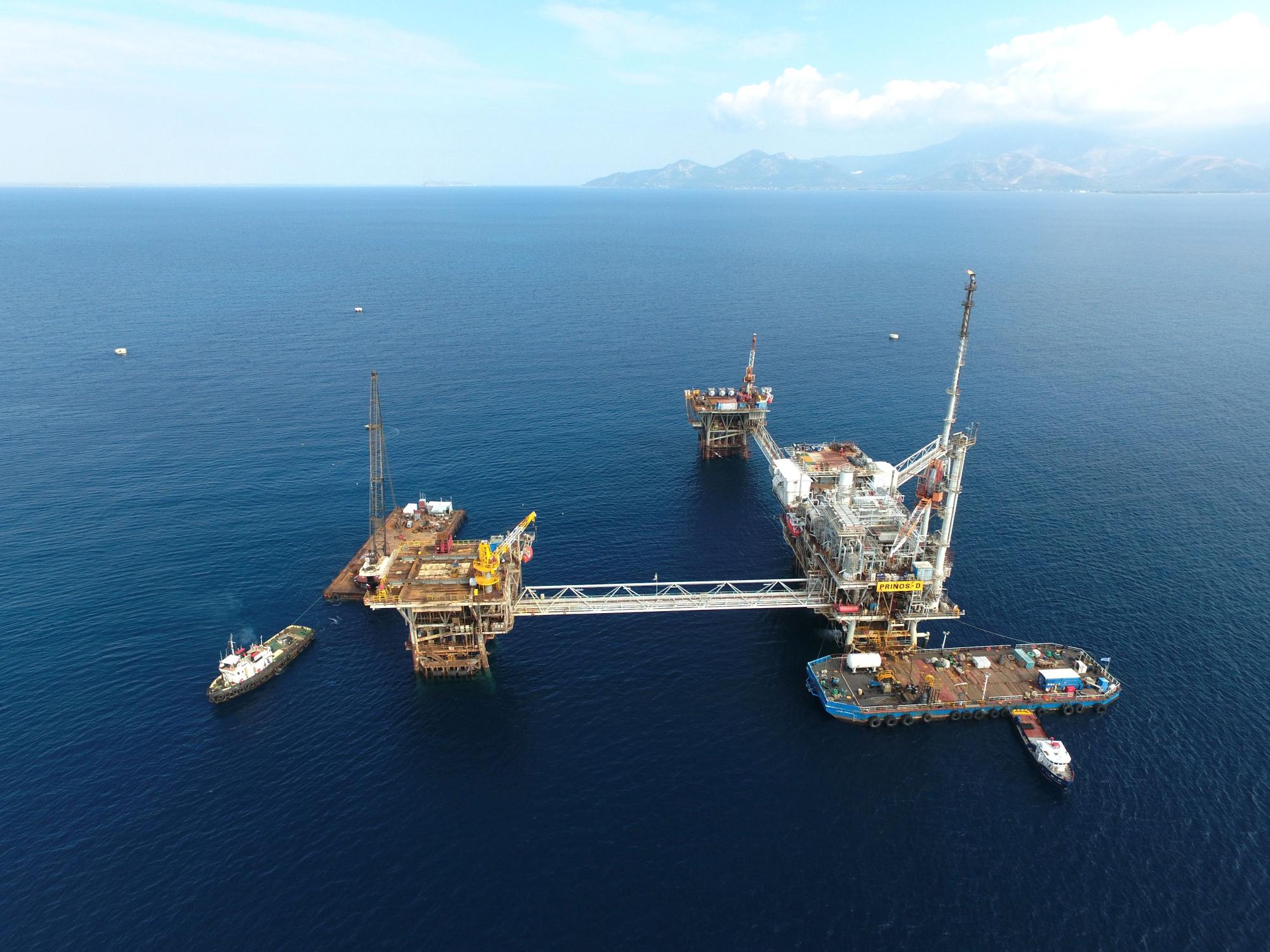
EnEarth, filiale du groupe pétrolier et gazier grec Energean, développe l’un des plus grands projets de stockage du carbone d’Europe dans la région du golfe de Kavala. C’est là que se situe le gisement pétrolier de Prinos, dont les puits seront utilisés pour stocker du carbone.
« Les technologies de captage et de stockage des émissions de carbone ne sont pas nouvelles », explique Katerina Sardi, directrice générale d’Energean et d’EnEarth en Grèce. « On en parlait déjà il y a près de 25 ans : au début des années 2000, je travaillais sur des projets relatifs au carbone. Aujourd’hui, je suis fière de voir ces solutions enfin mises en pratique. »
Captage et stockage du carbone : comment ça marche ?
Les émissions de carbone qui, en temps normal, seraient rejetées dans l’atmosphère seront captées sur des sites industriels en Grèce et dans des pays voisins. Ensuite, le carbone, en partie comprimé à l’état liquide, sera transporté vers le site de stockage de Prinos, en Grèce. Une plateforme pétrolière en mer sera utilisée pour stocker le carbone dans les fonds marins et un site sur terre servira à son stockage dans des citernes.
« Le carbone sera injecté sous terre à grande profondeur », explique Zoran Stanic, chef de l’unité Fonds pour l’innovation, qui fait partie des services de conseil de la BEI. « Les plateformes en mer ont été installées il y a près de 50 ans pour l’exploitation du pétrole. Le site sera maintenant utilisé pour stocker du carbone en toute sécurité dans des réservoirs géologiques, situés quatre kilomètres sous la surface de la mer. »
Le site est parfaitement adapté au stockage du carbone. Les formations géologiques aux alentours des puits ont été étudiées de manière approfondie depuis les années 1970. « Nous disposons de décennies de données confirmant leur durabilité », précise Katerina Sardi. « Études sismiques, puits forés et carottages – tout confirme la possibilité d’un stockage à long terme. »
Le carbone pourrait commencer à arriver sur le site en 2027. Une fois pleinement opérationnel, le projet devrait atteindre une capacité annuelle de 2,8 millions de tonnes de carbone d’ici à 2030, pour un potentiel total de 66 millions de tonnes. La Grèce, l’Italie, la Slovénie et la Croatie devraient utiliser ce site de stockage pour les entreprises de secteurs à fortes émissions, comme la chimie, le ciment et l’acier, que l’on dit « difficiles à décarboner ».
L’UE renforce ses capacités de stockage du carbone
Les projets de stockage du carbone dans l’Union européenne restent limités. La plupart en sont aux premiers stades de planification ou de montage. Selon Zero Emissions Platform, trois projets ont été mis en service en 2025 (Sleipner, Snøhvit et Northern Lights en Norvège) et un autre devrait être opérationnel en 2026 (Porthos aux Pays-Bas).
Pour favoriser sa réussite, le site de stockage de Prinos a reçu 270 millions d’euros de subventions provenant d’un programme de financement de l’UE appelé Mécanisme pour l’interconnexion en Europe (MIE) ainsi que d’un fonds de relance grec. Le projet a également bénéficié d’une assistance considérable de la part des services de conseil de la BEI.
« Ce projet est non seulement important pour la Grèce, mais aussi pour les efforts déployés par l’Europe du Sud-Est en matière d’action climatique », dit Zoran Stanic, membre des services de conseil de la BEI. « Il accélère le développement et positionne Prinos en tant que modèle pour des initiatives comparables dans tout le bassin méditerranéen. »
Les experts financiers et techniques des services de conseil de la BEI ont accompagné Prinos pour le montage du projet : leurs recommandations ont permis d’affiner le modèle économique et d’améliorer la capacité du projet à attirer des financements. « La justification économique est solide compte tenu de la demande de séquestration du carbone dans la région », malgré les difficultés à attirer des entreprises intéressées par le stockage du carbone, explique Matthieu Banal, un conseiller financier des services de conseil de la BEI.
Les services de conseil de la BEI ont également aidé Prinos à s’y retrouver dans les politiques et réglementations concernant le captage et le stockage du carbone et à déterminer comment l’eau extraite du site pourrait être valorisée.
Le stockage du carbone est essentiel pour la réalisation des objectifs de l’UE visant à porter à zéro les émissions nettes d’ici à 2050. L’Europe souhaite renforcer le stockage du carbone pour qu’il atteigne 50 millions de tonnes par an d’ici à 2030.
« Ce projet relève de l’ambition plus large visant à protéger l’industrie et l’emploi en Europe, à faire progresser la technologie européenne, à atténuer les changements climatiques et à contenir le réchauffement planétaire à 1,5 °C », déclare Katerina Sardi. « Sans un stockage efficace du carbone, atteindre le zéro net devient plus difficile, voire irréalisable. »
La Banque européenne d’investissement soutient également un projet de captage du carbone à Stockholm, en Suède. Il s’agira de la première centrale à bioénergie à grande échelle assortie d’installations de captage du carbone dans le pays. La société qui l’exploite, Stockholm Exergi, a reçu 260 millions d’euros en avril 2025 de la part de la Banque européenne d’investissement pour l’aider à financer la construction. Il est prévu que l’installation ouvre en 2028 et qu’elle capte 800 000 tonnes de carbone par an, soit plus que ce que le transport routier émet chaque année dans la ville.

EnEarth
Le stockage réduit les coûts liés au carbone pour l’industrie
Les entreprises du ciment, de l’acier et de la chimie font face à une hausse des coûts liés au carbone du fait de la nouvelle réglementation de l’UE visant à limiter leurs émissions. Prinos leur offre une solution.
« Tout le monde y gagne », explique Katerina Sardi. « L’industrie peut stocker du carbone au lieu d’en émettre et ainsi rester compétitive sans nuire à l’environnement. » Le projet stimulera aussi le développement économique du golfe de Kavala, grâce à la diversification de l’emploi et à la création de postes. « Cela donnera des raisons aux jeunes de rester et de bâtir un avenir ici. »
Katerina Sardi souligne que le captage et le stockage du carbone constituent un maillon essentiel de la transition énergétique de l’Europe. « Sans ces techniques, la survie de l’industrie européenne serait en jeu. »