- Greek firms maintain innovation levels comparable to the European average, with further opportunities to develop advanced digital technologies.
- 81% of Greek firms engage in international trade, significantly above the EU average.
- Companies are actively reducing carbon emissions through measures such as recycling, sustainable transport, and energy efficiency initiatives.
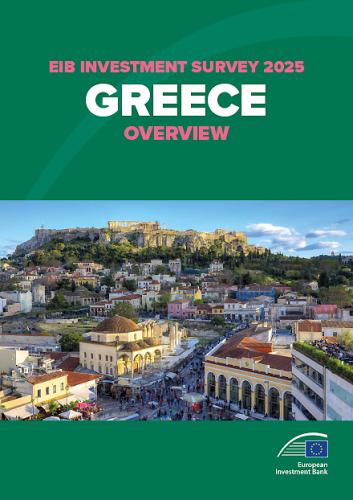
The EIB Investment Survey 2025 – Greece shows that Greek firms remain resilient and optimistic, despite geopolitical and economic challenges.
According to the survey:
- 76% of firms invested in the past financial year, slightly below the EU average (86%).
- 14% expect investment to increase in the current year, above the EU average (4%).
- 73% of investments were directed to tangible assets, while 7% went to Research & Development, in line with EU averages.
“Greek firms demonstrate remarkable resilience and adaptability in a complex economic environment. They continue to invest, innovate, and strengthen their international competitiveness. The EIB will continue to support Greek companies as they advance the green and digital transition,” said EIB Vice-President Yannis Tsakiris.
International Engagement and Resilience
81% of Greek firms participate in international trade, with manufacturing firms (93%) and large enterprises (91%) leading the way. Despite changes in customs regulations, tariffs, and certification requirements, Greek firms continue to adapt effectively and expand their global footprint.
Climate Action and Resilience
- 63% of firms report exposure to physical climate risks, yet 51% do not expect immediate effects from stricter environmental standards, higher than the EU average (37%). Specifically:
- 28% have developed climate adaptation strategies
- 38% have invested in energy efficiency measures
- 84% have implemented carbon-reduction initiatives, including recycling (63%), sustainable transport (52%), and energy efficiency measures (52%)
- 58% have conducted energy audits, while 33% have set greenhouse gas reduction targets
Innovation and Digital Transformation
30% of Greek firms invest in new products, processes, or services, close to the EU average (32%). Adoption of digital technologies stands at 56% (EU 77%), while generative AI adoption reaches 19% among SMEs and 27% among large firms, primarily for internal processes and sales/marketing functions.
“The survey shows that Greek firms are investing, but challenges remain. Turning the green and digital transition into an opportunity for growth and resilience is now the priority,” said EIB Chief Economist Debora Revoltella.
Investment Barriers and Financing
Greek firms identify high energy costs (92%), lack of skilled staff (90%), uncertainty about the future (90%), and regulatory burdens (89%) as their main investment obstacles. Financial constraints affect 13.5% of firms, above the EU average (6.1%). Most firms (73%) fund their investments primarily from internal resources, while 27% benefit from policy support, exceeding the EU average (16%).
Gender Equality in Business
In Greece, 34% of firms have at least 40% women in senior management positions, while 22% have majority female ownership. Both figures surpass EU averages, reflecting significant progress in promoting gender diversity and inclusion in business leadership.
Για περισσότερες πληροφορίες: https://www.eib.org/en/publications/20250218-econ-eibis-2025-greece
Background information
About the EIB
The European Investment Bank (ElB) is the long-term lending institution of the European Union, owned by its Member States. Built around eight core priorities, we finance investments that contribute to EU policy objectives by bolstering climate action and the environment, digitalisation and technological innovation, security and defence, cohesion, agriculture and bioeconomy, social infrastructure, the capital markets union, and a stronger Europe in a more peaceful and prosperous world.
The EIB Group, which also includes the European Investment Fund (EIF), signed nearly €89 billion in new financing for over 900 high-impact projects in 2024, boosting Europe’s competitiveness and security.
All projects financed by the EIB Group are in line with the Paris Climate Agreement, as pledged in our Climate Bank Roadmap. Almost 60% of the EIB Group’s annual financing supports projects directly contributing to climate change mitigation, adaptation, and a healthier environment.
Fostering market integration and mobilising investment, the Group supported a record of over €100 billion in new investment for Europe’s energy security in 2024 and mobilised €110 billion in growth capital for startups, scale-ups and European pioneers.Approximately half of the EIB's financing within the European Union is directed towards cohesion regions, where per capita income is lower than the EU average.