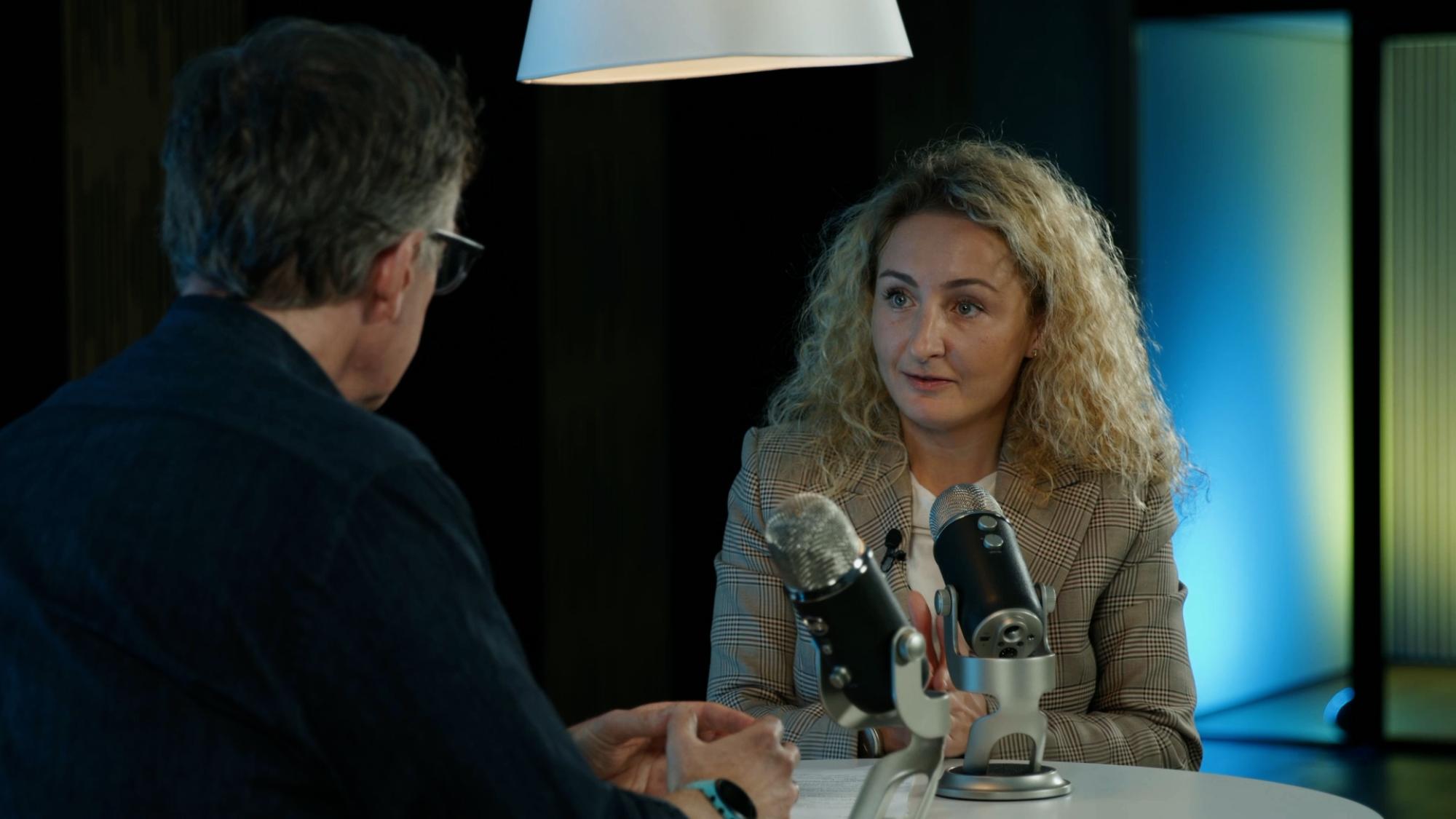
„Verteidigungsbereitschaft erreichen wir nicht nur mit Panzern. Es braucht ein Ökosystem breit gefächerter Technologien, um Gefahren zu erkennen, abzuschrecken und schnell zu reagieren. Der Weg zu diesen neuen Technologien führt über Innovation. Mit dem Fokus auf Verteidigung können wir Innovation für die nächsten Jahrzehnte nach vorne stellen.“

Invested by Europe ist ein Podcast über die europäische Wirtschaft. Von Wohnraum, Energie und Innovation bis hin zu Infrastruktur, Sicherheit und Verteidigung: Fachleute verraten in jeder Folge, wo die großen Herausforderungen liegen. Wir wollen wissen, was sich ändert, welche Lösungen es gibt und wie Europa in seine Zukunft investiert.

Darum geht es in dieser Folge
Europa muss bei Sicherheit und Verteidigung umdenken. Angesichts rapider geopolitischer Umwälzungen werden Bereitschaft und Resilienz immer wichtiger. In dieser Folge unseres Podcasts Invested by Europe sprechen wir darüber, warum Sicherheit und Verteidigung jetzt ganz oben auf der europäischen Agenda stehen und was strategische Autonomie konkret bedeutet.
Unsere Expertin erklärt, wie Europa bislang fehlende Fähigkeiten aufbaut: mit koordinierten Investitionen, Kooperation zwischen den EU-Ländern und neuen Finanzierungsinstrumenten für eine gemeinsame Beschaffung. Immer wichtiger dabei: Innovationen. Sie erhöhen nicht nur die Verteidigungsbereitschaft, sondern tragen auch zu mehr Wirtschaftswachstum, technischem Fortschritt und breiterem Wohlstand bei. In dieser Folge zeigen wir anhand der Rolle von privaten Investitionen, Dual-Use-Technologien und der Zusammenarbeit mit Partnern, dass Verteidigung heute auf einem breiten Ökosystem komplexer, ineinandergreifender Technologien beruht.

Kurzfassung
Investitionen in Sicherheit und Verteidigung sind für Europa zunehmend ein Wettlauf gegen die Zeit. In dieser Folge geht es darum, wie die geopolitischen Umwälzungen, allen voran der russische Einmarsch in die Ukraine, Europas Verständnis von Sicherheit, Resilienz und strategischer Autonomie verändert haben. Jetzt gilt es vor allem, bisher fehlende Fähigkeiten aufzubauen – und das erfordert nachhaltige Investitionen auf nationaler und europäischer Ebene.
Unsere Expertin spricht über Initiativen wie SAFE (Security Action for Europe), die die Zusammenarbeit zwischen den EU-Ländern verbessern sollen. SAFE unterstützt mit Krediten von bis zu 150 Milliarden Euro die Beschaffung von Verteidigungsausrüstung. Eine gemeinsame Beschaffung und die Zusicherung, dass Kredite der Mitgliedstaaten für Verteidigungsgüter nicht auf die nationalen Verschuldungsgrenzen angerechnet werden, sollen die Länder zur Zusammenarbeit ermutigen. Das Ziel ist „Interoperabilität“. Anstelle von Doppelausgaben sollen sich die Länder in ihren Fähigkeiten ergänzen.
Verteidigungsbereitschaft bedeutet vor allem Innovation – das zeigt sich immer deutlicher. Neben herkömmlicher Ausrüstung braucht es ein breites Spektrum von Technologien für Früherkennung, Abschreckung und eine schnelle Reaktion. Staaten und große Verteidigungsunternehmen stehen hier im Mittelpunkt, aber auch kleine und mittlere Zulieferer, vor allem in Bereichen wie Weltraumtechnik, Cybersicherheit, künstliche Intelligenz und modernste Elektronik, spielen eine wichtige Rolle. Innovative Unternehmen können sich breiter aufstellen, neue Lösungen entwickeln und Ideen schneller auf den Markt bringen.
Weitere Schwerpunkte dieser Folge sind die Bedeutung von Dual-Use-Technologien – also Neuerungen, die sowohl militärisch als auch zivil genutzt werden können – und die Notwendigkeit, neben öffentlichen Mitteln auch private Investitionen zu mobilisieren. Dabei bedeutet Erfolg für Europa letztlich Bereitschaft. Europa muss sich auf eigene Innovationen, Lieferanten und Finanzierungen verlassen können und gleichzeitig in einem stabilen, friedlichen Umfeld eng mit Partnern wie NATO und Europäischer Kommission zusammenarbeiten.
Die wichtigsten Ergebnisse
- Europa kämpft bei Sicherheit und Verteidigung gegen die Zeit. Die geopolitischen Umwälzungen zwingen Europa, fehlende Fähigkeiten rasch aufzubauen – und dafür braucht es koordinierte Investitionen und Zusammenarbeit.
- Verteidigungsbereitschaft fußt in erster Linie auf Innovation. Denn wer innovativ ist, kann in einem vielfältigen Ökosystem, das Großkonzerne sowie kleine und mittlere Unternehmen aus Bereichen wie Weltraumtechnik, KI und Cybersicherheit umfasst, schneller Fähigkeiten aufbauen.
- Europa braucht eine Kombination aus öffentlichen und privaten Investitionen. Nur so kann es strategisch autonom werden. Europa muss sich auf eigene Innovationen, Lieferanten und Finanzierungen verlassen können und gleichzeitig in einem stabilen, friedlichen Umfeld eng mit Partnern zusammenarbeiten.
Unser Gast

Andra Migiu
Andra Migiu hat bei der Europäischen Investitionsbank an großen Initiativen wie dem Paneuropäischen Garantiefonds mitgearbeitet und verschiedene Teams unter komplexen, wirkungsstarken Mandaten geführt. Bevor sie zur EIB kam, war sie in leitenden Positionen in der Wirtschaftsprüfung und Beratung tätig. Zudem war sie Staatssekretärin im rumänischen Gesundheitsministerium. Seit Juli 2025 steht sie an der Spitze des Security and Defence Office der EIB, mit dem die Bank auf ihre wachsende Rolle in Europas Sicherheit und Verteidigung reagiert.
Invested by Europe anhören und abonnieren
Hier finden Sie Invested by Europe:
- Alle Podcast-Folgen auf unserer Website
- Apple Podcasts
- Spotify
- Deezer
- – oder auf Ihrer bevorzugten Podcast-Plattform
Freuen Sie sich jede Woche auf eine neue Folge.
Mehr Infos
Verteidigung – kleine Firmen ganz groß
Wie die EIB-Gruppe direkt und über Partner kleinere Unternehmen im Verteidigungssektor fördert – für Innovation, Resilienz und Sicherheit in der EU
Megafabrik denkt Satellitenbau neu
Belgische Megafabrik will mit Massenproduktion die globale Satellitenindustrie revolutionieren.
Was macht der One-Stop-Shop für Sicherheit- und Verteidigung?
Alles, was Sie über die Finanzierungen der EIB für Europas Sicherheit und Verteidigung wissen müssen