Suche starten DE menü Kundenportal der EIB-Gruppe
Suche starten
Ergebnisse
Top-5-Suchergebnisse Alle Ergebnisse anzeigen Erweiterte Suche
Häufigste Suchbegriffe
Meistbesuchte Seiten

On a cold evening at a hospital in Zhytomyr in northern Ukraine, surgery goes on without a pause, despite fires and explosions that keep bringing in more injuries. 

Every movement in the operating room must be planned and coordinated. “There is no place for panic,” says Viktor Pomyrlianu, medical director of Pavlusenko Hospital No. 2, located west of Kyiv. “You must stay focused, because a patient’s life depends on it.” 

new surgical unit, opened in May 2025, doubled the hospital’s capacity to treat patients and added state-of-the-art medical equipment and infrastructure.  

This work was part of the European Investment Bank’s recovery programme for Ukraine, with support from the United Nations Development Programme (UNDP).   

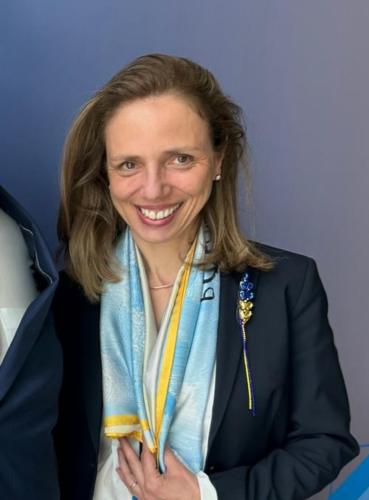
“In Ukraine now, you cannot build a big hospital because it will be immediately attacked,” says Violaine Silvestro von Kameke, the European Investment Bank’s senior loan officer who leads the Bank’s recovery programmes. “You need to build small things. This costs more but it’s safer.” 

Long-term recovery for Ukraine

With financing needs estimated at $524 billion over the next decade, the hope is that all these smaller projects will lead to big advances in Ukraine. 

The country is a top priority for the European Investment Bank. Beyond emergency aid, the focus is on areas that can make the biggest difference quickly.  

In 2025, the European Investment Bank Group supported projects worth €1.5 billion to help families heat homes, help children return to school and ensure that people receive medical care.   

The Bank supported Ukraine’s energy security with €300 million loan to Naftogaz, and signed five major agreements, for a total of €400 million, in areas such as water supplies, district heating and general reconstruction in cities. Across the country, more than 500 public buildings are being repaired or upgraded in around 150 communities.  

The Bank’s advisory experts are helping the country to plan rail projects, upgrade border crossings and strengthen links with the European Union under wartime conditions. 

In 2025, the European Investment Bank Group supported projects worth €1.5 billion to help families heat homes, help children return to school and ensure that people receive medical care.
©pop_jop/Getty Images

Better medical care

At the Pavlusenko surgical unit in Zhytomyr, the medical director Pomyrlianu says that for a long time the working conditions were “minimally sufficient.”  

Operating rooms were cramped, equipment was outdated and ventilation was inadequate. The reconstruction project added new heating, ventilation and cooling systems, upgraded water and wastewater pipes, renewed electrical wiring and fire safety equipment.  

The project also added support systems such as a vacuum station, a compressor unit and a modular chiller, which keep the surgical area clean and temperatures under control.  

This work “changed everything,” Pomyrlianu says, “Doctors can work according to European standards. Patients have access to high-quality care here in Zhytomyr, close to their families.” The unit can now support more than 6 000 patients a year.  

Doctors can work according to European standards,” says the medical director Pomyrlianu, “patients have access to high-quality care here in Zhytomir, close to their families.”

The surgical unit is one of 12 projects in the Zhytomyr region financed by the European Investment Bank. Another one is in the village of Vysoke, where a preschool opened in October 2025. Built in 11 months despite the war, the building can host 40 children and includes a shelter for air-raid alerts. The shelter is open to the whole community after school hours.  

The first-ever preschool in Vysoke, Zhytomyr Oblast, can host 40 children and includes a shelter for air-raid alerts.

‘Every second matters’

The urgency that defines community safety can be seen clearly in Avangard, a small community around 30 kilometres east of Zhytomyr.  

Yurii Halchynskyi has led the Community Safety Centre in Avangard since April 2022. His team of 24 rescuers responds to fires, accidents, shelling and floods, working in difficult conditions and never retreating.  

“Courage is when you do the right thing, even if no one applauds you,” Halchynskyi says. “Simply because you cannot do otherwise.”  

Among the hundreds of fires extinguished over the years and dozens of life-saving operations carried out, some moments stay with him forever. Pulling a child from under rubble, leading him out of a burning building, seeing frightened eyes and small hands wrapped around a rescuer’s neck.  

“That’s when you feel most acutely that this is not just a job,” he says. “It is responsibility for someone’s life. Every second matters.” 

Halchynskyi and his team rely on small rituals: short briefings before departures, words of encouragement, jokes that ease the tension. “They may seem minor,” Halchynskyi says, “but it is precisely these little things that give strength in the hardest moments.’’ 

“Courage is when you do the right thing, even if no one applauds you. Simply because you cannot do otherwise.”

Yurii Halchynskyi
Head of Community Safety Centre in Avangard, Odesa Oblast

Preparing for danger

The Community Safety Centre serves more than 36 000 residents in Avangard and neighbouring areas, including parts of Odesa and Tairovska. Its work goes beyond emergencies.  

“We want to prevent danger before it occurs,” says Halchynskyi. “Our task is to teach as many people as possible, adults and children, how to act correctly in critical situations.” 

In April 2025, the centre expanded into a new building, with better emergency services and a stronger ability to operate under war. “The changes are tremendous,” Halchynskyi says. “They are a major boost for our work.” 

The new building covers more than 1 000 square metres. On the first floor, eight vehicle bays allow inspections and repairs, including on large equipment, which previously had to be kept outdoors. On the second floor, dedicated rooms are used for training, preparation and recovery. The building also functions as a shelter for the community and emergency teams during air raids. 

The expanded Community Safety Centre serves more than 36 000 residents in Avangard and neighbouring areas, including parts of Odesa and Tairovska.
Lviv’s St. Luke’s Hospital has undergone a €940 000 renovation to improve services for its 50 000 annual patients.

The centre’s expansion was supported by a €484 000 investment from the European Investment Bank, with technical assistance from the United Nations Development Programme. 

It is part of the Bank’s wider effort to restore schools, hospitals, heating and water systems, including two projects that opened in February 2025:  

  • in Lviv, the refurbished St. Luke’s Hospital hosts one of the country’s largest burn units 
  • in Truskavets, a €330 000 renovation of preschool No.7 “Dzvinochok” improved energy efficiency and made life better for children and staff displaced by the war. 

Keeping the heat on

Since the start of the war, repeated Russian attacks have pushed the country’s heating and energy systems to the edge. Across Ukraine, damage to district heating alone is estimated at more than €2.5 billion, and the figure continues to rise. Rebuilding is expected to cost €6 billion to €10 billion. 

Under the EU-backed Ukraine Energy Rescue Plan, in October 2025 the EIB provided a €300 million loan to the public utility Naftogaz. Part of this financing will help replenish the country’s long-term gas reserves ahead of the winter. Supporting gas supplies was an exceptional measure to ensure that households can stay warm and businesses can keep running following damage from Russia’s attacks. Naftogaz has committed to invest an amount equal to this loan into renewable energy and clean energy projects.  

The city heating systems inherited from the Soviet era are highly centralised and easy to shut down in an attack. Large plants supply whole districts, so when one stops working, entire neighbourhoods are left in the cold. 

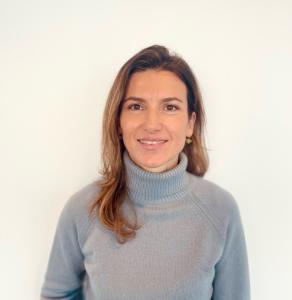
“Our answer is decentralisation,” says Maya Ganelina, head of International Business at Ukrgasbank, one of Ukraine’s public banks. “We want to move from large central heating systems that are easy targets to smaller sources that are much harder to disable all at once.” 

With 215 branches across Ukraine, including areas near the front line, Ukrgasbank and two partner banks are channelling €200 million in European Investment Bank financing directly to local public authorities. This allows money to reach cities faster. 

Signed in July 2025 and assisted by the UNDP’s local expertise, €30 million has already been disbursed for district heating to keep hospitals, schools and homes warm in the winter.  

The EIB financing also supported municipal investments in renewable energy, gas-fired heating systems and energy-efficiency. 

Signed in July 2025 and assisted by the UNDP’s local expertise, €30 million has already been disbursed for district heating to keep hospitals, schools and homes warm in the winter.
“Our answer is decentralisation. We want to move from large central heating systems that are easy targets to smaller sources that are much harder to disable all at once.”
Maya Ganelina

Head of International Business at Ukrgasbank

Why energy efficiency matters to Ukraine

“Ukraine needs practical, scalable solutions during the war, and that means combining loans and grants so that communities can keep critical services running.”
Violaire Silvestro von Kameke

Senior loan officer at the European Investment Bank

Once buildings are properly insulated and systems upgraded, every euro invested in energy efficiency multiplies its impact.


To ensure that even the most vulnerable communities near the frontline get help from the district heating project, the European Commission is providing a €30 million grant. This money covers up to half of the project costs for eligible municipalities close to the frontlines.  

Germany has provided a €16.5 million grant to support renewable energy in hospitals and schools renovated under EIB municipal operations. Solar panels are part of this funding. 

“When buildings are properly insulated and systems upgraded, every additional investment goes much further,” says Silvestro von Kameke, the senior EIB loan officer.  

Hospital and schools in Dnipropetrovsk, Vinnytsia, Poltava and other regions, renovated with EIB support in 2023, are now ready to be fitted with solar panels, using the German grant.  

“Ukraine needs practical, scalable solutions during the war,” says Silvestro von Kameke, “and that means combining loans and grants so that communities can keep critical services running.” 

‘We have to move forward’

The district heating project moved forward fast, despite the shelling in Kyiv, where the Ukrgasbank team is based. “We survive by keeping daily life going,” says Ganelina, the bank official. “We can’t dwell on the difficulty, on what’s been lost. We have to move forward.” 

Viktor Duma, deputy head of International Business at Ukrgasbank who works with Ganelina, says he worked on the agreement with European Investment Bank on Christmas Eve. “Christmas is usually sacred,” he says. “But for those working on Ukraine, that had to wait.” 

Dumas’ 26-year-old son has been fighting on the front line since the start of the Russian invasion. He used to drive a tank, but he cannot anymore because shell shock has left him with health problems. 

In the evenings, Duma’s wife prepares food for soldiers on the frontline joining ‘Borshch for the army’”, a volunteer initiative in which civilians prepare and send traditional soup to Ukrainian soldiers.  

“When you multiply this across the whole country, these small acts of help, repeated by many people, contribute to the country’s survival,” he says. 

The district heating project moved forward fast, despite the shelling in Kyiv, where the Ukrgasbank team is based.
©Global Images Ukraine/Getty Images
“These small acts of help, repeated by many people, contribute to the country’s survival.”
Viktor Duma

Deputy head of International Business at Ukrgasbank

What the war in Ukraine leaves behind

Based in Luxembourg, Silvestro von Kameke regularly travels to Ukraine to visit projects and meet mayors. She works closely with UNDP staff based in Ukraine. A UN colleague lost her partner on the frontline just two weeks before their wedding. 

After almost four years of war, the toll is visible everywhere. People struggle to think as they once did, Silvestro von Kameke says. Children are restless, anxious. Almost everyone has lost someone. 

“Every village has photos of those who died on fountains, walls and fences,” Silvestro von Kameke says. “Each time I go back, there are more.” 

Her missions often include nights spent in bomb shelters, with sleep broken by air-raid alerts. Yet people always tell her “We are going to resist.”  

Many families, especially women and children, have lived for years away from their homes and in so-called collective centres, in tough conditions. Others, particularly older residents, remain in their damaged homes, unable or unwilling to leave. 

This is where ideas of a recovery are taking shape. There are plans for around 1 600 new energy-efficient and affordable apartments in cities hit by the war or in locations that are hosting people who relocated because of the fighting.  

This project is part of a €100 million pilot social housing programme backed by the European Union and the European Investment Bank

Connecting Ukraine to Europe

With airports closed and roads disrupted, millions of Ukrainians are using the railways to evacuate or move. However, the railways also are getting damaged by the shelling. 

The European Investment Bank’s technical advisors, under a programme called JASPERS, or Joint Assistance to Support Projects in European Regions, are helping to launch big projects to keep trains running and to connect Ukraine’s railways to European Union lines.  

In September 2025, a 22-kilometre rail line opened to connect the western Ukrainian cities of Uzhhorod and Chop. The breakthrough is that the tracks now meet European standard widths, so it’s easier for trains to enter and exit the country. 

“This is a very important first step,” says Pawel Malinowski, a European Investment Bank loan officer in charge of railway operations in Ukraine. “First steps are usually the hardest.” 

Now that the line uses European track widths, trains can travel directly from Ukraine to Austria, Hungary and Slovakia without time-consuming changes at the border.   

“Passengers immediately noticed the benefits,” says Oleg Yakovenko, director of strategy at Ukrainian Railways, the state railway company. “Faster border crossings and staying on the same train turned a difficult journey into a smooth one, and demand rose almost overnight.” 

Wartime urgency

“This is a very important first step. First steps are usually the hardest.”
Pawel Malinowski

European Investment Bank loan officer


A €50 million EIB loan is now helping to modernise rail border crossing points with Poland, Slovakia, Hungary and Romania. This loan is backed by a European Commission’s €1.95 billion guarantee and a €50 million European Commission’s grant.  

Further north, in Lviv, a major city close to the Polish border, several railway projects are receiving advisory help from the European Investment Bank. The city has welcomed many new residents since the start of the war. The European Union plans to help make Lviv a railway hub. Today, more than 70% of Ukrainians travelling to Europe depart from Lviv. 

Railway projects are normally planned a decade in advance, Malinowski says, but in Ukraine today they are being planned all the time. “In a war situation, everything suddenly becomes urgent, in this strategically important sector,” he says. 

The EIB loan for Ukrainian Railways was first planned in 2012 for railway electrification in central Ukraine. When the war started, this €150 million loan’s purpose was changed, with €100 million rapidly disbursed in mid-2022. 

“When life in Ukraine feels unpredictable, the railway gives us predictability,” Yakovenko says. “You can still plan your departure and arrival, and even in the middle of the war, the trains keep moving.” 

“You can still plan your departure and arrival, and even in the middle of the war, the trains keep moving.”

Oleg Yakovenko
Director of strategy at Ukrainian Railways