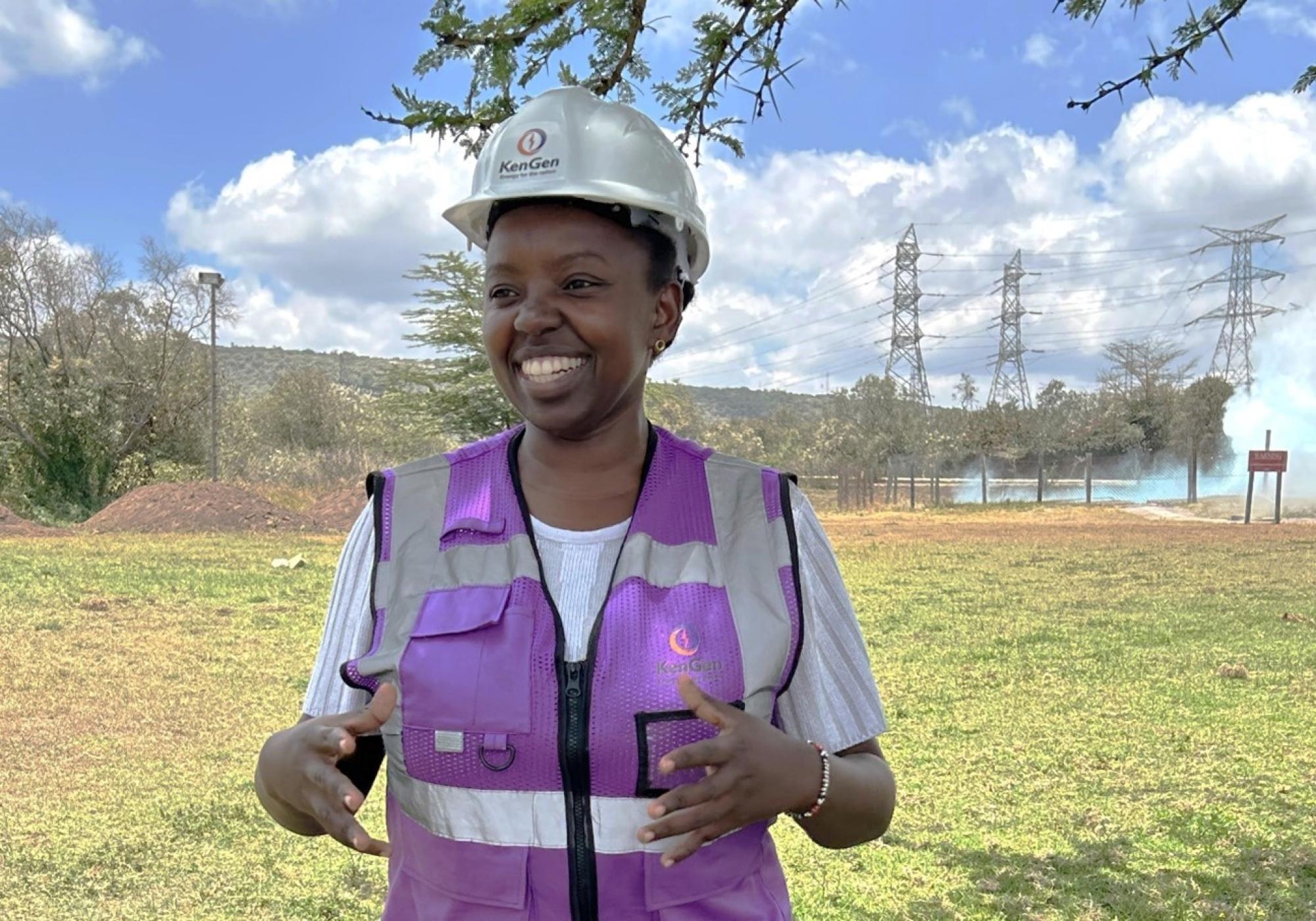
Ohne Geothermie könnte das Land seinen Energiebedarf kaum decken.
Andere Links
Übersicht
Veröffentlichungsdatum
7 Januar 2016
Projektstatus
Referenz
Unterzeichnet | 08/09/2017
20150459
Projekttitel
Projektträger – Finanzintermediär
OLKARIA I GEOTHERMAL EXTENSION
KENYA ELECTRICITY GENERATING COMPANY LTD
Vorgeschlagene EIB-Finanzierung (voraussichtlicher Betrag)
Gesamtkosten (voraussichtlicher Betrag)
EUR 72 million
EUR 311 million
Beschreibung
Ziele
The project consists of the extension of the existing 140 MW Olkaria I Unit 4 & 5 geothermal power plant with an additional 70 MW turbine (Unit 6), the necessary wells, steam-gathering system and interconnection facilities.
The project will help meet growing electricity demand at a competitive cost. Its economic benefits include increased power generation, improved security of supply (geothermal power is unaffected by annual hydrological conditions), reduced national dependence on imported fossil fuels for electricity generation, fewer emissions associated with conventional thermal generation and additional operational flexibility with the greater Olkaria geothermal generation park.
Umweltaspekte
Auftragsvergabe
If located inside the EU, the project would fall under Annex II of the Environmental Impact Assessment (EIA) Directive 2011/92/EU, requiring a screening decision by the competent authority. Kenyan law requires a full EIA. An environmental and social impact assessment (ESIA) has been established for the new unit and has been approved and a respective licence issued by the NEMA (National Environmental Management Authority). As with the other units of Olkaria I power station, the project lies in the Hells Gate National Park, where there is no human settlement. The Bank will ensure that the project complies with its environmental and social standards.
The promoter is a utility majority-owned by the Government of Kenya. For the project it will adopt open competitive tendering procedures and envisages publication in the Official Journal of the EU for the main contracts. The Bank will require the promoter to ensure that any procurement procedures are done in accordance with the Bank's Guide to Procurement.
Kommentar(e)
The Government of Kenya, in its Vision 2030 development programme launched in 2008, has identified energy as being one of the key enablers to attain 10% GDP growth target. The project will provide renewable energy to bridge the existing gap between energy demand and supply in Kenya and it will help mitigate the impact of climate change. The investment is in line with the Sustainable Development Goals (SDGs), especially SDG 7 "Ensure access to affordable, reliable, sustainable and modern energy for all".
Weitere Unterlagen
Dokumente
Umwelt- und Sozialverträglichkeitsprüfung - OLKARIA I GEOTHERMAL EXTENSION - 70MW Additional Unit 6 geothermal powerplant
Datum der Veröffentlichung
22 Mar 2016
Sprache
Bereich
Finanzierung
Nummer des Dokuments
63951928
Thema
Umweltinformationen
Art des Dokuments
Projektnummer
20150459
Sektor(en)
Regionen
Länder
Öffentlich zugänglich
Jetzt herunterladen
Nicht-technische Zusammenfassung - OLKARIA I GEOTHERMAL EXTENSION - For the drilling of 80 Geothermal Steam production Wells
Datum der Veröffentlichung
23 Mar 2016
Sprache
Bereich
Finanzierung
Nummer des Dokuments
65357527
Thema
Umweltinformationen
Art des Dokuments
Projektnummer
20150459
Sektor(en)
Regionen
Länder
Öffentlich zugänglich
Jetzt herunterladen
Nicht-technische Zusammenfassung - OLKARIA I GEOTHERMAL EXTENSION - NTS of the ESIA for the Additional Unit 6 Powerplant
Datum der Veröffentlichung
22 Mar 2016
Sprache
Bereich
Finanzierung
Nummer des Dokuments
65362518
Thema
Umweltinformationen
Art des Dokuments
Projektnummer
20150459
Sektor(en)
Regionen
Länder
Öffentlich zugänglich
Jetzt herunterladen
Umwelt- und Sozialverträglichkeitsprüfung - OLKARIA I GEOTHERMAL EXTENSION - EIA for the drilling of 80 Geothermal Steam Production Wells
Datum der Veröffentlichung
22 Mar 2016
Sprache
Bereich
Finanzierung
Nummer des Dokuments
65369919
Thema
Umweltinformationen
Art des Dokuments
Projektnummer
20150459
Sektor(en)
Regionen
Länder
Öffentlich zugänglich
Jetzt herunterladen
Formblatt ökologische und soziale Aspekte - OLKARIA I GEOTHERMAL EXTENSION
Datum der Veröffentlichung
25 Jul 2016
Sprache
Bereich
Finanzierung
Nummer des Dokuments
67483700
Thema
Umweltinformationen
Art des Dokuments
Projektnummer
20150459
Sektor(en)
Regionen
Länder
Öffentlich zugänglich
Jetzt herunterladen
Abschlussbericht zu ökologischen und sozialen Aspekten - OLKARIA I GEOTHERMAL EXTENSION
Datum der Veröffentlichung
24 Dec 2025
Sprache
Bereich
Finanzierung
Nummer des Dokuments
252644842
Thema
Umweltinformationen
Art des Dokuments
Projektnummer
20150459
Sektor(en)
Regionen
Länder
Öffentlich zugänglich
Jetzt herunterladen
Link zum projekt
Andere Links
Über das Projekt
Wie und warum
Afrikas Energie-Primus
Warum
- Geothermie bietet saubere Energie
- Senkt Emissionen aus fossilen Brennstoffen
- Bringt Kenia bei Erneuerbaren in Afrika weit nach vorn
Wie
- Kenia baut Geothermie aus und exportiert Know-how
- Ab 2030 will das Land ausschließlich grüne Energieträger nutzen
- Dank Geothermie-Erfolg kann Kenia in andere Erneuerbare investieren, etwa Wasser- und Solarkraft
Sektoren und Länder

Story
Industrialisierung geht auch ohne Umweltschäden
Aufgewachsen ist er in einem kenianischen Dorf, ohne Strom und elektrisches Licht. Heute entwickelt Peketsa Mangi die Geothermie beim Energieversorger KenGen in Olkarie. Dort steht eines der größten Geothermiekraftwerke der Welt.
Kenia sei bereits seit den 1950er-Jahren „der Erdwärme-Pionier in Afrika“, sagt Mangi. Er steht mitten auf einem saftigen Feld im Great Rift Valley, hinter ihm schnaubt die Erde dicke, weiße Dampfschwaden aus.

Über mehrere tausend Meter tiefe Bohrlöcher zapfen die Olkaria-Kraftwerke die Energie der Erde an. Sie fangen Dampf auf und befördern ihn durch Leitungen zu den Turbinen, die den Strom erzeugen. Große weiße Rohre führen Wasser oder Dampf durch den gesamten Komplex, der rund 70 Quadratkilometer einnimmt. Die Rohre stehen auf Stelzen, damit Tiere darunter hindurchlaufen können, und haben sogar hohe Bögen für die Giraffen, die morgens unter den umliegenden Bäumen frühstücken.
Kenia ist nicht nur führend im Energiesektor, sondern stärkt auch Frauen in diesem Bereich. Das Land weiß, was Frauen mitbringen.
Medien zum Thema
Kein Netz? Kein Problem!
Das Unternehmen d.light versorgt auch abgelegene Ortschaften in Afrika mit sauberer Energie.
Eine helfende Hand
Klimafinanzierungen helfen dürregeplagten Hirten in Kenia. Die Kredite werden von der EU besichert, weil sich kenianische Banken kaum in abgelegene Regionen vorwagen
Links
Projekte und Storys zum Thema
EIB and Swedbank have secured EUR 200.75 million in financing for the developer of the Rūdninkai Military Town
The developer of part A of stage II of the Rūdninkai Military Town project, Rudina, has signed loan agreements with the European Investment Bank (EIB) and Swedbank: each institution is providing a loan of EUR 100.37 million. Rudina is indirectly managed by the INVL fund ‘INVL Defence Infrastructure Fund I’, together with the construction companies Conres and Fegda.
Transport Investment Summit to Accelerate Projects in the Western Balkans, Ukraine and Moldova
Under the theme “Delivering Growth and Competitiveness through Connectivity,” the Transport Summit opened today in Thessaloniki, with a focus on turning strategic connectivity priorities into investment-ready projects. Bringing together partners from the Western Balkans, Ukraine and Moldova, discussions will focus on the implementation of the TEN-T extension, opportunities related to the EU Growth Plan, donor coordination, project preparation and enhanced public-private cooperation.
EIB Global named Development Lender of the year by Uxolo Pathfinder Awards
The European Investment Bank’s (EIB) development arm, EIB Global, today received the “Development Lender of the Year” title at the prestigious Uxolo Pathfinder Awards.