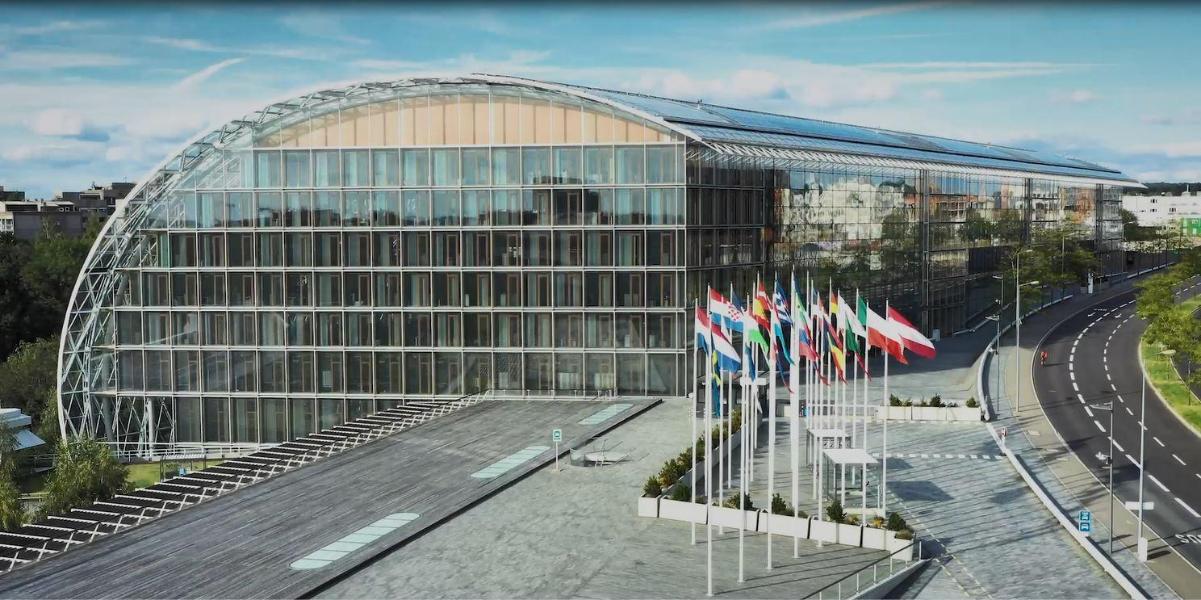
What is the EIB?
The EU's bank
The EIB is the European Union's bank. We are the only bank owned by and representing the interests of the European Union Member States. We work closely with other EU institutions to implement EU policy.
A major player
As the largest multilateral borrower and lender by volume, we provide finance and expertise for sound and sustainable investment projects which contribute to furthering EU policy objectives. More than 90% of our activity is focused on Europe but we also implement the financial aspects of the EU's external and development policies.
Lending, blending and advising
- Lending: The vast majority of our financing is through loans, but we also offer guarantees, microfinance, equity investment, etc.
- Blending: Our support helps us unlock financing from other sources, particularly from the EU budget. This is blended together to form the full financing package.
- Advising: Lack of finance is often only one barrier to investment. We can help with administrative and project management capacity which facilitates investment implementation.
See "Products section" for our full range of products and services.
Our priorities
We support projects that make a significant contribution to growth, employment, economic and social cohesion and environmental sustainability in Europe and beyond. Our priorities, as defined in our Operational Plan, are:
- Supporting the creators of 80% of new jobs (small and medium sized enterprises SMEs)
- Addressing economic and social imbalances between the regions (cohesion)
- Protecting and improving the natural and urban environment (environmental sustainability)
- Promoting innovation through investment in ICT and human and social capital (knowledge economy)
- Linking regional and national infrastructure of transport and energy (Trans-European Networks)
- Supporting a competitive and secure energy supply (sustainable energy)
We raise the bulk of our lending resources on the international capital markets through bond issues. Our excellent rating allows us to borrow at advantageous rates. We thus are able to offer good terms to our clients.
Our multiplier effect
We generally finance one-third of each project but it can be as much as 50%. This long term, supportive financing often encourages private and public sector actors to make investment which might not otherwise be made.
What makes the EIB different?
All the projects we finance must not only be bankable but also comply with strict economic, technical, environmental and social standards. Our corps of 300 engineers and economists screens every project, before, during and after we lend. We work hard to be accountable to EU citizens.
Our expertise
Our 1 950 staff build on more than 50 years' experience and expertise in project financing. Headquartered in Luxembourg, we have a network of local and regional offices in Europe and beyond.
The EIB Group
The EIB Group consists of the European Investment Bank and the European Investment Fund (EIF). The EIF focuses on innovative financing for SMEs. The EIB is the majority shareholder with the remaining equity held by the European Union (represented by the European Commission) and other European private and public bodies.
Combatting the crisis
In 2012, our shareholders (the EU Member States) decided to increase our capital by EUR 10bn. This boosted our stability and allowed us to plan for EUR 60bn additional lending between 2013 and 2015. Previously, when the financial crisis erupted in 2008, the EU asked us to offset falling investment. This led to a more-than one-third increase in the total value of on-going, outstanding loans by 2011.
As well as our lending operations, we also help one-off schemes to address specific challenges.In 2008/9 many corporate clients approached us for the first time to access the RSFF scheme which supports research, development and innovation (RDI). We also make special funding available to enhance private investment capacity for RDI into energy efficiency and emissions reduction in the automotive, rail, aviation and shipping industries. We work with the European Commission to use EU funds to support special programmes to help countries hard-hit during the crisis.


