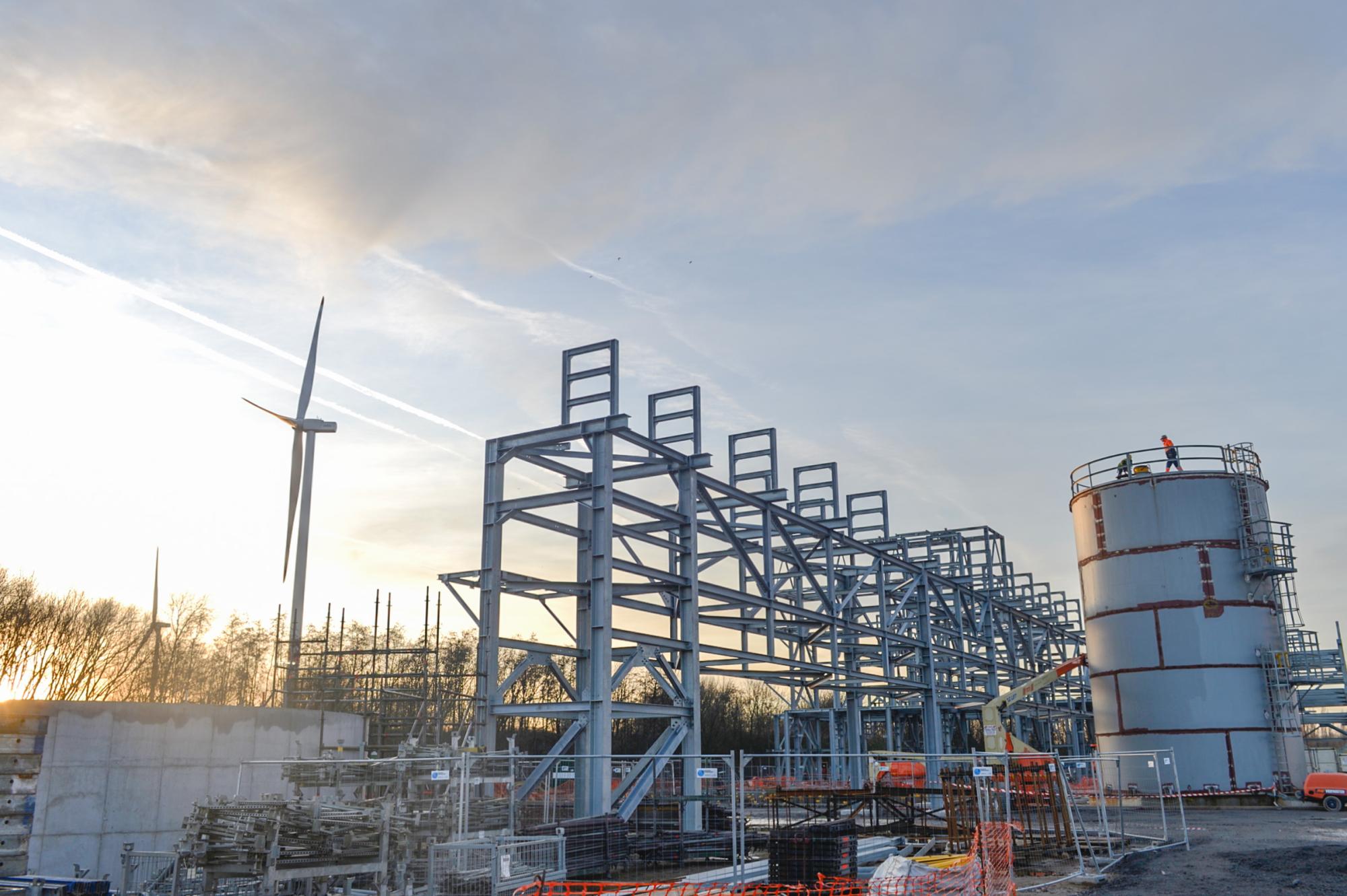
"It contributes to the circular economy and generates green ethanol, which can be used as fuel or feedstock in multiple chemical processes."
Other links
Summary sheet
Release date
11 January 2018
Status
Reference
Signed | 15/05/2020
20170622
Project name
Promoter - financial intermediary
STEELANOL (EDP)
ARCELORMITTAL
Proposed EIB finance (Approximate amount)
Total cost (Approximate amount)
EUR 75 million
EUR 154 million
Description
Objectives
First of its kind demonstration plant for the production of advanced bio-ethanol through an innovative gas-fermentation process using exhaust gases emitted by a steel mill.
The project aims to demonstrate the commercial viability of such bio-ethanol production to improve the sustainability of the European steel manufacturing industry and its profitability, by valorising steel process off-gases.
Environmental aspects
Procurement
The project will be implemented within the perimeter of fully authorised existing facilities. According to the competent authority, an Environmental Impact Assessment (EIA) is not required. The project has been screened out according to Annex II of the EIA Directive 2014/52/EU amending the Directive 2011/92/EU. The Bank's services will assess the environmental and climate relevant details during project appraisal.
The Bank will require the promoter to ensure that implementation of the project will be done in accordance with the Bank's Guide to Procurement.
Related documents
Documents
Environmental and Social Data Sheet (ESDS) - STEELANOL (EDP)
Publication Date
18 May 2019
Document language
Main Topic
Lending
Document Number
79474008
Document Focus
Environmental Information
Document Type
Project Number
20170622
Sector(s)
Regions
Countries
Publicly available
Download now
Link to source
Other links
News & Stories
Link to source
Other links
Inside the project
How and Why
Reducing CO2 emissions and promoting a circular economy
Why
- Steel-making is a high-emissions industry. We need steel, but we don’t need the emissions. We need to make steel sustainable
- Energy efficiency in industrial processes can make a big dent in global emissions
- An innovation with global implications developed in Europe. We back European innovators
How
- This is a first-of-its kind industrial scale demonstration of ground-breaking new technology that will help reduce CO2 emissions in steel production and promote a circular economy
- The technology supported by the project will reduce the steelmaker’s CO2 emissions in Belgium and then at other sites in Europe and around the world
- The project involves converting waste wood into a coal substitute that will be used in the steel plant along with waste CO2 to produce bio-ethanol
Sectors & Countries

"As a material producer, we believe that we must focus on circular economy and develop ‘cradle to cradle’ processes which use less primary resources and enable us to reduce the carbon emissions."
Related media
Green steel, circular steel
Big steelmaker ArcelorMittal uses an innovative steel technology that saves CO2 emissions–and turns them into useful bio fuel
A plan for the future of the planet
We publish our Climate Bank Roadmap, which outlines bold ambitions for climate finance to back the European Green Deal and fight global warming
Links
Related projects and stories
Why Europe is the best place to live
Life in Europe is better. Social investment in health, education and jobs reduces inequality, helping Europeans live longer and earn more.
Celebrating diversity, equity and inclusion at Luxembourg Pride Week
The European Investment Bank (EIB) Group is taking part in Luxembourg Pride Week from 2 to 12 July, celebrating the LGBTIQ+ community and reaffirming its strong commitment to diversity, equity and inclusion.
Local leaders and EIB join forces to pool public and private funds for affordable houses
Intensifying their cooperation with the European Investment Bank, regions and cities on 2 July discussed the EU’s housing policy with President Calvino, Members of the European Parliament and associations. During their debate in a plenary session of the European Committee of the Regions, they also voiced concerns that the next EU budget will weaken EU support for social, energy and climate projects