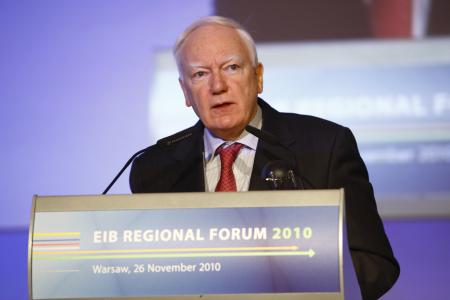
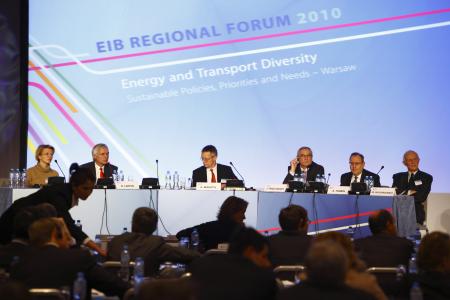
The Forum's objectives were to:
- Raise relevant issues at a high political level
- Facilitate a dialogue between major stakeholders
- Identify priorities
- Share information on financing needs and opportunities to help align policies to needs in the region
Topics were divided into three main sessions:
Energy
In order to sustain economic development, to ensure the security of energy supply and to protect the environment, the public and private sectors in the field of power generation need to overcome the challenges surrounding, amongst others: new capacity and modernisation needs, technological deployment, market liberalisation, directives enforcement, fuel diversification and the social impact of the decline in the mining industry and the increasing energy prices.
With Central and Eastern Europe's energy mix being mostly based on fossil fuels and considering that the primary energy demand will increase dramatically by 2020, the decision to integrate renewable energy and energy efficient projects into national and regional energy policies is essential. How will the region implement the EU Energy Package?
Transport
The European Union policy objectives promote environmentally friendly means of transport, sustainability, interoperability and intermodality. How advanced is the implementation of these objectives in the region? Is it more difficult when costs of transport are primarily national but distribution of benefits regional or local?
Infrastructure networks should facilitate economic growth, regional competitiveness, employment generation and territorial cohesion. How, in practise, can Member States maintain the proper balance between infrastructure development in economically active regions versus interventions in developing regions where additional infrastructure and improved accessibility could increase competitiveness and reduce the economic gap? Should large, visible TEN-T projects be implemented or rather prioritise the overall efficiency of the networks?
Finance
The financial crisis has put tremendous strain on public budgets, lending to public private partnerships is less available and more expensive; is this temporary, or has the market been affected permanently? Although European Union funds are a partial remedy for constrained public finances, what is needed to create a more efficient infrastructure financing system? What could enhance the attractiveness of infrastructure projects for commercial banks?
How can investments into energy efficient and renewable energy technologies be catalysed by the public sector and are the banks in the region able to promote lending to renewable energy projects which use expensive, potentially unproven new technologies?